How to Find Micro-Influencers for Your Niche (6 Free & Paid Ways)
Cream and peach paper person tokens around a raised orange token with a white person icon, next to a cream paper magnifying glass

Reports suggest that micro and nano creators are claiming almost half of influencer marketing budgets in 2026. There are literally millions of micro-influencers out there. So, naturally, brands and marketing agencies are scratching their heads, trying to figure out how to find the right micro-influencers for their brands.

But what does the right micro-influencer actually look like? Here's an example of a very successful campaign.

In 2025, Nails.INC launched It's Topless, a 4-in-1 gel manicure polish. Usually, a brand at this stage would look for beauty influencers with larger followings and higher engagement rates.

But Nails.INC worked with busy mums, DIYers, and athletes who could actually demonstrate the product's convenience.
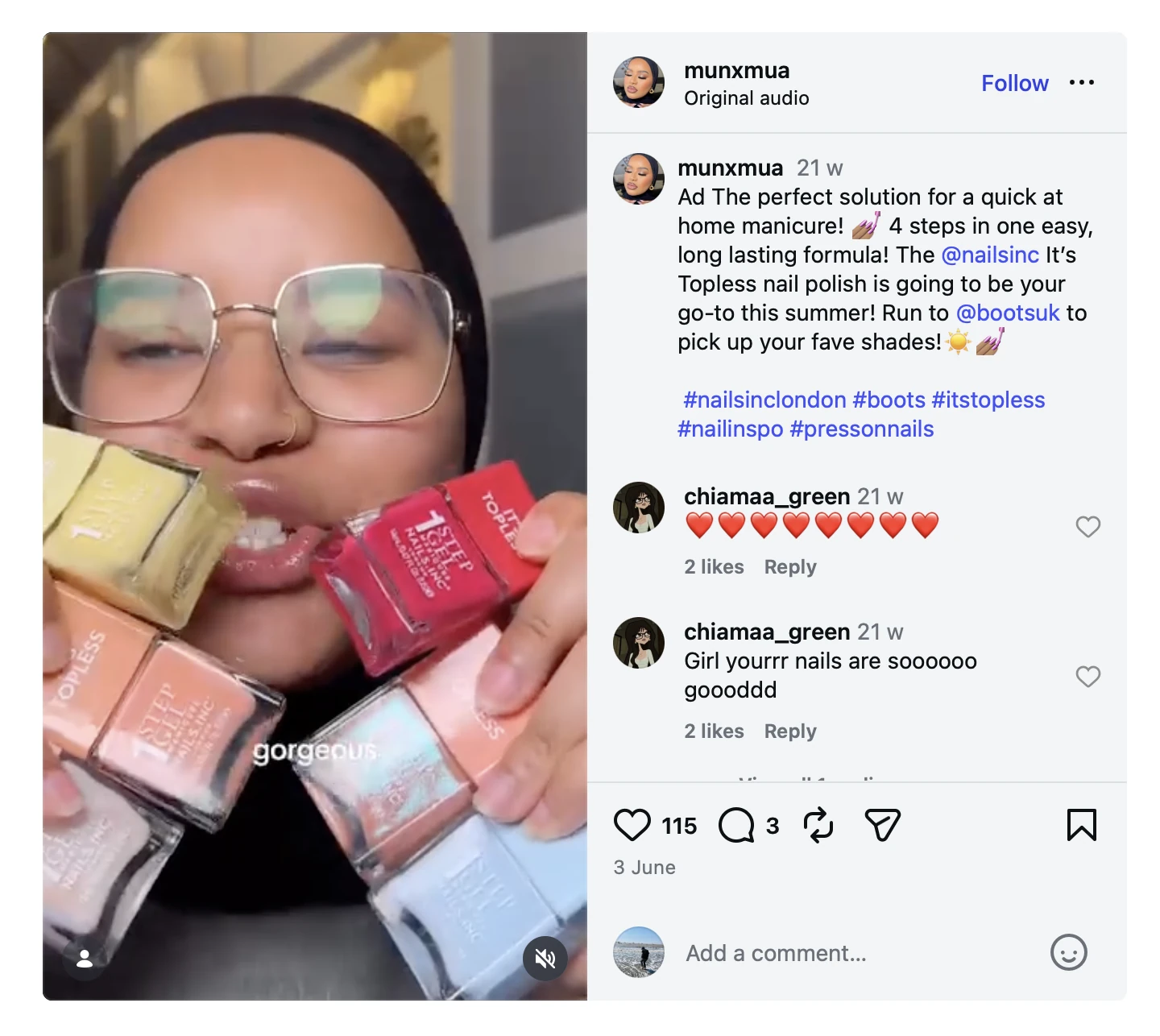
Micro-influencer @munxmua holding Nails.INC It’s Topless nail polish bottles in a sponsored Instagram reel showcasing everyday use rather than studio-style beauty content
Via Instagram

Alongside them, they collaborated with lifestyle creators who followed trends and nail professionals who could talk about the product from experience.

Nail professional @naomikisted applying Nails.INC It’s Topless polish in a paid partnership reel, talking about the product from working experience
Via Instagram

These three creator groups were a brilliant choice. Together, they offered a holistic approach to the market, covering different audiences and use cases. Their work with micro-influencers alone ended up generating almost 6 million in reach.

But take note of how selective they were. Every creator needed at least a 3% engagement rate, no heavily edited imagery, and a history of producing authentic, brand-safe content. All this just to narrow down the search and avoid the wrong.

What does picking the wrong micro-influencer actually cost your brand?

Why would Asset, a D2C body care brand, look for comedy and LGBTQ+ creators instead of focusing only on beauty, wellness and lifestyle influencers?

Well, Asset sells products for butt health and hygiene, a category many people aren't comfortable discussing publicly. Founder Chad O'Connell said that this made finding the right creators for marketing collaborations difficult.

The brand would be spending money on influencer partnerships without knowing what the return would look like.

Interestingly, some of their most successful collaborations came from unexpected places. Such as, a comedian posted an unboxing video that reached over 3.4 million views.
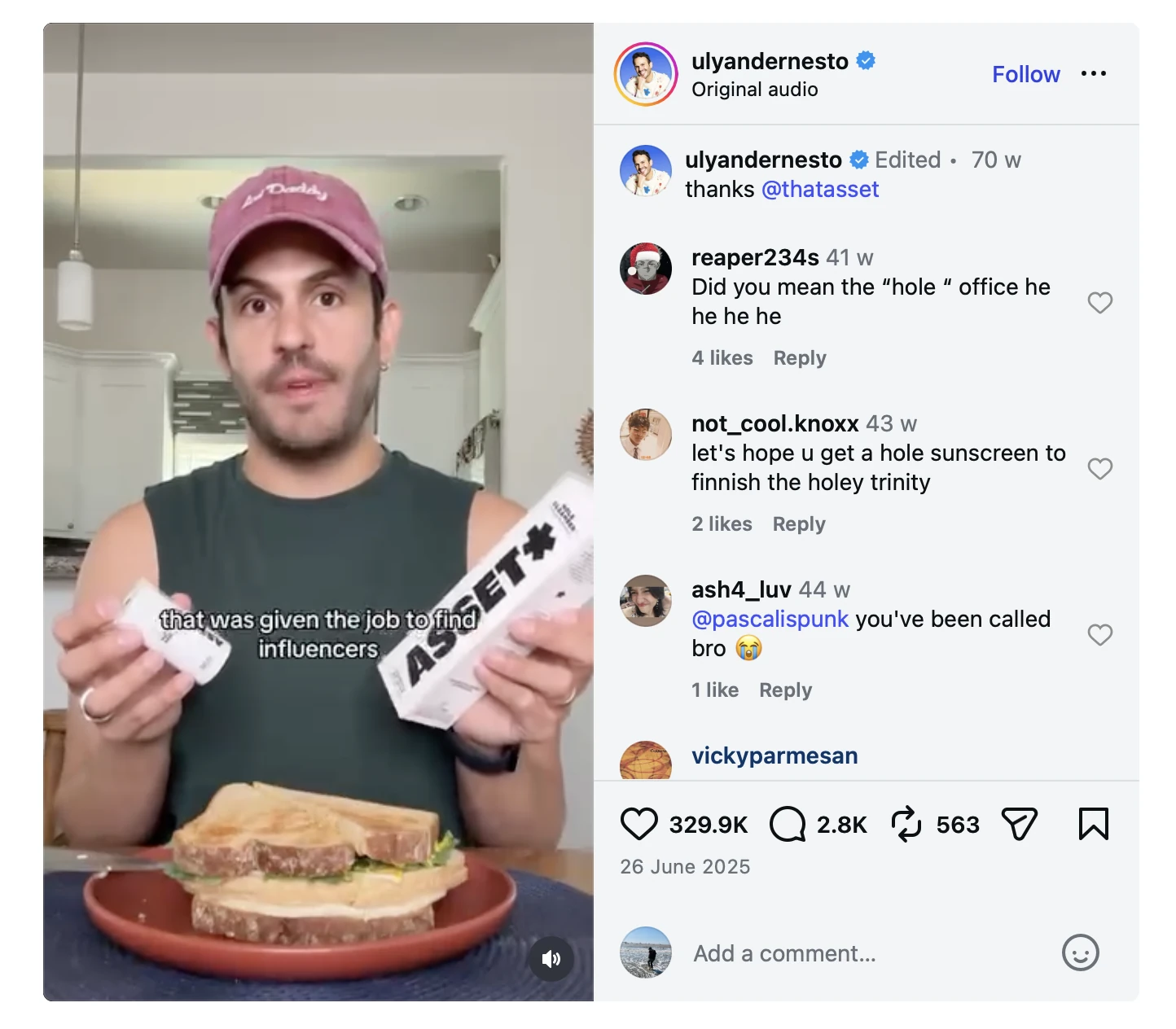
Comedy creator @ulyandernesto unboxing Asset body care products in a reel with 329.9K likes
Via Instagram

That's the reality of finding micro-influencers for a niche brand. When brands send product samples to TikTok Shop creators, only 47% actually post a video, and just 14% generate any sales.

Here are four ways a bad micro-influencer pick can drain your budget:

  • You pay for samples that never get posted
  • You pay creators whose audiences won't buy your product
  • Your team spends weeks vetting the wrong creators
  • You miss better creators while chasing the wrong ones

Worked out math example: Say you seed 50 creators at $300 each, plus $25 product and shipping per creator.

  • Total committed: $16,250
  • 53% never post: $8,613 produces nothing at all
  • Of the 24 who do post, 86% drive no sales: roughly 20 more creators, another $6,500
  • Creators who actually move product: about 3
  • Cost per productive creator: around $5,400 on a $16,250 spend

Remember, time and effort cost money too.

6 ways to find micro-influencers for your brand

Here are six ways to find creators who actually fit your product and audience, from searching your existing customers and niche communities to using influencer discovery platforms:

How to find micro-influencersWhen does this work best?
1. Customers and followersCheck tagged posts and story mentions from the last 90 days. Cross-reference customer social handles and look for creators mentioned in post-purchase surveysWhen you already have customers posting organically about your products
2. Niche hashtags and keywordsReplace broad tags like #skincare with specific ones like #acnetreatmentserum. Search phrases customers use, and check newer posts to discover smaller creatorsWhen you're starting from scratch or targeting a very specific product category
3. Instagram, TikTok and YouTubeExplore Instagram's Similar Accounts, filter creators through TikTok One Creator Marketplace, and use YouTube's Channels filter to find niche reviewersWhen you want to discover active creators without paying for a database
4. Competitor collaborationsCheck competitors' tagged posts, campaign hashtags, sponsored content and TikTok Shop affiliates. Look for creators who have only worked with rivals onceWhen entering an established market where competitors have already run influencer campaigns
5. Online communitiesExplore r/UGCcreators for portfolios and rates, niche subreddits for active contributors, and relevant Facebook Groups, Discord servers and LinkedIn communitiesWhen you need creators with niche knowledge or those actively looking for collaborations
6. Influencer discovery platformsUse tools like Clayface to filter by audience location, age, interests and previous brand partnerships. This helps you find creators whose followers actually match your target customers. Clayface makes it easier to narrow down millions of profiles using these filters, while also searching spoken audio and visible products to find creators missed by caption searches.When you need to shortlist 100+ creators, work across markets or identify untagged product mentions

1. Find micro-influencers among your customers and followers

Someone has already bought your product, liked it enough to post about it, and maybe even tagged your brand. All without you asking or paying them.

Isn't that a pretty good place to start looking for micro-influencers?

You can find these creators by checking:

  • Go through your Instagram or TikTok followers and look for accounts with 10,000 to 100,000 followers.
  • Check your tagged posts and story mentions from the last 90 days.
  • Search branded hashtags, including common misspellings of your brand name.
  • Check your customer database for social media handles.
  • Look through post-purchase survey responses, especially answers to "How did you hear about us?"

That last one is important since customers might mention a specific creator who introduced them to your product. Now you have a potential influencer to work with, along with evidence that their content has already influenced a purchase.

When does this work best?

This method works best for brands that already have an existing customer base and some organic conversations happening around their products.

Urban Outfitters is a good example. Its ME@UO program recruits creators from its own customer base rather than relying entirely on finding influencers elsewhere.
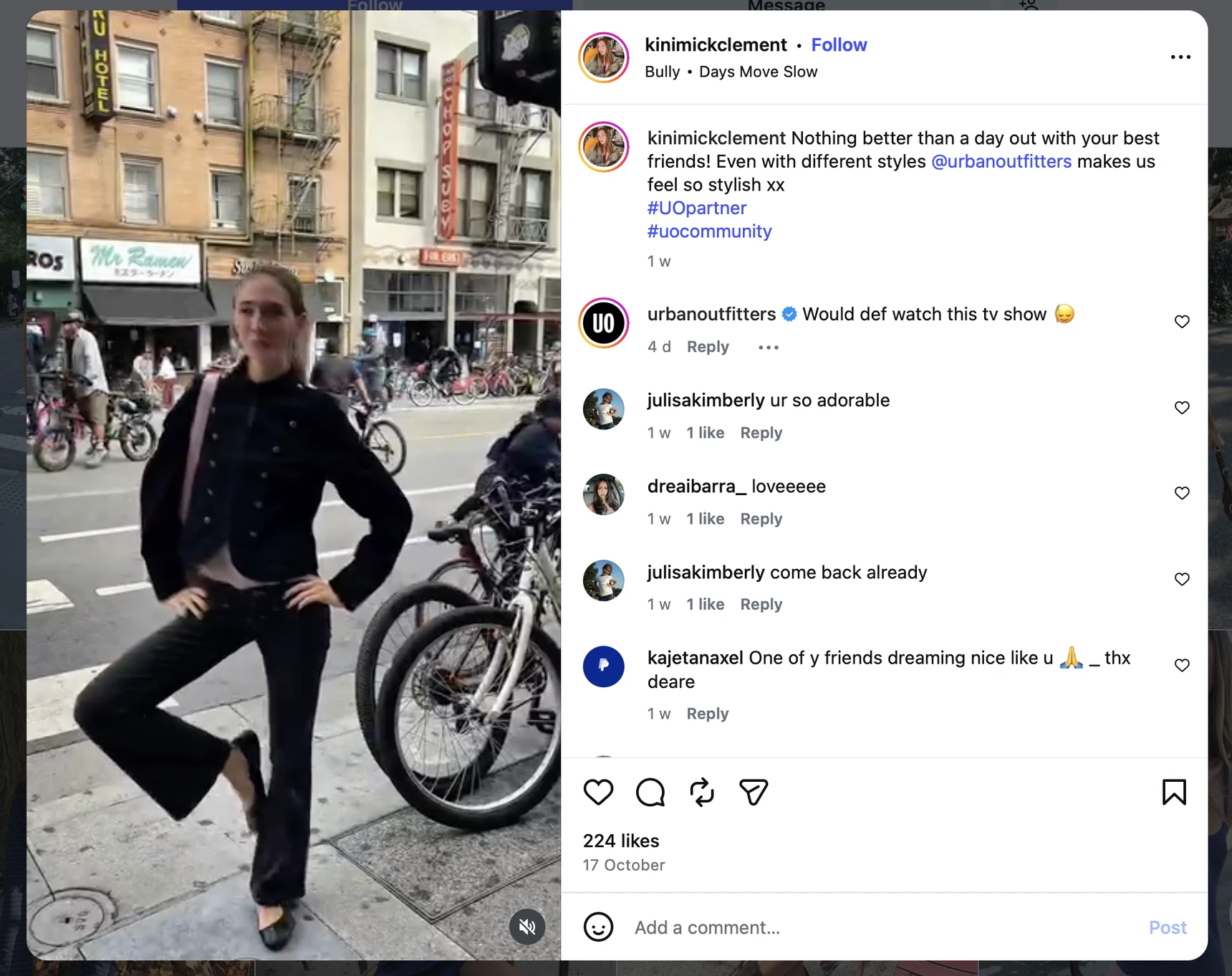
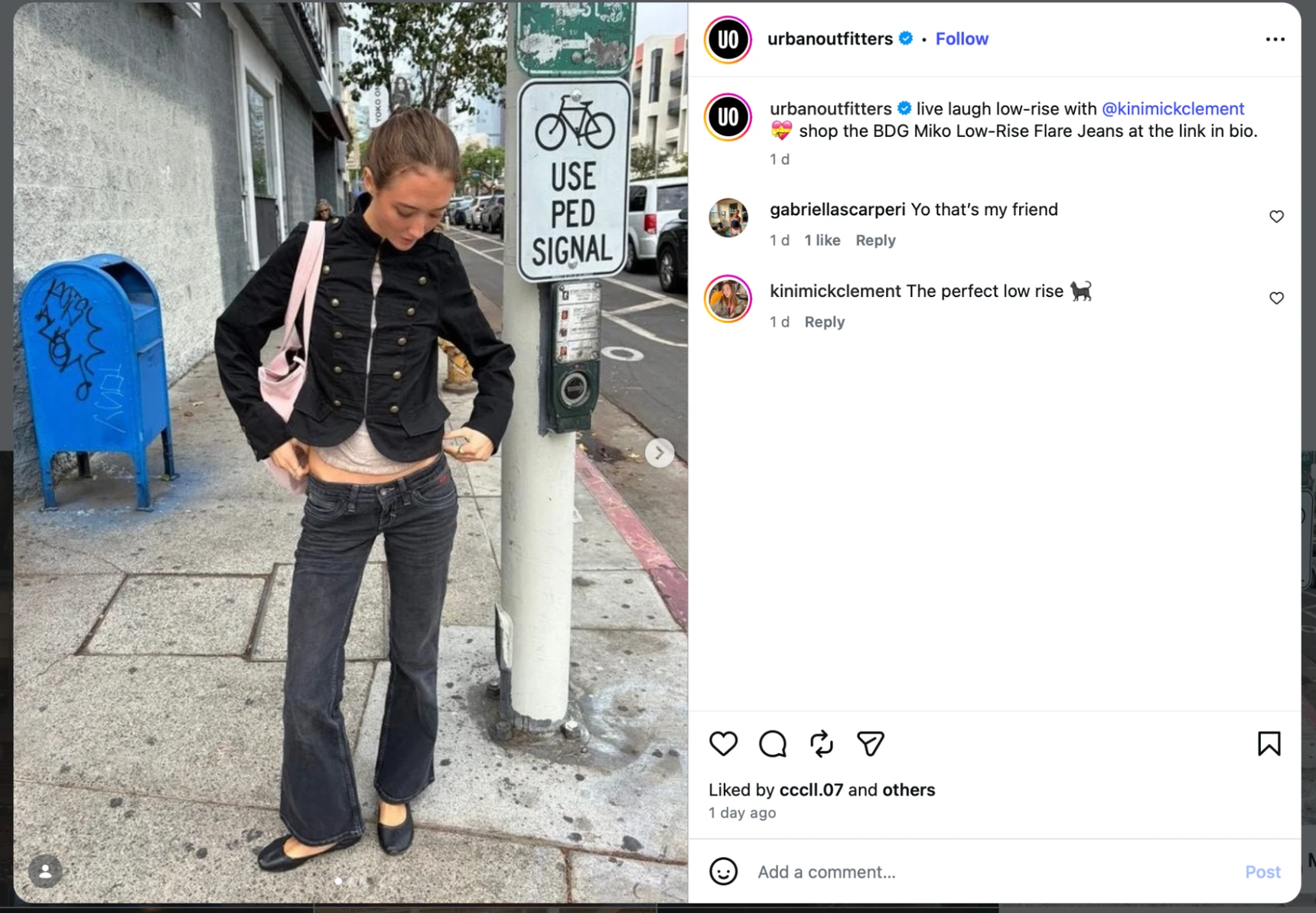
How to find micro-influencers among existing customers: @kinimickclement posting Urban Outfitters content tagged #UOpartner
Via Instagram
Urban Outfitters Instagram post featuring ME@UO creator @kinimickclement wearing BDG jeans
Via Instagram

American Eagle, Express, Home Depot, Lowe's and Sephora have also built ongoing creator and affiliate programs instead of relying solely on one-off influencer campaigns.

What's particularly interesting is that Urban Outfitters also plans to use feedback from these creators to inform future product releases and seasonal collections.

Are you catching video mentions where your brand is never tagged or named?

A vehicle brand told us their old tool missed most of their TikTok posts because creators never mentioned the brand in captions. Clayface analyzes spoken audio, on-screen text, and products shown in the video.

Start a 14-day parallel run

2. Search niche hashtags and keywords

One of the easiest ways to find micro-influencers is through Instagram and TikTok hashtags. But the trick is to search for something more specific than your general product category.

For example, I searched for #skincare on Instagram and found over 153 million posts. That's a massive pool of content to go through, and most of it might not even be relevant to my product.
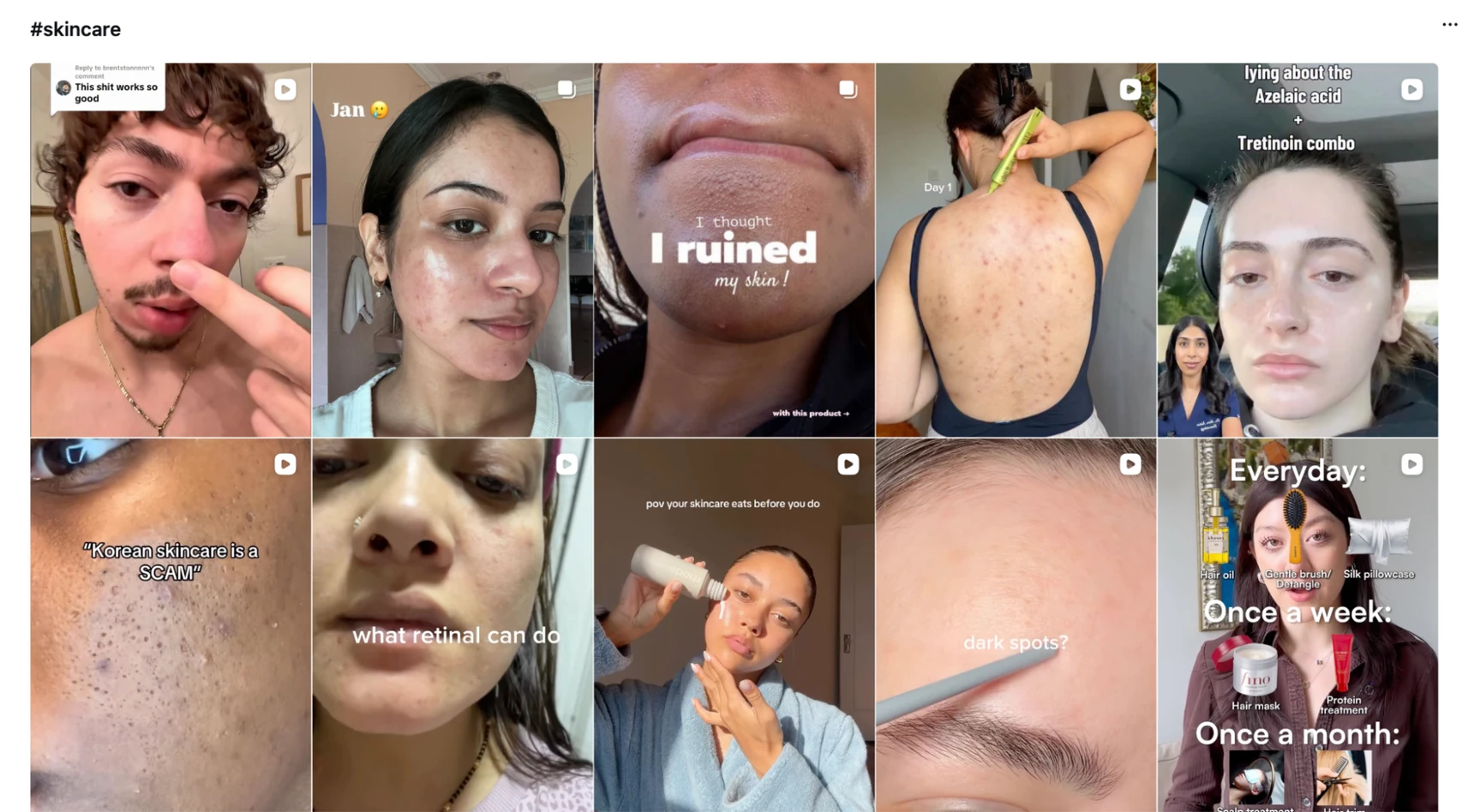
Instagram #skincare hashtag results with over 153 million posts, too broad to find micro-influencers in
Searching a broad hashtag like #skincare returns 153 million posts, most of them irrelevant to any one product

But when I narrowed my search to #acnetreatmentserum, I found just over 1,000 posts. Now that's a much more manageable pool of creators who are actually talking about the kind of product I'm interested in.
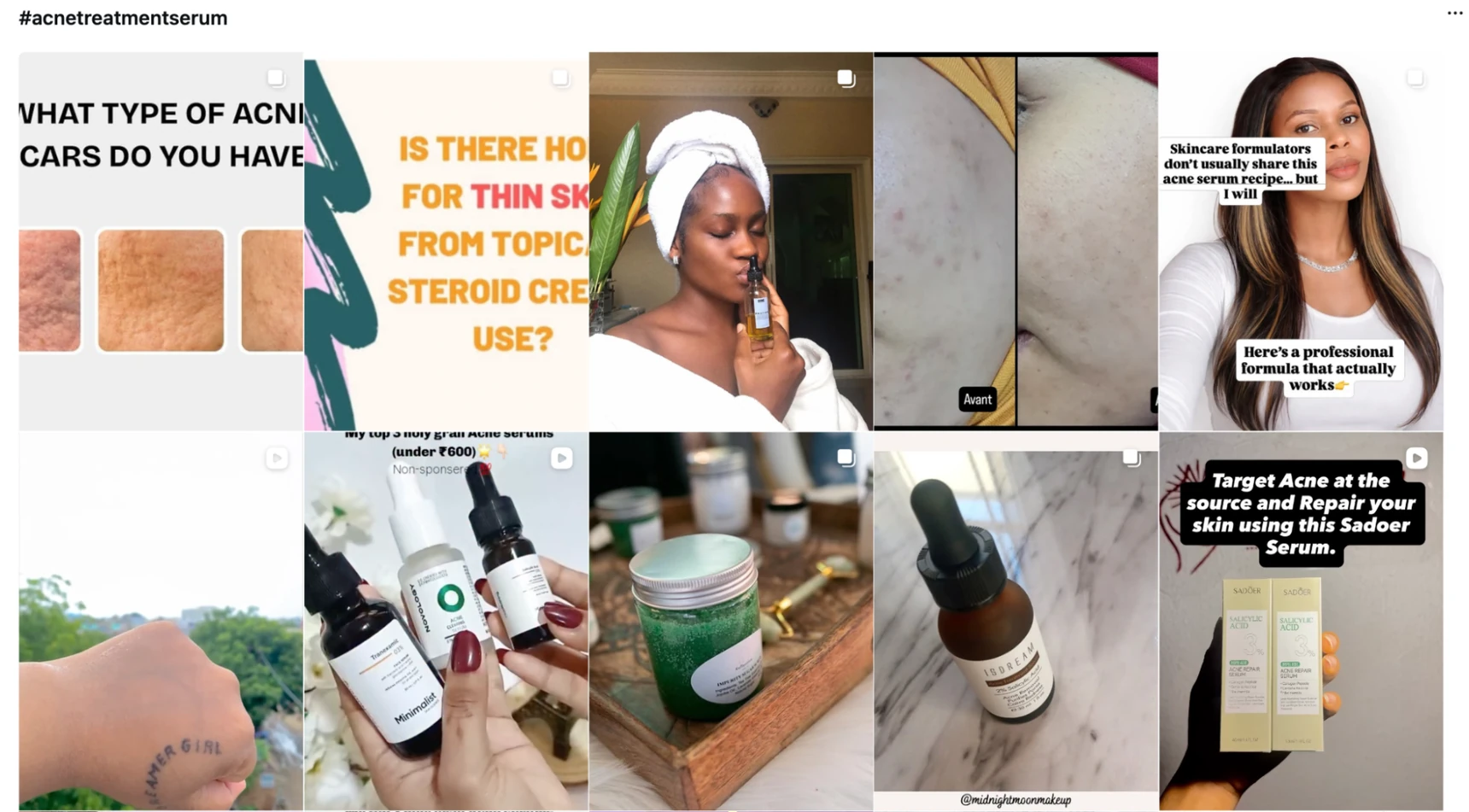
Instagram #acnetreatmentserum results with around 1,000 posts, a narrow hashtag for finding micro-influencers
Narrowing to #acnetreatmentserum drops the pool to around 1,000 posts from creators actually discussing the product type

You can do the same for almost any niche:

  • Fitness: Instead of #fitness, try #apartmentgym, #postpartumfitness or #liftingover40.
  • Skincare: Instead of #skincare, try #acnejourney, #sensitiveskincare or #retinolbeginner.
  • Food: Instead of #food, try #mealprepforbeginners, #budgetcooking or #glutenfreebaking.
  • Home decor: Instead of #homedecor, try #rentalfriendly, #smallspaceliving or #firstapartment.

And don't limit yourself to hashtags. Try searching for phrases your potential customers would actually use, like "best serum for acne-prone skin" or "honest review of acne serums."

You can also do this on YouTube by searching for product reviews, long-term experiences and comparisons. These searches can help you find creators whose audiences are already interested in the problems your product solves.

One more thing I'd recommend is looking beyond the most popular posts. Check newer posts too. That's where you might find smaller creators who are actively talking about your niche but haven't yet attracted dozens of brand partnerships.

When does this work best?

This method works best when you're just starting your influencer search and don't have an existing list of creators.

It costs nothing, works even if nobody has mentioned your brand before, and helps you discover how people actually talk about your product category.

Bonus: You might even come across customer problems, product questions and niche communities you hadn't considered targeting before.

3. Use Instagram, TikTok and YouTube creator discovery

According to Modern Retail, 70% of surveyed TikTok Shop consumers had purchased a product recommended by a creator.

That's a pretty good reason to look for creators directly on Instagram, TikTok and YouTube where people are discovering and buying products. Here's how to go about it for each platform.

Instagram

  • Similar accounts: Find a creator who fits your niche, open their profile and look for suggested accounts. For example, if you're selling camping equipment, start with a creator who regularly posts hiking and camping content, then explore similar profiles.
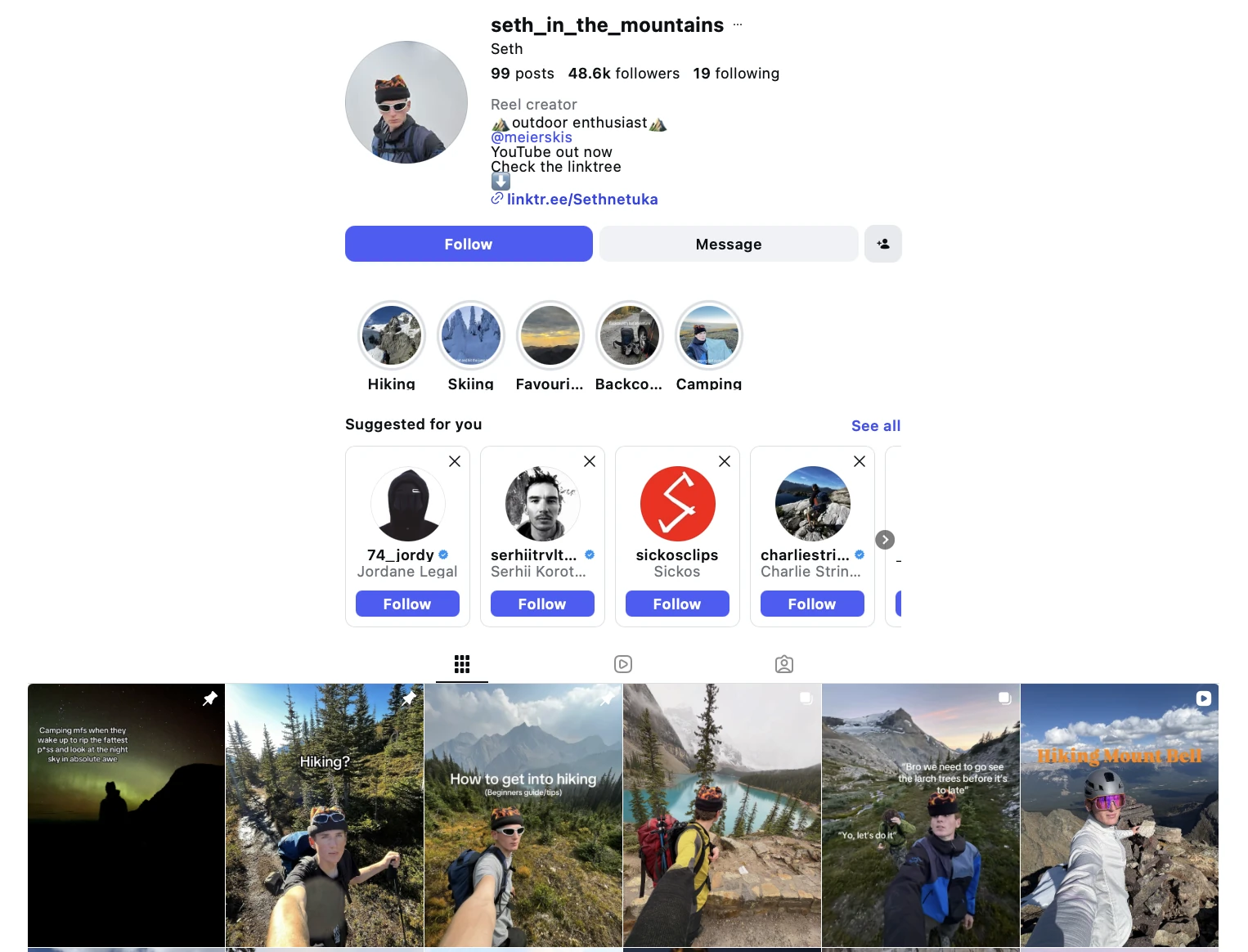
Instagram Suggested for you panel used to find micro-influencers similar to an outdoor creator with 48.6K followers
Via Instagram
  • Location search: Search cities, neighbourhoods or specific locations to find creators posting from those places. This is particularly useful for regional businesses, restaurants and local campaigns.
  • Reels: Explore Reels related to your niche and check who's consistently creating relevant videos. Don't just look at the most popular creators.

TikTok

  • TikTok One Creator Marketplace: Use the creator search filters to narrow your results by follower count, location, audience demographics and engagement rate. You can also search for creators making content about a specific category, like gaming accessories or pet products.
TikTok Creator Marketplace filters for creator country, audience country, followers, average views and engagement rate
Via TikTok
  • Creator Search Insights: Search for topics people are interested in and identify content gaps. For example, if you're selling pet accessories, you might discover people searching for solutions to common pet problems and then look for creators discussing those topics.
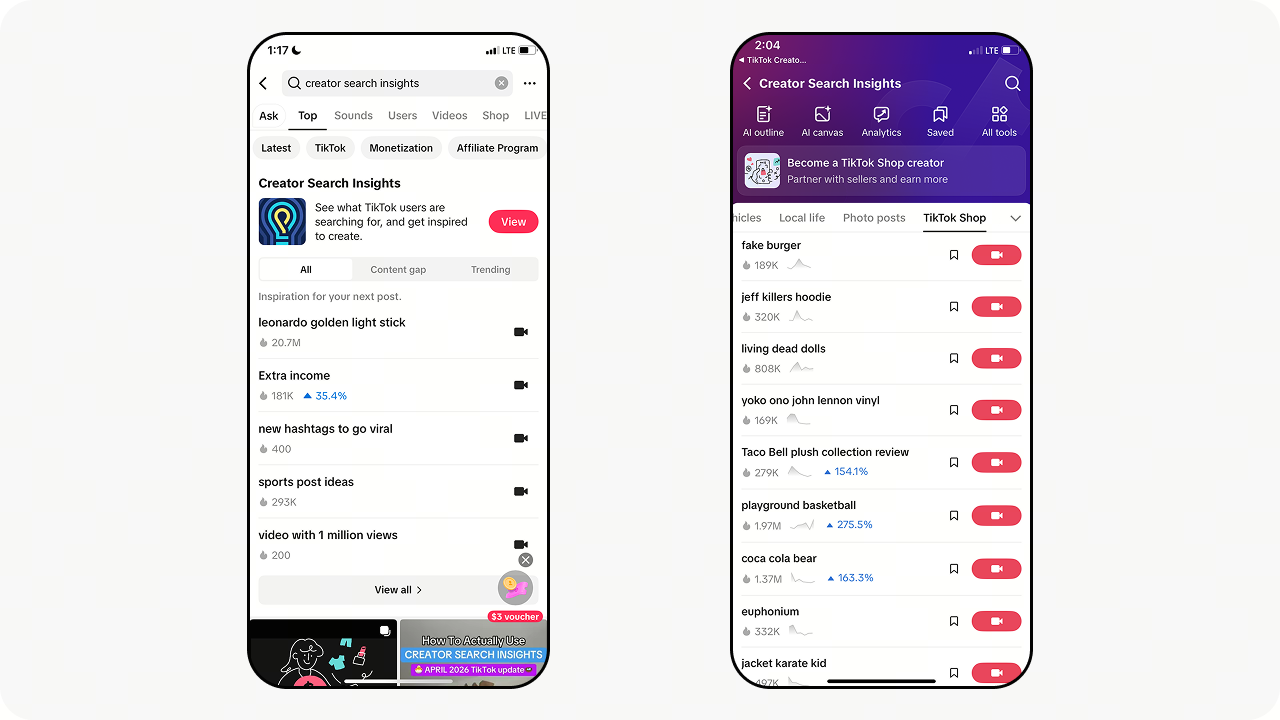
TikTok Creator Search Insights showing trending search topics and content gaps by category
Via TikTok
  • Trending sounds: Open sounds that keep appearing in your niche and explore the creators using them. This can introduce you to smaller creators you wouldn't necessarily find through hashtags.

YouTube

  • Search for phrases like "best budget camping gear," "mechanical keyboard review" or "automatic pet feeder after 6 months."
  • Use the Channels filter to find creators publishing content around those topics instead of scrolling through individual videos.
  • You can also explore other filters to find creators that have posted recently and in a style that you prefer.
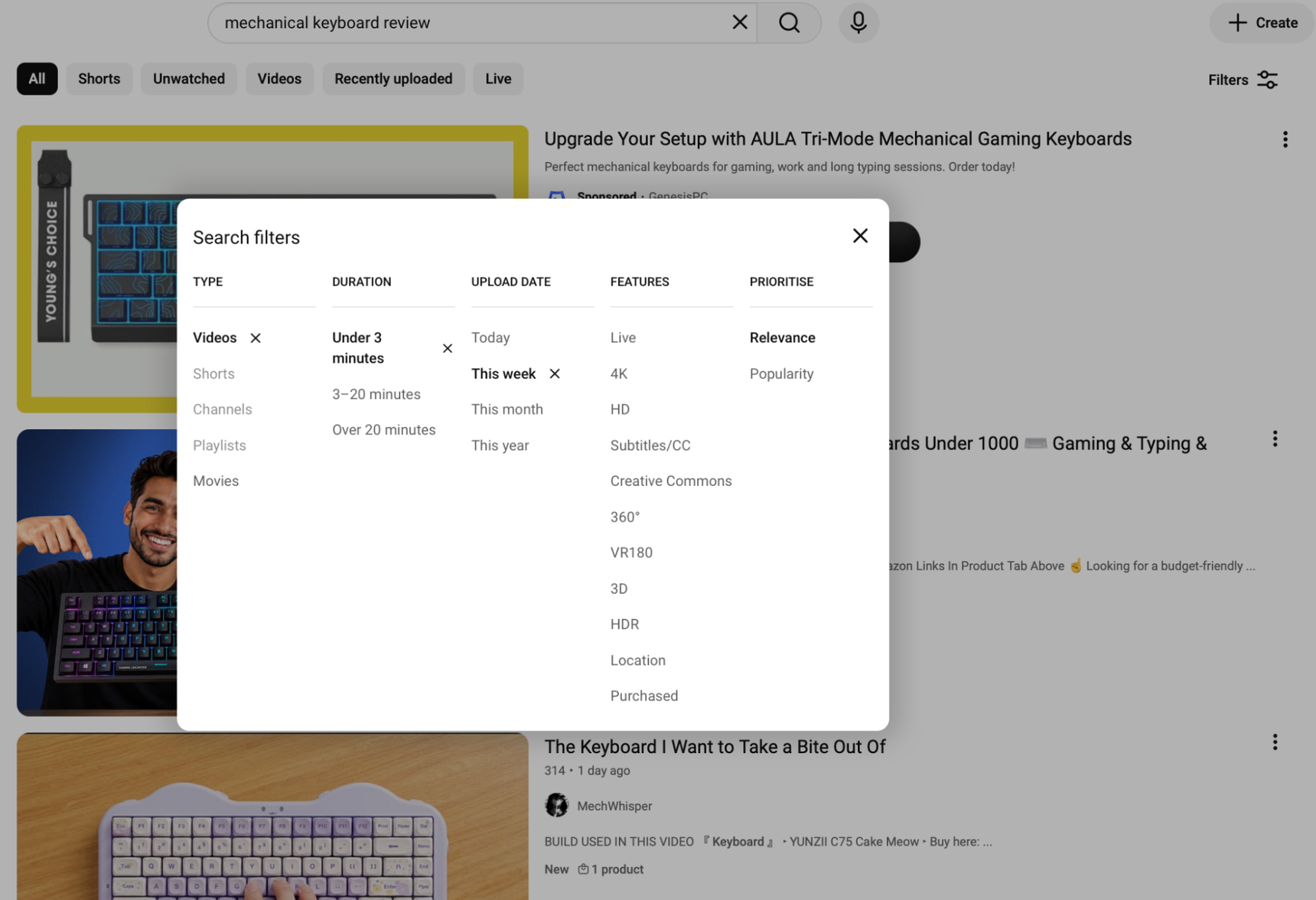
YouTube Channels filter used to find micro-influencers reviewing mechanical keyboards
Via YouTube
  • When you find a relevant creator, check the recommended videos to discover other channels covering similar products.

When does this work best?

This method works well when you want to build a creator shortlist without investing in a paid tool. One advantage of searching directly on these platforms is that you can discover people who have only recently started gaining attention in your niche.

But there's a limitation worth knowing. These tools can help you find creators based on their content, audience and engagement. They don't necessarily tell you whether those creators have actually influenced purchases or changed how people feel about a product.

This is where Clayface can help you dig deeper. Instead of relying on likes and engagement alone, it analyzes what creators actually say and show in their videos, including spoken audio, on-screen text and audience comments.

Clayface dashboard showing brand conversations, sentiment shift over time and engagement across social platforms
Clayface tracks whether conversation and sentiment moved after creator content went live, with every figure linked to the original posts

In the dashboard image above, you can see how people respond to brand content, whether those conversations are shaping positive or negative brand sentiment, and how the sentiment is changing over time. Also, every single metric is tied to real post links that you can open and check.

4. Find creators already working with your competitors

Your competitors have probably already spent time finding, vetting and working with creators who reach the same audience you're trying to target. So why not use their influencer campaigns as a starting point for your own search?

And just because a creator has worked with your competitor doesn't mean they're unavailable.

According to the 2026 Brand Deals Report, which analysed over 316,000 sponsored posts, 69% of Instagram, 72% of TikTok and 49% of YouTube brand collaborations were one-offs.

That's a lot of creators who have worked with a brand once but may still be open to other partnerships.

Here's where you can find them:

  • Competitors' tagged posts: Visit their Instagram profiles and check the Tagged tab to see which creators have featured their products.
  • Branded hashtags: Search your competitors' campaign hashtags to find creators who have participated in their promotions.
  • Sponsored content: Look for paid partnership labels, #ad and #sponsored posts mentioning your competitors. These help you identify creators who have already worked on brand campaigns.
  • TikTok Shop affiliates: If your competitors sell through TikTok Shop, look for creators promoting their products through affiliate videos.
  • Creators your competitors haven't worked with: While exploring these accounts, look for similar creators who fit your niche but haven't promoted competing products yet.

Of course, check whether they have any active exclusivity agreements before approaching them.

When does this work best?

This method works particularly well when you're entering an established category and already know who your biggest competitors are.

It can also help you understand what kind of creators other brands are investing in and how they present their products.

5. Find micro-influencers in online communities

Many micro-influencers are also active in Reddit communities, Facebook Groups, Discord servers and LinkedIn, where they discuss brand collaborations, share portfolios and look for opportunities.

In fact, I came across a Reddit post where a UGC creator shared how they landed their first paid brand deal simply by reaching out to a brand manager they found in a subreddit.
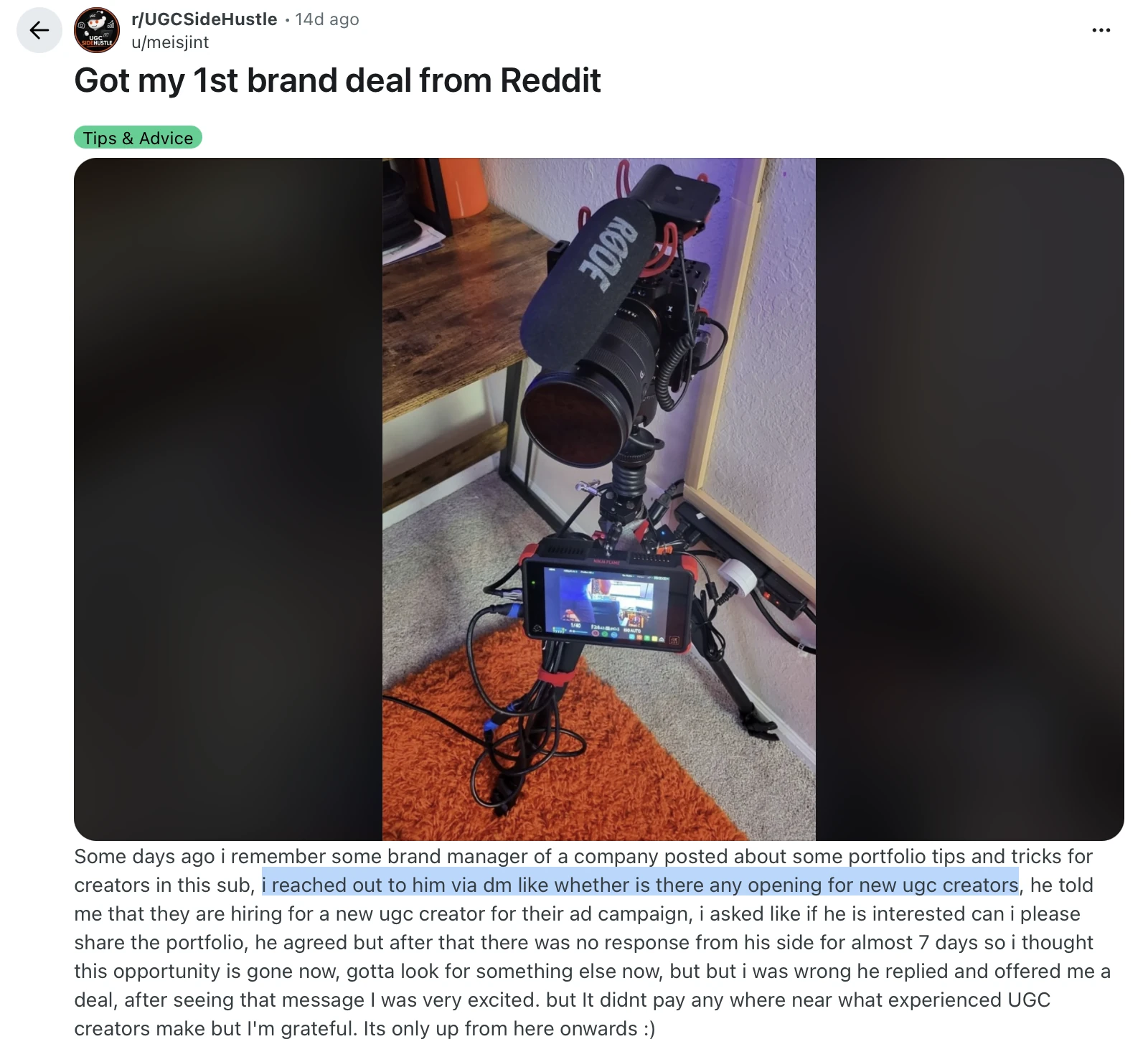
Reddit post in r/UGCSideHustle from a UGC creator who landed a first brand deal by DMing a brand manager
Via Reddit

So these communities are worth exploring when you're looking for smaller creators who might be open to working with your brand.

Here's where you can start:

Reddit

  • r/UGCcreators: Look for creators discussing their rates, sharing portfolios and asking questions about brand collaborations.
  • r/influencermarketing: You'll find discussions from both brands and creators about sponsorships, pricing and finding collaborations.
  • r/InstagramMarketing: Look for smaller Instagram creators sharing their experiences with brand deals and growing their accounts.
  • Niche subreddits: Explore communities like r/MechanicalKeyboards, r/Coffee or r/CampingGear. Check whether regular contributors also create content on Instagram, TikTok or YouTube.

Facebook Groups

Search for terms like "UGC creators UK," "fitness content creators" or "food bloggers India." Many groups have creators sharing their portfolios and looking for collaborations. Check the group rules before posting an opportunity.

Discord

Look for communities around gaming, technology, photography or other specialised interests. These can be useful for finding creators who genuinely understand your niche, although you'll often need to spend some time participating before reaching out.

LinkedIn

Try searching for professionals who regularly share educational content in your category. For example, a mechanic who posts car maintenance videos or a dietitian who shares nutrition advice could be a good fit for a relevant product, even without a huge following.

When does this work best?

This method works particularly well when your product serves a specific community or when you need creators who genuinely understand the subject they're talking about.

One thing I'd be careful about: Reddit communities often have strict rules around self-promotion. Read those rules first, participate in relevant discussions and reach out to creators through their publicly listed business contacts when appropriate.

6. Use influencer discovery platforms

When you're trying to find over 100 creators across multiple markets, manually checking hashtags and individual profiles can take up a lot of your team's time.

That's when you need influencer discovery platforms.

Most of these tools claim to have millions of creator profiles in their databases. Even Clayface has over 475 million creator profiles and covers 25+ social media platforms in one place.

But I'd argue that the number of profiles matters far less than how accurately you can narrow them down to creators who actually fit your brand.

What should you look for in an influencer discovery tool?

  • Audience location: Look at where the creator's followers are based, because that's who you're reaching out to. Clayface lets you filter by audience markets, which is particularly useful when you're targeting specific countries or regions.
  • Audience demographics: Check the age groups and interests of the people watching. Clayface lets you narrow down creators based on these audience characteristics rather than relying only on the creator's profile.
  • Average views and engagement: Don't rely entirely on follower count. Check how many people are actually watching and interacting with their recent content.
  • Posting frequency: Make sure the creator is actively publishing relevant content. Clayface shows posting frequency alongside average views and engagement.
  • Previous brand collaborations: Check which brands they've worked with, whether they've promoted competitors and how audiences responded to those partnerships.

Look at this Clayface dashboard below.
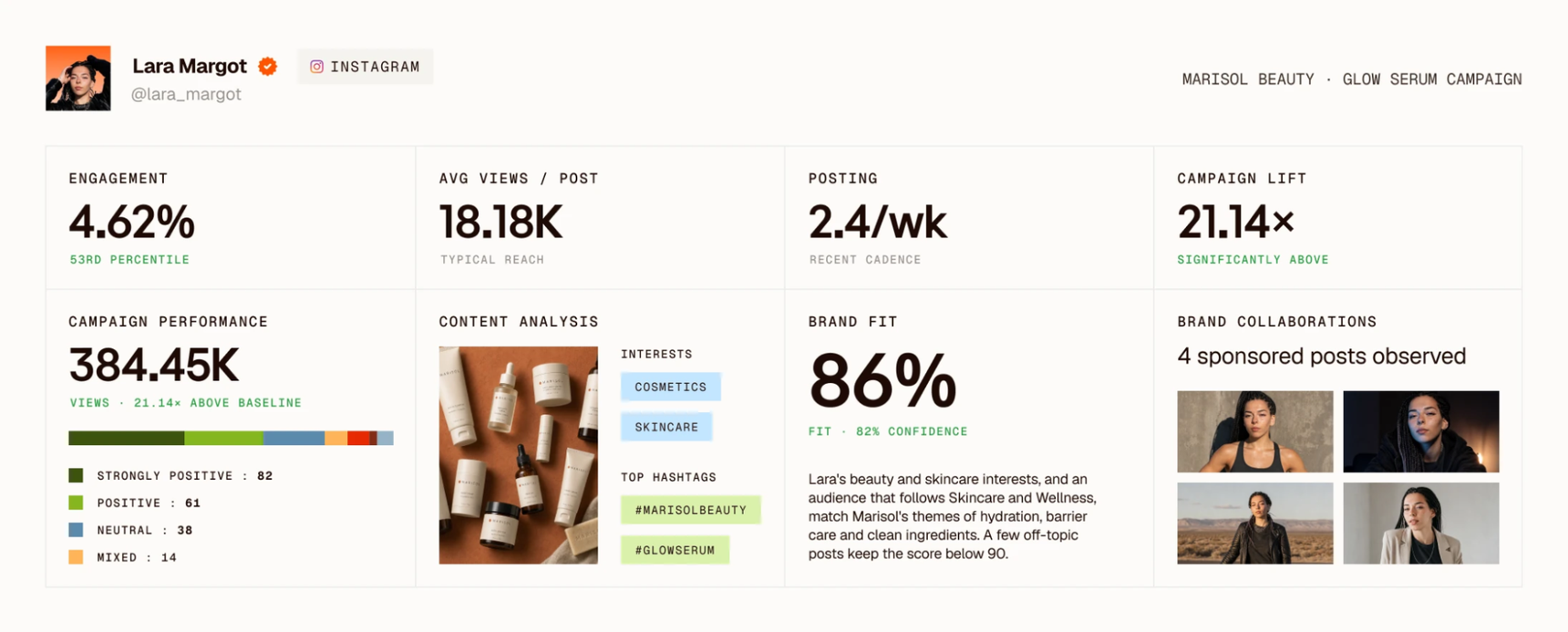
Clayface influencer discovery dashboard showing engagement rate, average views, campaign lift and brand-fit score for a micro-influencer
Campaign lift and brand fit tell you more about a micro-influencer than follower count does, via Clayface dashboard

For this creator, you can see many metrics including the engagement rate and the brand-fit score. You can also see previous sponsored posts and how the featured campaign performed compared to the creator's usual baseline.

But what I find more useful is that you can go beyond these numbers and understand what the creator actually talks about and how people respond.
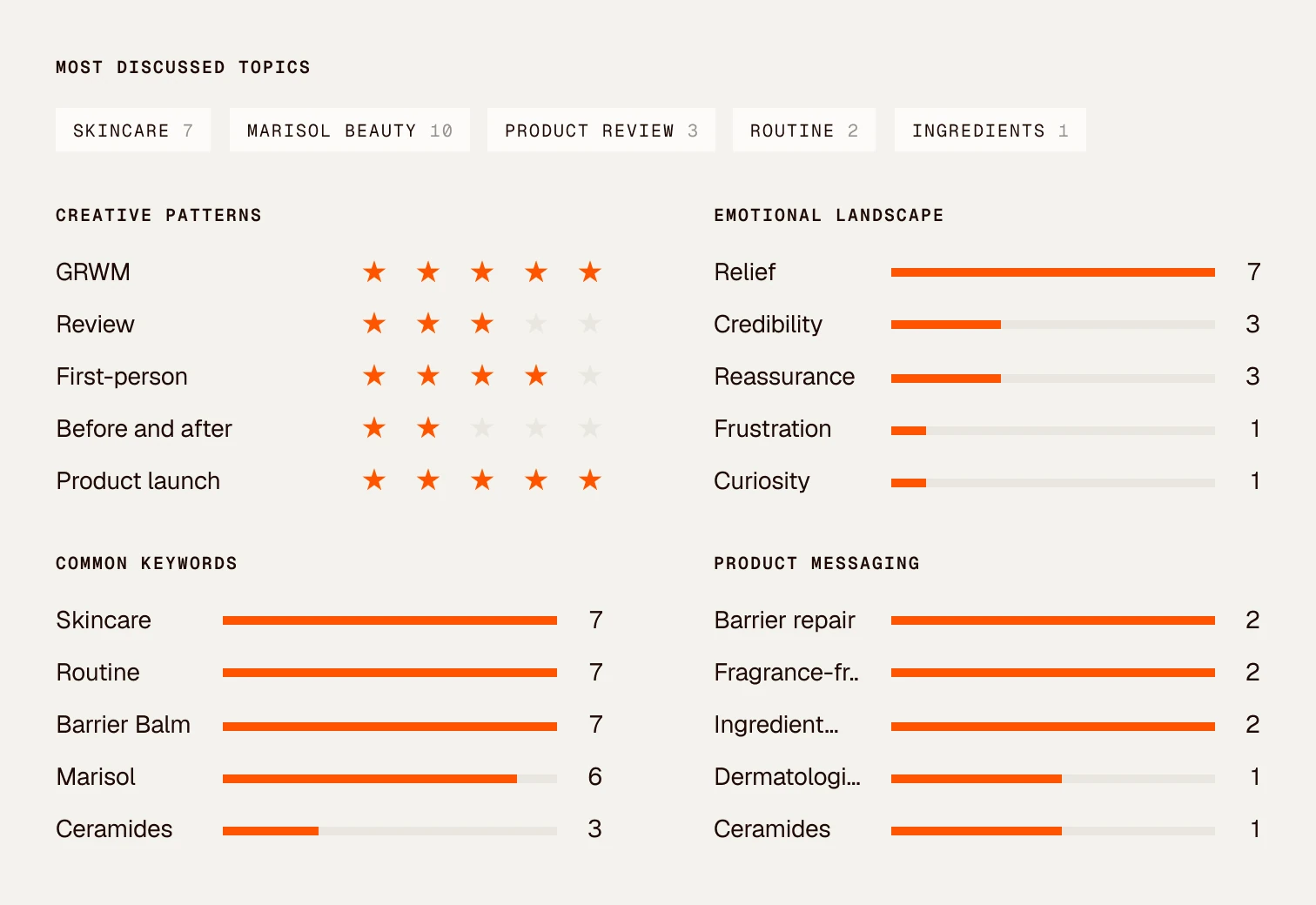
Clayface content analysis showing a creator’s most discussed topics, content formats, keywords and audience emotions
This Clayface dashboard shows what a creator actually talks about and how audiences respond

This dashboard shows which topics appeared most frequently, the creator's common keywords, content formats and the emotions associated with the content. You can see whether the content generated reassurance, curiosity or frustration rather than judging its success by views alone.

And because Clayface covers more than 25 platforms, you can explore creator activity across different social channels without having to piece together separate searches for every platform.

That wider coverage can matter when conversations happen outside the usual social feeds. One marketing lead at a leading powersports brand described their experience with Clayface:

“We named the Facebook groups on a Tuesday and had them running by Thursday. Everywhere else that has been a month-long exercise that does not always end up working.”

When does this work best?

This method works best when you're running influencer campaigns regularly, need to find creators across different markets or have reached a point where manual searches are taking too much time.

It's particularly useful for niche products where audience fit, content relevance and previous campaign performance matter more than follower count alone.

How to vet a micro-influencer before you pay

You need to cross-check everything we've discussed, including the influencer's audience, content and whether their previous collaborations actually make sense for your product.

Here's what I'd recommend checking before spending any money.

1. Check whether their audience matches your customers

A creator might live in Tokyo but have most of their audience outside Japan. It wouldn't make sense to collaborate with them if your brand only ships within Japan.

Start by checking:

  • Audience location: Where are most of their followers based? Prioritise the markets where you actually sell.
  • Age and language: Do their followers match the age groups and languages of your target customers?
  • Content interests: Are people following them for content related to your product, or for something completely different?

You can request audience analytics directly from creators or check these details through an influencer discovery platform like Clayface.

2. Look at their recent engagement

A creator with 60,000 followers might look promising, but what if their last ten videos averaged only 2,000 views? I'd recommend opening their profile and checking their last 10 posts.

Pay particular attention to comments asking about product prices, availability, recommendations or personal experiences. These are much more useful signals of purchase interest than hundreds of identical emojis.
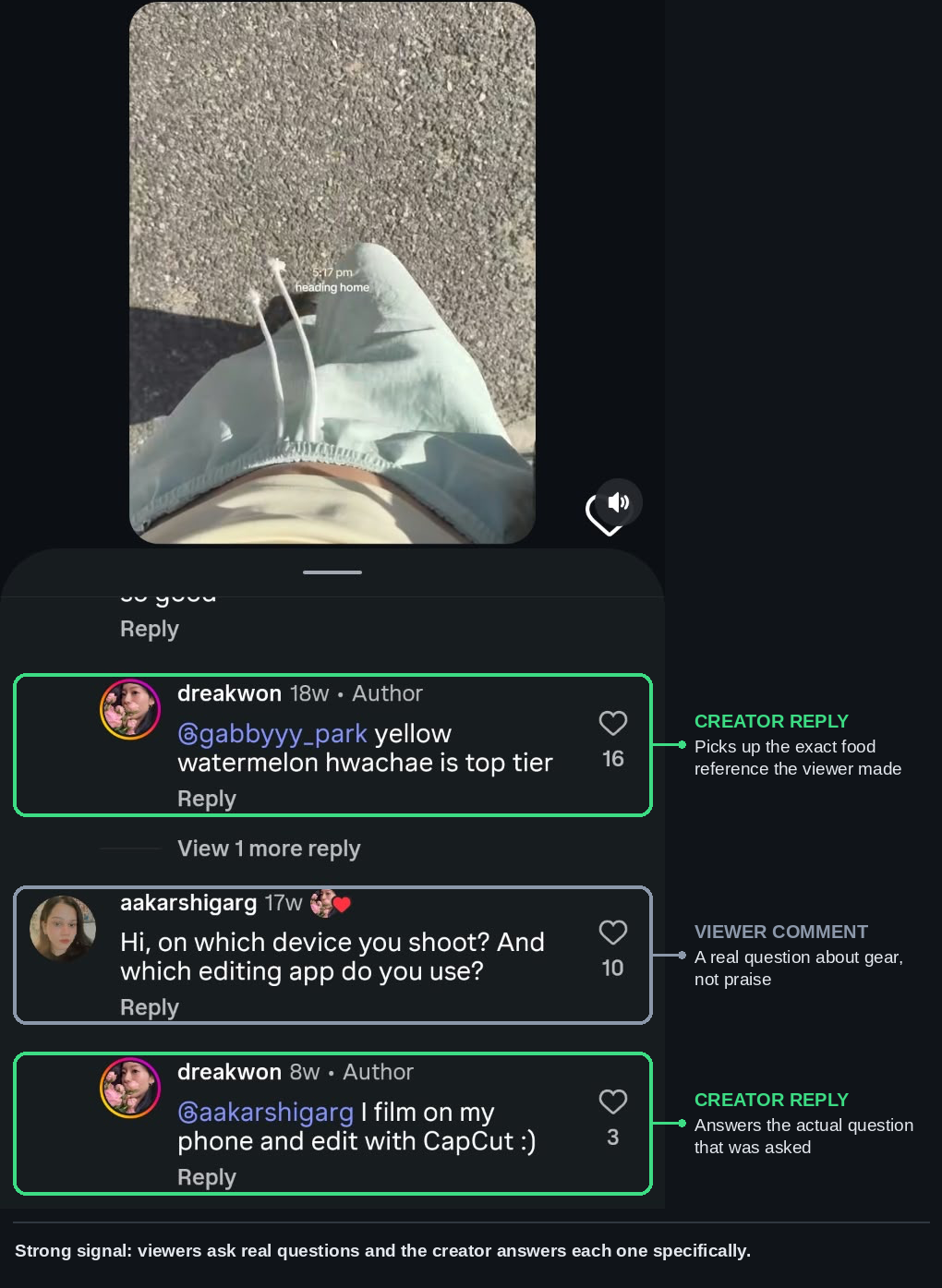
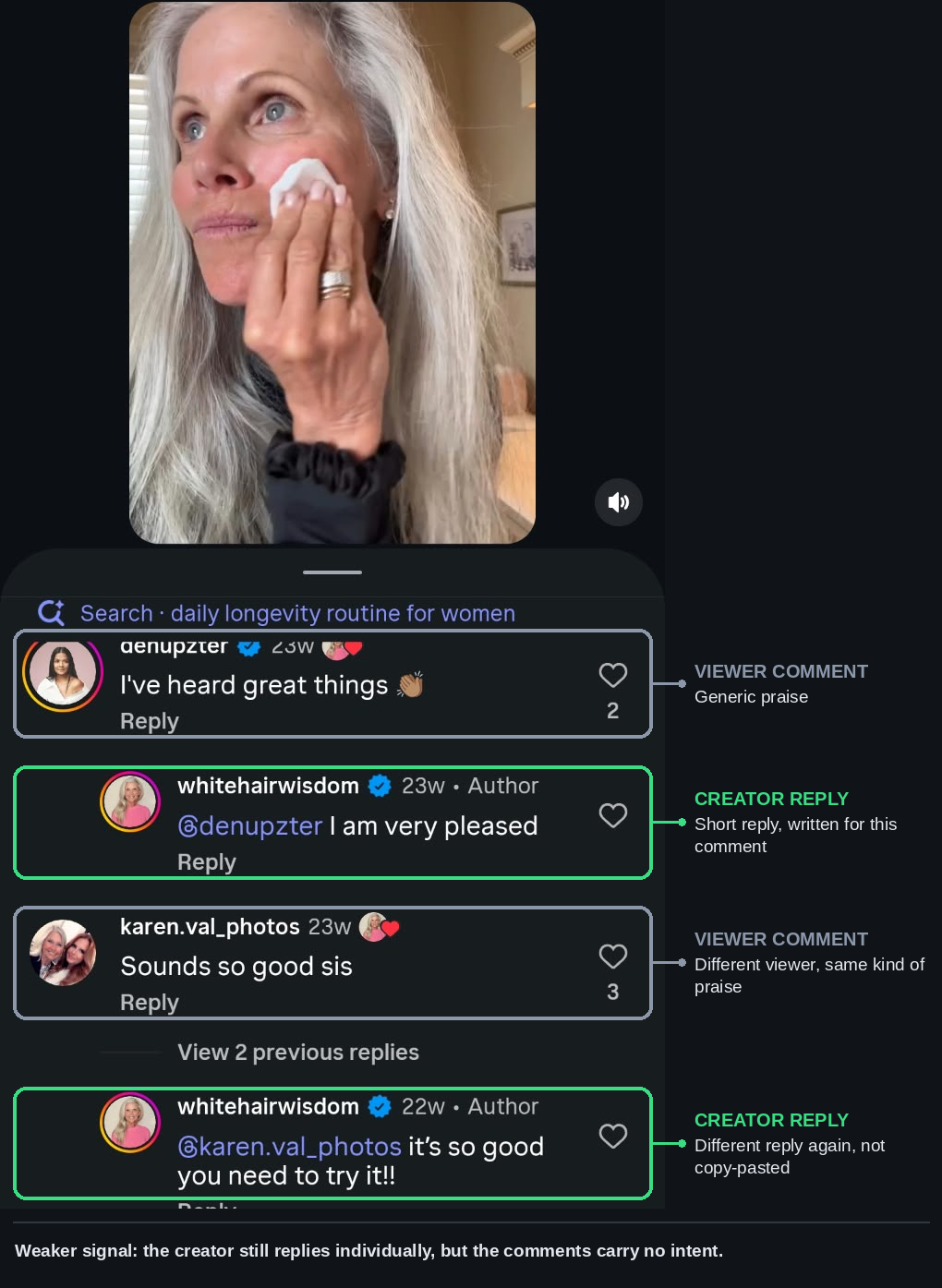
Vetting micro-influencers by comment quality: a creator answering a viewer’s specific question about filming gear
Via Instagram
Instagram comments showing generic praise and short creator replies
Via Instagram

You can automate some of this analysis with Clayface, which groups audience comments into recurring topics and identifies the emotions behind them.

Also check for unexplained follower spikes, repetitive comments and sudden changes in engagement. None of these automatically proves fraud, but they deserve a closer look.

3. Review their previous brand collaborations

This is particularly important if you're working with a niche product.

I'd recommend checking at least three things:

  • Have they recently worked with a direct competitor?
  • Do they regularly promote products that have little to do with their content?
  • Have their previous brand collaborations generated genuine audience interest?

You can go a step further by checking whether conversations about those brands increased after the creator posted. Or use Clayface to examine their previous brand collaborations, changes in brand mentions and audience sentiment following those posts.

This gives you more context than a media kit showing follower counts and total impressions. Just remember that an increase in mentions after a post doesn't automatically mean the creator caused it.

How to verify micro-influencers recommended by AI

You can also ask ChatGPT, Gemini or other AI tools to recommend micro-influencers in a specific niche. But I wouldn't recommend copying those recommendations straight into your outreach list.

A study by Sparkonomy tested five AI models against 10,000 Instagram and YouTube creator profiles. It found that 99.7% of the profiles received at least one incorrect follower count across those models.

So how do you verify an AI-generated influencer shortlist?

  1. Ask for direct profile links. Don't settle for a name or username. Open the Instagram, TikTok or YouTube profile yourself and confirm that the account exists and matches the suggested creator.
  2. Verify their follower count. Compare what AI reported against the actual profile. If you're specifically looking for micro-influencers with 10,000 to 100,000 followers, eliminate accounts outside your chosen range.
  3. Check their latest posts. Open the profile and see whether they've published anything in the last 30 days. Also verify that they're still creating content in the niche AI recommended them for.
  4. Confirm their audience demographics. A creator's bio and location don't tell you where their followers live. Request audience analytics or use a discovery platform to check their audience markets and age groups.
  5. Verify their previous partnerships. If AI claims they've worked with a particular brand, find the actual post or campaign. Don't treat an AI-generated collaboration history as evidence.

A quick micro-influencer vetting checklist

Before finalising your shortlist, use this checklist to make sure you haven't missed anything.

What to checkWhat to do before approving
Audience fitConfirm their audience's main locations, age groups and interests match your target customers.
Recent performanceReview the last 10 posts for consistent views, engagement and relevant content.
Comment qualityLook for genuine questions, conversations and signs of purchase interest.
Brand fitCheck whether their usual content and product recommendations make sense for your brand.
Competitor relationshipsReview recent sponsored posts and confirm there are no conflicting agreements.
Campaign reliabilityAgree on deliverables, deadlines, disclosure requirements and payment terms in writing.
Profile authenticityVerify the account exists, is active and has no obvious signs of manipulated engagement.

How to contact micro-influencers and get responses

I came across this Reddit discussion where a brand was struggling to get responses from micro-influencers despite offering free premium access to its product.

One of the replies was from a creator who said they preferred receiving offers through email, and charged at least $500 for a video across those platforms,

Reddit comment from a micro-influencer with 15K TikTok followers stating a $500 minimum rate per video
Via Reddit

That's an important reminder that smaller creators aren't necessarily willing to work for free. So, how do you improve your chances of getting a response?

  1. Find their preferred contact method. Check their Instagram bio, YouTube channel details or link-in-bio page for a business email. If they list a manager, contact that person instead. Use DMs when that's their preferred or only contact option.
  2. Tell them exactly why you chose them. Reference a specific video or post and explain how your product fits their content. A creator reviewing camping equipment is more likely to consider a relevant product than a generic message asking them to promote your brand.
  3. Be upfront about compensation. Mention whether you're offering a paid collaboration, free products, affiliate commissions or a combination. If you have no budget, start with nano creators who already show interest in your category. But don't assume they'll accept gifting.
  4. Make the offer easy to evaluate. Briefly explain what product you're promoting, what content you'd like, when you need it and what they'll receive. For a paid collaboration, ask for their rates or share your budget range.
  5. Follow up without spamming. If you haven't heard back after five to seven business days, send one short follow-up in the same email thread. If there's still no response, move on to another creator.

Here are four ready-to-use templates for emails, DMs and follow-ups. You can fill in the details yourself or upload your product information to ChatGPT and use the prompt below to personalise each message for the creator you're contacting.

FIRST EMAIL

Subject: Paid collaboration with [Brand Name]

Hi [Creator Name],

I came across your [specific post/video] about [topic] and particularly liked [specific detail].

I'm reaching out from [Brand Name]. We make [product and its main benefit]. Since you regularly create content about [relevant topic], I think [product] could be a good fit for your audience because [specific reason].

We're planning a paid [content format] collaboration for [month]. Would you be interested in sharing your rates?

Thanks,
[Your Name]

FIRST DM

Hey [Creator Name]! Loved your post about [specific topic], especially [specific detail]. I'm from [Brand], and we make [product] for [target customer]. I thought it could fit your [content niche] because [reason]. We're looking for a creator for a paid [content format] collaboration. Would you be interested?

FOLLOW-UP EMAIL

Subject: Re: Paid collaboration with [Brand Name]

Hi [Creator Name],

Just following up on my earlier email about [product]. I thought it could be a great fit for your content on [specific topic], particularly because [brief reason].

We'd love to discuss a paid collaboration. Let me know if you're interested, and I can share more details.

Thanks,
[Your Name]

FOLLOW-UP DM

Hey [Creator Name]! Just following up on my message about [product] from [Brand]. I think it could fit nicely with your [specific content niche]. Let me know if you'd be interested in discussing a paid collaboration!

Personalize with AI

Upload your product description, replace the fields in the prompt, and paste it into ChatGPT or any AI model.

I'm reaching out to a micro-influencer for a potential brand collaboration. I've uploaded information about my product.

Please use the product information and the creator details I provide to personalise four outreach messages: a first email, a first Instagram/TikTok DM, a follow-up email, and a follow-up DM.

Creator profile URL: [PASTE LINK]
Relevant creator post URL: [PASTE LINK]
Campaign offer (paid, gifting or affiliate): [DETAILS]
Requested content and timing: [DETAILS]
Brand name: [BRAND]

Requirements:
1. Briefly explain what the product is, its main benefit, and why it fits this creator's specific content and audience.
2. Reference one real, verifiable post or detail from the creator's content. Don't invent posts, metrics or interests. If you cannot access the links, ask me for the post details.
3. Be clear about compensation. Don't invent a fee or promise payment unless I specify it.
4. Keep emails under 120 words and DMs under 70 words. Follow-ups should be shorter and should not repeat the full pitch.
5. Write naturally, professionally and conversationally. Avoid generic compliments and exaggerated claims.
6. Return all four messages in a copyable table, ready to send, with no placeholders except any information I still need to supply.

Finding the right micro-influencers is just the beginning

You've found creators who fit your brand, vetted their audiences and launched your campaign. But that's exactly where the actual work starts and this stage is even more crucial.

You need to understand how people responded. Did the content spark genuine interest in your product? What were people saying in the comments? Did brand mentions increase, and did audience sentiment change?

These are the insights that help you figure out which creators are worth working with again and what you should do differently in your next campaign.

This is where Clayface can help you analyze audience comments, untagged mentions and conversations across social platforms to uncover recurring themes, purchase intent and changes in brand sentiment.

So, instead of judging your influencer campaign by views alone, you can understand how people actually responded to it and use that information to make better decisions the next time around.

Go beyond influencer campaign views. Track sentiment, conversations and brand lift.

Clayface analyzes audience comments, untagged mentions and conversations across social platforms to uncover recurring themes, purchase intent and changes in brand sentiment after your influencer campaign.

Start a 14-day parallel run

How to Find Micro-Influencers for Your Niche (6 Free & Paid Ways)

Learn how to find micro influencers with 6 free and paid methods. Discover niche creators, vet their audiences and measure campaign impact with Clayface.

Ross Bose
Ross Bose
October 30, 2026
Published:
October 30, 2026
Updated:
How to Find Micro-Influencers for Your Niche (6 Free & Paid Ways)

Summarize this article with AI

Table of Contents

TL;DR

  • Find micro-influencers through existing customers, niche hashtags, competitor campaigns, online communities and discovery tools like Clayface.
  • Creator fit is more important than followers. Nails.INC's micro-influencer campaign reached nearly 6 million people by targeting busy mums, DIYers and nail professionals.
  • Only 47% of creators receiving TikTok Shop samples post videos, and 14% generate sales. Set clear deliverables, compensation and deadlines before shipping.
  • Vet creators before paying. Check audience demographics, recent views, genuine comments and competitor partnerships. Clayface helps analyse creator performance and audience sentiment.
  • Measure more than views. Track purchase-intent comments, untagged mentions, sentiment shifts and attributable sales. Always verify AI-recommended creators against their live profiles.

Reports suggest that micro and nano creators are claiming almost half of influencer marketing budgets in 2026. There are literally millions of micro-influencers out there. So, naturally, brands and marketing agencies are scratching their heads, trying to figure out how to find the right micro-influencers for their brands.

But what does the right micro-influencer actually look like? Here's an example of a very successful campaign.

In 2025, Nails.INC launched It's Topless, a 4-in-1 gel manicure polish. Usually, a brand at this stage would look for beauty influencers with larger followings and higher engagement rates.

But Nails.INC worked with busy mums, DIYers, and athletes who could actually demonstrate the product's convenience.

Micro-influencer @munxmua holding Nails.INC It’s Topless nail polish bottles in a sponsored Instagram reel showcasing everyday use rather than studio-style beauty content
Via Instagram

Alongside them, they collaborated with lifestyle creators who followed trends and nail professionals who could talk about the product from experience.

Nail professional @naomikisted applying Nails.INC It’s Topless polish in a paid partnership reel, talking about the product from working experience
Via Instagram

These three creator groups were a brilliant choice. Together, they offered a holistic approach to the market, covering different audiences and use cases. Their work with micro-influencers alone ended up generating almost 6 million in reach.

But take note of how selective they were. Every creator needed at least a 3% engagement rate, no heavily edited imagery, and a history of producing authentic, brand-safe content. All this just to narrow down the search and avoid the wrong.

What does picking the wrong micro-influencer actually cost your brand?

Why would Asset, a D2C body care brand, look for comedy and LGBTQ+ creators instead of focusing only on beauty, wellness and lifestyle influencers?

Well, Asset sells products for butt health and hygiene, a category many people aren't comfortable discussing publicly. Founder Chad O'Connell said that this made finding the right creators for marketing collaborations difficult.

The brand would be spending money on influencer partnerships without knowing what the return would look like.

Interestingly, some of their most successful collaborations came from unexpected places. Such as, a comedian posted an unboxing video that reached over 3.4 million views.

Comedy creator @ulyandernesto unboxing Asset body care products in a reel with 329.9K likes
Via Instagram

That's the reality of finding micro-influencers for a niche brand. When brands send product samples to TikTok Shop creators, only 47% actually post a video, and just 14% generate any sales.

Here are four ways a bad micro-influencer pick can drain your budget:

  • You pay for samples that never get posted
  • You pay creators whose audiences won't buy your product
  • Your team spends weeks vetting the wrong creators
  • You miss better creators while chasing the wrong ones

Worked out math example: Say you seed 50 creators at $300 each, plus $25 product and shipping per creator.

  • Total committed: $16,250
  • 53% never post: $8,613 produces nothing at all
  • Of the 24 who do post, 86% drive no sales: roughly 20 more creators, another $6,500
  • Creators who actually move product: about 3
  • Cost per productive creator: around $5,400 on a $16,250 spend

Remember, time and effort cost money too.

6 ways to find micro-influencers for your brand

Here are six ways to find creators who actually fit your product and audience, from searching your existing customers and niche communities to using influencer discovery platforms:

How to find micro-influencersWhen does this work best?
1. Customers and followersCheck tagged posts and story mentions from the last 90 days. Cross-reference customer social handles and look for creators mentioned in post-purchase surveysWhen you already have customers posting organically about your products
2. Niche hashtags and keywordsReplace broad tags like #skincare with specific ones like #acnetreatmentserum. Search phrases customers use, and check newer posts to discover smaller creatorsWhen you're starting from scratch or targeting a very specific product category
3. Instagram, TikTok and YouTubeExplore Instagram's Similar Accounts, filter creators through TikTok One Creator Marketplace, and use YouTube's Channels filter to find niche reviewersWhen you want to discover active creators without paying for a database
4. Competitor collaborationsCheck competitors' tagged posts, campaign hashtags, sponsored content and TikTok Shop affiliates. Look for creators who have only worked with rivals onceWhen entering an established market where competitors have already run influencer campaigns
5. Online communitiesExplore r/UGCcreators for portfolios and rates, niche subreddits for active contributors, and relevant Facebook Groups, Discord servers and LinkedIn communitiesWhen you need creators with niche knowledge or those actively looking for collaborations
6. Influencer discovery platformsUse tools like Clayface to filter by audience location, age, interests and previous brand partnerships. This helps you find creators whose followers actually match your target customers. Clayface makes it easier to narrow down millions of profiles using these filters, while also searching spoken audio and visible products to find creators missed by caption searches.When you need to shortlist 100+ creators, work across markets or identify untagged product mentions

1. Find micro-influencers among your customers and followers

Someone has already bought your product, liked it enough to post about it, and maybe even tagged your brand. All without you asking or paying them.

Isn't that a pretty good place to start looking for micro-influencers?

You can find these creators by checking:

  • Go through your Instagram or TikTok followers and look for accounts with 10,000 to 100,000 followers.
  • Check your tagged posts and story mentions from the last 90 days.
  • Search branded hashtags, including common misspellings of your brand name.
  • Check your customer database for social media handles.
  • Look through post-purchase survey responses, especially answers to "How did you hear about us?"

That last one is important since customers might mention a specific creator who introduced them to your product. Now you have a potential influencer to work with, along with evidence that their content has already influenced a purchase.

When does this work best?

This method works best for brands that already have an existing customer base and some organic conversations happening around their products.

Urban Outfitters is a good example. Its ME@UO program recruits creators from its own customer base rather than relying entirely on finding influencers elsewhere.

How to find micro-influencers among existing customers: @kinimickclement posting Urban Outfitters content tagged #UOpartner
Via Instagram
Urban Outfitters Instagram post featuring ME@UO creator @kinimickclement wearing BDG jeans
Via Instagram

American Eagle, Express, Home Depot, Lowe's and Sephora have also built ongoing creator and affiliate programs instead of relying solely on one-off influencer campaigns.

What's particularly interesting is that Urban Outfitters also plans to use feedback from these creators to inform future product releases and seasonal collections.

Are you catching video mentions where your brand is never tagged or named?

A vehicle brand told us their old tool missed most of their TikTok posts because creators never mentioned the brand in captions. Clayface analyzes spoken audio, on-screen text, and products shown in the video.

Start a 14-day parallel run

2. Search niche hashtags and keywords

One of the easiest ways to find micro-influencers is through Instagram and TikTok hashtags. But the trick is to search for something more specific than your general product category.

For example, I searched for #skincare on Instagram and found over 153 million posts. That's a massive pool of content to go through, and most of it might not even be relevant to my product.

Instagram #skincare hashtag results with over 153 million posts, too broad to find micro-influencers in
Searching a broad hashtag like #skincare returns 153 million posts, most of them irrelevant to any one product

But when I narrowed my search to #acnetreatmentserum, I found just over 1,000 posts. Now that's a much more manageable pool of creators who are actually talking about the kind of product I'm interested in.

Instagram #acnetreatmentserum results with around 1,000 posts, a narrow hashtag for finding micro-influencers
Narrowing to #acnetreatmentserum drops the pool to around 1,000 posts from creators actually discussing the product type

You can do the same for almost any niche:

  • Fitness: Instead of #fitness, try #apartmentgym, #postpartumfitness or #liftingover40.
  • Skincare: Instead of #skincare, try #acnejourney, #sensitiveskincare or #retinolbeginner.
  • Food: Instead of #food, try #mealprepforbeginners, #budgetcooking or #glutenfreebaking.
  • Home decor: Instead of #homedecor, try #rentalfriendly, #smallspaceliving or #firstapartment.

And don't limit yourself to hashtags. Try searching for phrases your potential customers would actually use, like "best serum for acne-prone skin" or "honest review of acne serums."

You can also do this on YouTube by searching for product reviews, long-term experiences and comparisons. These searches can help you find creators whose audiences are already interested in the problems your product solves.

One more thing I'd recommend is looking beyond the most popular posts. Check newer posts too. That's where you might find smaller creators who are actively talking about your niche but haven't yet attracted dozens of brand partnerships.

When does this work best?

This method works best when you're just starting your influencer search and don't have an existing list of creators.

It costs nothing, works even if nobody has mentioned your brand before, and helps you discover how people actually talk about your product category.

Bonus: You might even come across customer problems, product questions and niche communities you hadn't considered targeting before.

3. Use Instagram, TikTok and YouTube creator discovery

According to Modern Retail, 70% of surveyed TikTok Shop consumers had purchased a product recommended by a creator.

That's a pretty good reason to look for creators directly on Instagram, TikTok and YouTube where people are discovering and buying products. Here's how to go about it for each platform.

Instagram

  • Similar accounts: Find a creator who fits your niche, open their profile and look for suggested accounts. For example, if you're selling camping equipment, start with a creator who regularly posts hiking and camping content, then explore similar profiles.
Instagram Suggested for you panel used to find micro-influencers similar to an outdoor creator with 48.6K followers
Via Instagram
  • Location search: Search cities, neighbourhoods or specific locations to find creators posting from those places. This is particularly useful for regional businesses, restaurants and local campaigns.
  • Reels: Explore Reels related to your niche and check who's consistently creating relevant videos. Don't just look at the most popular creators.

TikTok

  • TikTok One Creator Marketplace: Use the creator search filters to narrow your results by follower count, location, audience demographics and engagement rate. You can also search for creators making content about a specific category, like gaming accessories or pet products.
TikTok Creator Marketplace filters for creator country, audience country, followers, average views and engagement rate
Via TikTok
  • Creator Search Insights: Search for topics people are interested in and identify content gaps. For example, if you're selling pet accessories, you might discover people searching for solutions to common pet problems and then look for creators discussing those topics.
TikTok Creator Search Insights showing trending search topics and content gaps by category
Via TikTok
  • Trending sounds: Open sounds that keep appearing in your niche and explore the creators using them. This can introduce you to smaller creators you wouldn't necessarily find through hashtags.

YouTube

  • Search for phrases like "best budget camping gear," "mechanical keyboard review" or "automatic pet feeder after 6 months."
  • Use the Channels filter to find creators publishing content around those topics instead of scrolling through individual videos.
  • You can also explore other filters to find creators that have posted recently and in a style that you prefer.
YouTube Channels filter used to find micro-influencers reviewing mechanical keyboards
Via YouTube
  • When you find a relevant creator, check the recommended videos to discover other channels covering similar products.

When does this work best?

This method works well when you want to build a creator shortlist without investing in a paid tool. One advantage of searching directly on these platforms is that you can discover people who have only recently started gaining attention in your niche.

But there's a limitation worth knowing. These tools can help you find creators based on their content, audience and engagement. They don't necessarily tell you whether those creators have actually influenced purchases or changed how people feel about a product.

This is where Clayface can help you dig deeper. Instead of relying on likes and engagement alone, it analyzes what creators actually say and show in their videos, including spoken audio, on-screen text and audience comments.

Clayface dashboard showing brand conversations, sentiment shift over time and engagement across social platforms
Clayface tracks whether conversation and sentiment moved after creator content went live, with every figure linked to the original posts

In the dashboard image above, you can see how people respond to brand content, whether those conversations are shaping positive or negative brand sentiment, and how the sentiment is changing over time. Also, every single metric is tied to real post links that you can open and check.

4. Find creators already working with your competitors

Your competitors have probably already spent time finding, vetting and working with creators who reach the same audience you're trying to target. So why not use their influencer campaigns as a starting point for your own search?

And just because a creator has worked with your competitor doesn't mean they're unavailable.

According to the 2026 Brand Deals Report, which analysed over 316,000 sponsored posts, 69% of Instagram, 72% of TikTok and 49% of YouTube brand collaborations were one-offs.

That's a lot of creators who have worked with a brand once but may still be open to other partnerships.

Here's where you can find them:

  • Competitors' tagged posts: Visit their Instagram profiles and check the Tagged tab to see which creators have featured their products.
  • Branded hashtags: Search your competitors' campaign hashtags to find creators who have participated in their promotions.
  • Sponsored content: Look for paid partnership labels, #ad and #sponsored posts mentioning your competitors. These help you identify creators who have already worked on brand campaigns.
  • TikTok Shop affiliates: If your competitors sell through TikTok Shop, look for creators promoting their products through affiliate videos.
  • Creators your competitors haven't worked with: While exploring these accounts, look for similar creators who fit your niche but haven't promoted competing products yet.

Of course, check whether they have any active exclusivity agreements before approaching them.

When does this work best?

This method works particularly well when you're entering an established category and already know who your biggest competitors are.

It can also help you understand what kind of creators other brands are investing in and how they present their products.

5. Find micro-influencers in online communities

Many micro-influencers are also active in Reddit communities, Facebook Groups, Discord servers and LinkedIn, where they discuss brand collaborations, share portfolios and look for opportunities.

In fact, I came across a Reddit post where a UGC creator shared how they landed their first paid brand deal simply by reaching out to a brand manager they found in a subreddit.

Reddit post in r/UGCSideHustle from a UGC creator who landed a first brand deal by DMing a brand manager
Via Reddit

So these communities are worth exploring when you're looking for smaller creators who might be open to working with your brand.

Here's where you can start:

Reddit

  • r/UGCcreators: Look for creators discussing their rates, sharing portfolios and asking questions about brand collaborations.
  • r/influencermarketing: You'll find discussions from both brands and creators about sponsorships, pricing and finding collaborations.
  • r/InstagramMarketing: Look for smaller Instagram creators sharing their experiences with brand deals and growing their accounts.
  • Niche subreddits: Explore communities like r/MechanicalKeyboards, r/Coffee or r/CampingGear. Check whether regular contributors also create content on Instagram, TikTok or YouTube.

Facebook Groups

Search for terms like "UGC creators UK," "fitness content creators" or "food bloggers India." Many groups have creators sharing their portfolios and looking for collaborations. Check the group rules before posting an opportunity.

Discord

Look for communities around gaming, technology, photography or other specialised interests. These can be useful for finding creators who genuinely understand your niche, although you'll often need to spend some time participating before reaching out.

LinkedIn

Try searching for professionals who regularly share educational content in your category. For example, a mechanic who posts car maintenance videos or a dietitian who shares nutrition advice could be a good fit for a relevant product, even without a huge following.

When does this work best?

This method works particularly well when your product serves a specific community or when you need creators who genuinely understand the subject they're talking about.

One thing I'd be careful about: Reddit communities often have strict rules around self-promotion. Read those rules first, participate in relevant discussions and reach out to creators through their publicly listed business contacts when appropriate.

6. Use influencer discovery platforms

When you're trying to find over 100 creators across multiple markets, manually checking hashtags and individual profiles can take up a lot of your team's time.

That's when you need influencer discovery platforms.

Most of these tools claim to have millions of creator profiles in their databases. Even Clayface has over 475 million creator profiles and covers 25+ social media platforms in one place.

But I'd argue that the number of profiles matters far less than how accurately you can narrow them down to creators who actually fit your brand.

What should you look for in an influencer discovery tool?

  • Audience location: Look at where the creator's followers are based, because that's who you're reaching out to. Clayface lets you filter by audience markets, which is particularly useful when you're targeting specific countries or regions.
  • Audience demographics: Check the age groups and interests of the people watching. Clayface lets you narrow down creators based on these audience characteristics rather than relying only on the creator's profile.
  • Average views and engagement: Don't rely entirely on follower count. Check how many people are actually watching and interacting with their recent content.
  • Posting frequency: Make sure the creator is actively publishing relevant content. Clayface shows posting frequency alongside average views and engagement.
  • Previous brand collaborations: Check which brands they've worked with, whether they've promoted competitors and how audiences responded to those partnerships.

Look at this Clayface dashboard below.

Clayface influencer discovery dashboard showing engagement rate, average views, campaign lift and brand-fit score for a micro-influencer
Campaign lift and brand fit tell you more about a micro-influencer than follower count does, via Clayface dashboard

For this creator, you can see many metrics including the engagement rate and the brand-fit score. You can also see previous sponsored posts and how the featured campaign performed compared to the creator's usual baseline.

But what I find more useful is that you can go beyond these numbers and understand what the creator actually talks about and how people respond.

Clayface content analysis showing a creator’s most discussed topics, content formats, keywords and audience emotions
This Clayface dashboard shows what a creator actually talks about and how audiences respond

This dashboard shows which topics appeared most frequently, the creator's common keywords, content formats and the emotions associated with the content. You can see whether the content generated reassurance, curiosity or frustration rather than judging its success by views alone.

And because Clayface covers more than 25 platforms, you can explore creator activity across different social channels without having to piece together separate searches for every platform.

That wider coverage can matter when conversations happen outside the usual social feeds. One marketing lead at a leading powersports brand described their experience with Clayface:

“We named the Facebook groups on a Tuesday and had them running by Thursday. Everywhere else that has been a month-long exercise that does not always end up working.”

When does this work best?

This method works best when you're running influencer campaigns regularly, need to find creators across different markets or have reached a point where manual searches are taking too much time.

It's particularly useful for niche products where audience fit, content relevance and previous campaign performance matter more than follower count alone.

How to vet a micro-influencer before you pay

You need to cross-check everything we've discussed, including the influencer's audience, content and whether their previous collaborations actually make sense for your product.

Here's what I'd recommend checking before spending any money.

1. Check whether their audience matches your customers

A creator might live in Tokyo but have most of their audience outside Japan. It wouldn't make sense to collaborate with them if your brand only ships within Japan.

Start by checking:

  • Audience location: Where are most of their followers based? Prioritise the markets where you actually sell.
  • Age and language: Do their followers match the age groups and languages of your target customers?
  • Content interests: Are people following them for content related to your product, or for something completely different?

You can request audience analytics directly from creators or check these details through an influencer discovery platform like Clayface.

2. Look at their recent engagement

A creator with 60,000 followers might look promising, but what if their last ten videos averaged only 2,000 views? I'd recommend opening their profile and checking their last 10 posts.

Pay particular attention to comments asking about product prices, availability, recommendations or personal experiences. These are much more useful signals of purchase interest than hundreds of identical emojis.

Vetting micro-influencers by comment quality: a creator answering a viewer’s specific question about filming gear
Via Instagram
Instagram comments showing generic praise and short creator replies
Via Instagram

You can automate some of this analysis with Clayface, which groups audience comments into recurring topics and identifies the emotions behind them.

Also check for unexplained follower spikes, repetitive comments and sudden changes in engagement. None of these automatically proves fraud, but they deserve a closer look.

3. Review their previous brand collaborations

This is particularly important if you're working with a niche product.

I'd recommend checking at least three things:

  • Have they recently worked with a direct competitor?
  • Do they regularly promote products that have little to do with their content?
  • Have their previous brand collaborations generated genuine audience interest?

You can go a step further by checking whether conversations about those brands increased after the creator posted. Or use Clayface to examine their previous brand collaborations, changes in brand mentions and audience sentiment following those posts.

This gives you more context than a media kit showing follower counts and total impressions. Just remember that an increase in mentions after a post doesn't automatically mean the creator caused it.

How to verify micro-influencers recommended by AI

You can also ask ChatGPT, Gemini or other AI tools to recommend micro-influencers in a specific niche. But I wouldn't recommend copying those recommendations straight into your outreach list.

A study by Sparkonomy tested five AI models against 10,000 Instagram and YouTube creator profiles. It found that 99.7% of the profiles received at least one incorrect follower count across those models.

So how do you verify an AI-generated influencer shortlist?

  1. Ask for direct profile links. Don't settle for a name or username. Open the Instagram, TikTok or YouTube profile yourself and confirm that the account exists and matches the suggested creator.
  2. Verify their follower count. Compare what AI reported against the actual profile. If you're specifically looking for micro-influencers with 10,000 to 100,000 followers, eliminate accounts outside your chosen range.
  3. Check their latest posts. Open the profile and see whether they've published anything in the last 30 days. Also verify that they're still creating content in the niche AI recommended them for.
  4. Confirm their audience demographics. A creator's bio and location don't tell you where their followers live. Request audience analytics or use a discovery platform to check their audience markets and age groups.
  5. Verify their previous partnerships. If AI claims they've worked with a particular brand, find the actual post or campaign. Don't treat an AI-generated collaboration history as evidence.

A quick micro-influencer vetting checklist

Before finalising your shortlist, use this checklist to make sure you haven't missed anything.

What to checkWhat to do before approving
Audience fitConfirm their audience's main locations, age groups and interests match your target customers.
Recent performanceReview the last 10 posts for consistent views, engagement and relevant content.
Comment qualityLook for genuine questions, conversations and signs of purchase interest.
Brand fitCheck whether their usual content and product recommendations make sense for your brand.
Competitor relationshipsReview recent sponsored posts and confirm there are no conflicting agreements.
Campaign reliabilityAgree on deliverables, deadlines, disclosure requirements and payment terms in writing.
Profile authenticityVerify the account exists, is active and has no obvious signs of manipulated engagement.

How to contact micro-influencers and get responses

I came across this Reddit discussion where a brand was struggling to get responses from micro-influencers despite offering free premium access to its product.

One of the replies was from a creator who said they preferred receiving offers through email, and charged at least $500 for a video across those platforms,

Reddit comment from a micro-influencer with 15K TikTok followers stating a $500 minimum rate per video
Via Reddit

That's an important reminder that smaller creators aren't necessarily willing to work for free. So, how do you improve your chances of getting a response?

  1. Find their preferred contact method. Check their Instagram bio, YouTube channel details or link-in-bio page for a business email. If they list a manager, contact that person instead. Use DMs when that's their preferred or only contact option.
  2. Tell them exactly why you chose them. Reference a specific video or post and explain how your product fits their content. A creator reviewing camping equipment is more likely to consider a relevant product than a generic message asking them to promote your brand.
  3. Be upfront about compensation. Mention whether you're offering a paid collaboration, free products, affiliate commissions or a combination. If you have no budget, start with nano creators who already show interest in your category. But don't assume they'll accept gifting.
  4. Make the offer easy to evaluate. Briefly explain what product you're promoting, what content you'd like, when you need it and what they'll receive. For a paid collaboration, ask for their rates or share your budget range.
  5. Follow up without spamming. If you haven't heard back after five to seven business days, send one short follow-up in the same email thread. If there's still no response, move on to another creator.

Here are four ready-to-use templates for emails, DMs and follow-ups. You can fill in the details yourself or upload your product information to ChatGPT and use the prompt below to personalise each message for the creator you're contacting.

FIRST EMAIL

Subject: Paid collaboration with [Brand Name]

Hi [Creator Name],

I came across your [specific post/video] about [topic] and particularly liked [specific detail].

I'm reaching out from [Brand Name]. We make [product and its main benefit]. Since you regularly create content about [relevant topic], I think [product] could be a good fit for your audience because [specific reason].

We're planning a paid [content format] collaboration for [month]. Would you be interested in sharing your rates?

Thanks,
[Your Name]

FIRST DM

Hey [Creator Name]! Loved your post about [specific topic], especially [specific detail]. I'm from [Brand], and we make [product] for [target customer]. I thought it could fit your [content niche] because [reason]. We're looking for a creator for a paid [content format] collaboration. Would you be interested?

FOLLOW-UP EMAIL

Subject: Re: Paid collaboration with [Brand Name]

Hi [Creator Name],

Just following up on my earlier email about [product]. I thought it could be a great fit for your content on [specific topic], particularly because [brief reason].

We'd love to discuss a paid collaboration. Let me know if you're interested, and I can share more details.

Thanks,
[Your Name]

FOLLOW-UP DM

Hey [Creator Name]! Just following up on my message about [product] from [Brand]. I think it could fit nicely with your [specific content niche]. Let me know if you'd be interested in discussing a paid collaboration!

Personalize with AI

Upload your product description, replace the fields in the prompt, and paste it into ChatGPT or any AI model.

I'm reaching out to a micro-influencer for a potential brand collaboration. I've uploaded information about my product.

Please use the product information and the creator details I provide to personalise four outreach messages: a first email, a first Instagram/TikTok DM, a follow-up email, and a follow-up DM.

Creator profile URL: [PASTE LINK]
Relevant creator post URL: [PASTE LINK]
Campaign offer (paid, gifting or affiliate): [DETAILS]
Requested content and timing: [DETAILS]
Brand name: [BRAND]

Requirements:
1. Briefly explain what the product is, its main benefit, and why it fits this creator's specific content and audience.
2. Reference one real, verifiable post or detail from the creator's content. Don't invent posts, metrics or interests. If you cannot access the links, ask me for the post details.
3. Be clear about compensation. Don't invent a fee or promise payment unless I specify it.
4. Keep emails under 120 words and DMs under 70 words. Follow-ups should be shorter and should not repeat the full pitch.
5. Write naturally, professionally and conversationally. Avoid generic compliments and exaggerated claims.
6. Return all four messages in a copyable table, ready to send, with no placeholders except any information I still need to supply.

Finding the right micro-influencers is just the beginning

You've found creators who fit your brand, vetted their audiences and launched your campaign. But that's exactly where the actual work starts and this stage is even more crucial.

You need to understand how people responded. Did the content spark genuine interest in your product? What were people saying in the comments? Did brand mentions increase, and did audience sentiment change?

These are the insights that help you figure out which creators are worth working with again and what you should do differently in your next campaign.

This is where Clayface can help you analyze audience comments, untagged mentions and conversations across social platforms to uncover recurring themes, purchase intent and changes in brand sentiment.

So, instead of judging your influencer campaign by views alone, you can understand how people actually responded to it and use that information to make better decisions the next time around.

Go beyond influencer campaign views. Track sentiment, conversations and brand lift.

Clayface analyzes audience comments, untagged mentions and conversations across social platforms to uncover recurring themes, purchase intent and changes in brand sentiment after your influencer campaign.

Start a 14-day parallel run

Frequently asked questions

How much should brands budget for micro-influencer collaborations in 2026?

Micro-influencers typically charge $100 to $2,000 or more per deliverable, depending on the platform, content format and audience. According to Influencer Marketing Hub, Instagram posts commonly cost $100 to $500, while TikTok videos range from $200 to $800. Remember to budget separately for shipping, content licensing and paid amplification.

What is a good engagement rate for a micro-influencer in 2026?

An engagement rate of 2% to 3% is a useful starting point, while 5% is generally considered strong, according to Neil Patel. However, benchmarks vary by platform and niche. Compare the creator's last 10 posts and look for genuine comments, shares and product questions.

How do you find local micro-influencers for a regional brand?

Search location-specific hashtags, Instagram and TikTok posts, and creators regularly featuring local businesses or events. For example, a Manchester coffee brand could search for local café reviewers and food creators. Always check where their audience lives, since a creator based in Manchester may have most of their followers elsewhere.

How many micro-influencers should a small brand use for its first campaign?

Starting with 5 to 10 micro-influencers is a reasonable approach for testing different audiences without committing your entire budget to one creator. NP Digital recommends this for campaigns under $25,000. Track each creator's engagement, audience response and conversions before scaling.

How can brands identify fake followers before hiring a micro-influencer?

Look for sudden follower spikes, repetitive comments, inconsistent engagement and suspicious audience demographics. Review their last 10 to 15 posts and request audience analytics if necessary. These signals don't automatically prove fake followers, but multiple warning signs should prompt further investigation before paying.