Digital shelf monitoring that explains why your ratings move
Watch how your products are doing on Amazon, on retailer sites and on your own store, then find out what is behind a change. Clayface goes through the words in every review, not just the star counts, and connects them to what people are saying about the product elsewhere.












What to watch on the digital shelf
Reviews
What your reviews actually say
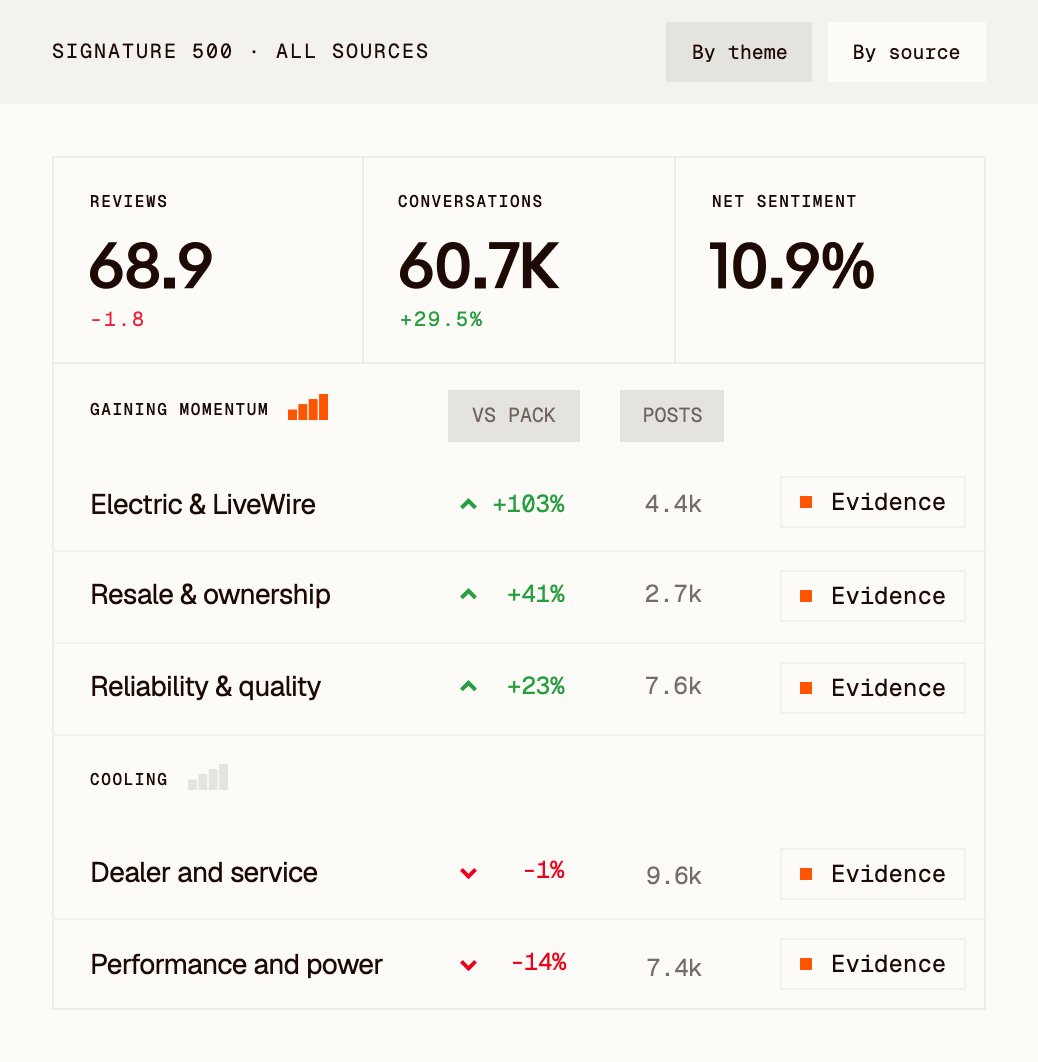
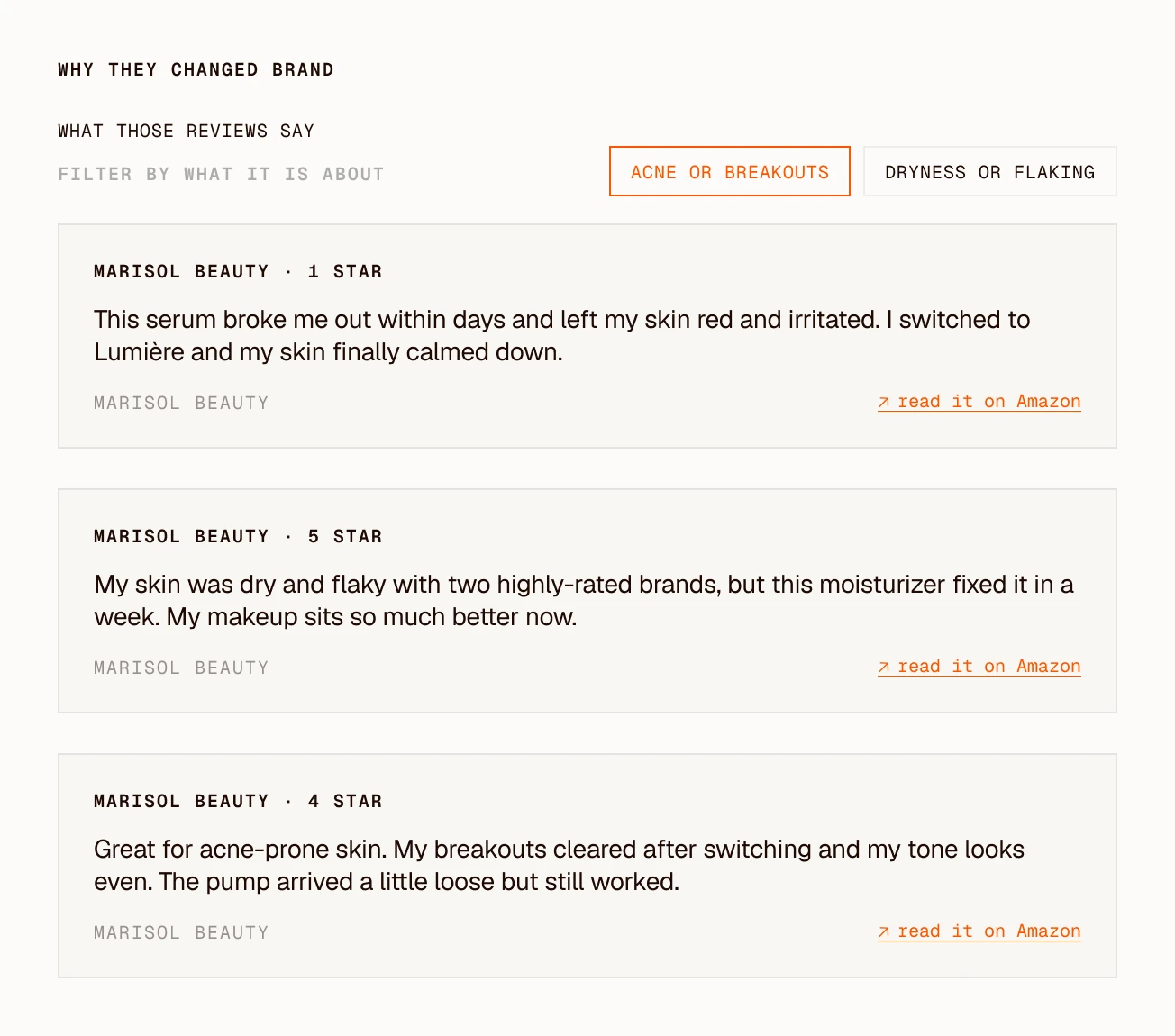
A star rating tells you something is wrong but not what. See the subjects people raise in the review text, how often each comes up and which product each one belongs to.
Search position
Where your products land when someone searches
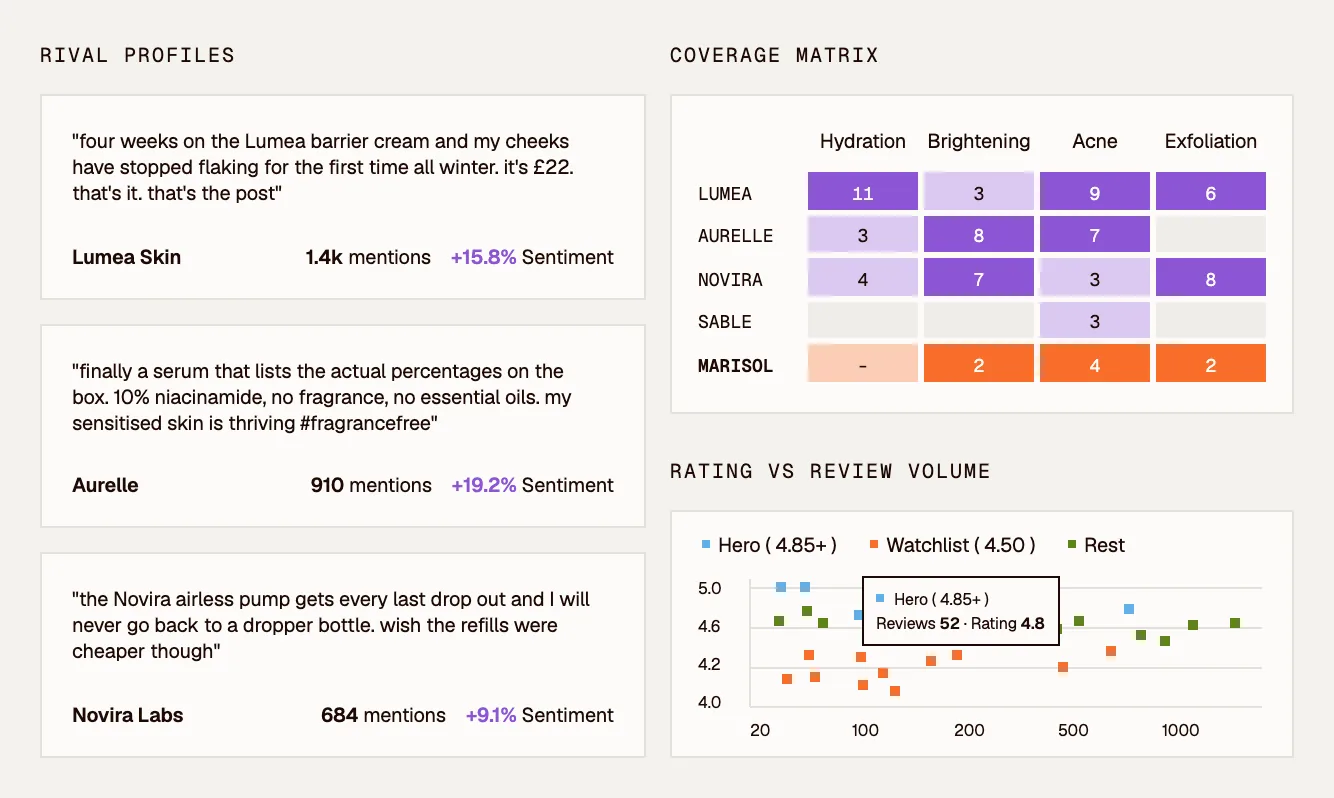
Most shoppers never scroll past the first few results. See where each of your products sits for the searches that matter and which rivals sit above it.
Off the shelf
What people say about the product elsewhere
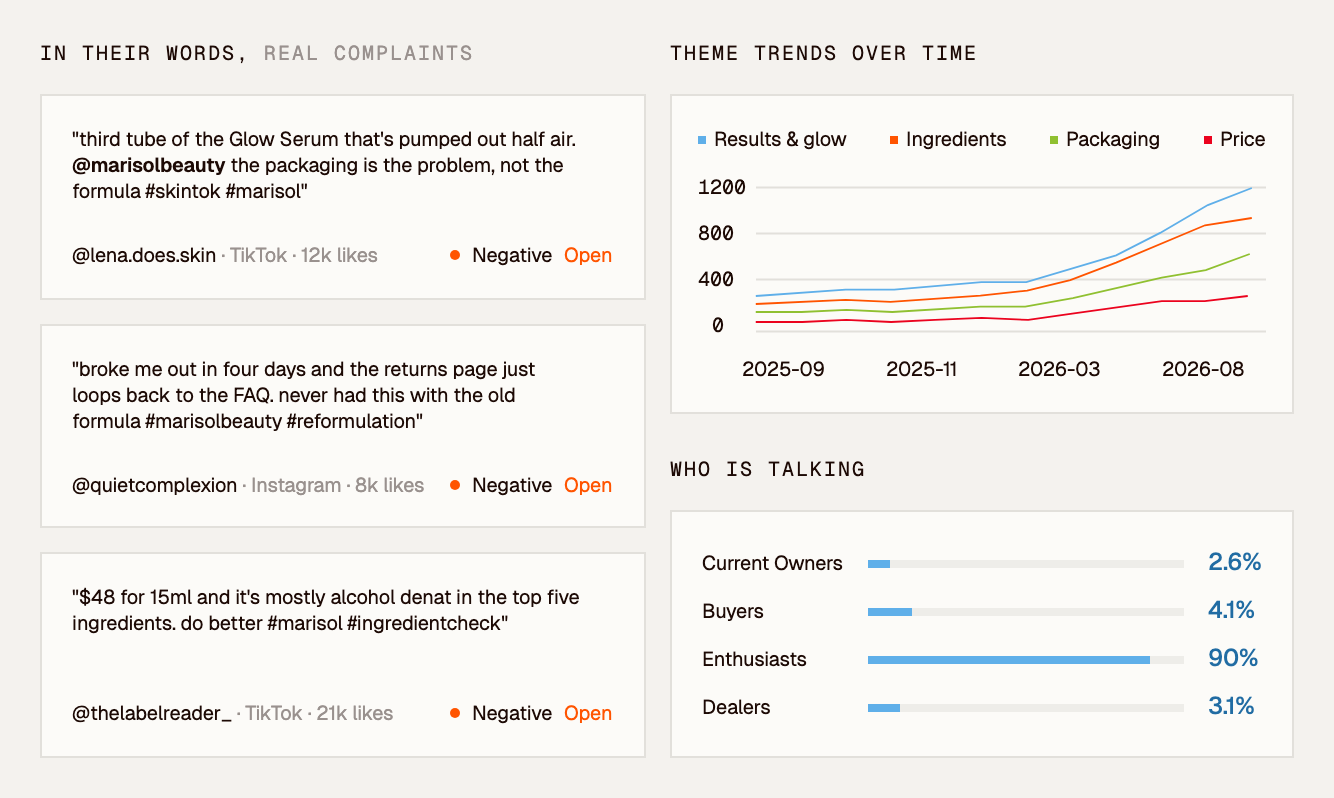
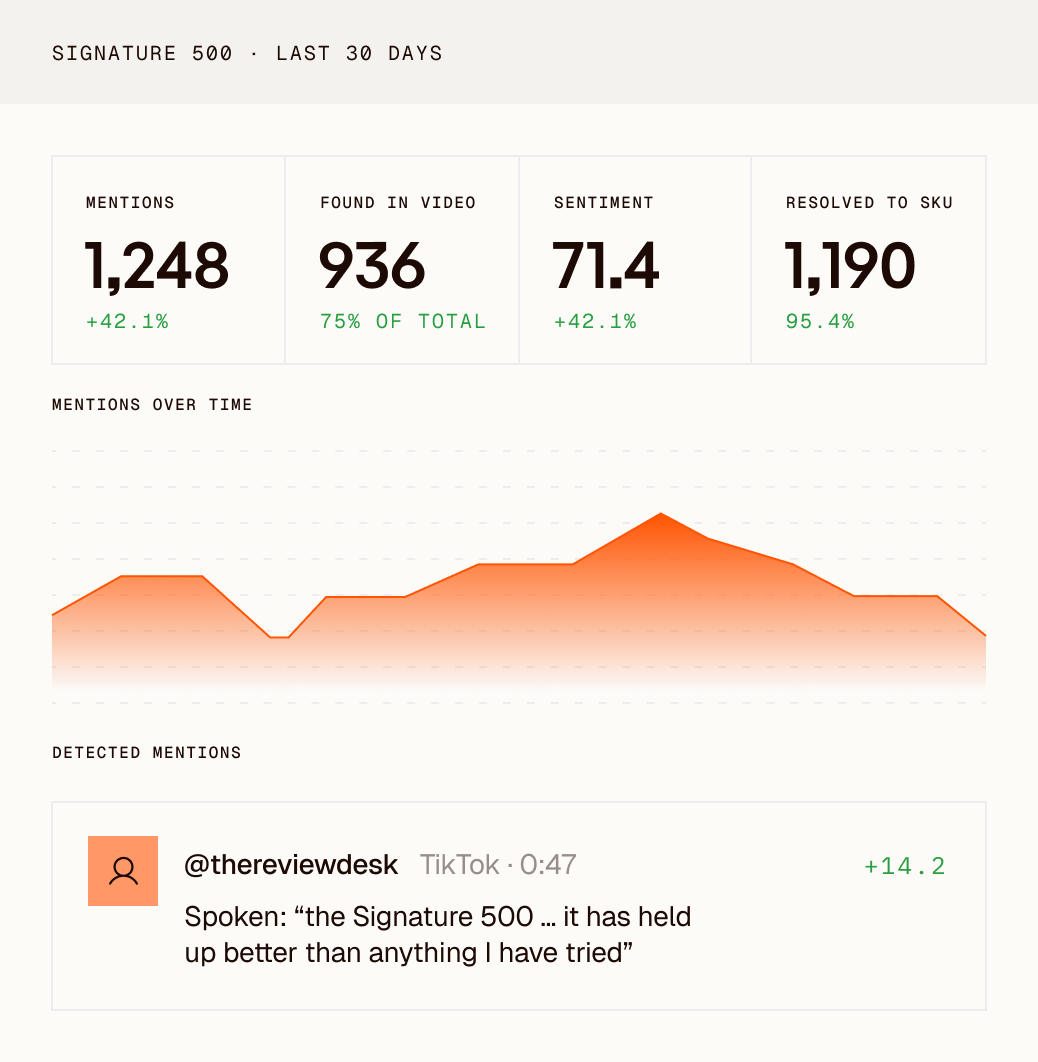
People complain in a video long before they get round to writing a review. See what is being said about a product on social and in forums, next to how it is doing on the shelf.



475M+
creators database
25+
Social media platforms covered
5B+
Signals processed monthly


Why Our Customers Believe Us
“One product lost half a star across three retailers in a month. It turned out to be the packaging, not the product, and we would never have found that in a rating.”
“People were posting about a fault six weeks before it showed up in our reviews. We fixed it in that window and the rating never moved.”
“Our listing data and our social data lived in two tools that never spoke to each other. Having both on one timeline is what made the pattern obvious.”

Find out why your ratings moved
Frequently asked questions

The digital shelf is everywhere your product is sold or shown online: Amazon and other marketplaces, retailer sites, your own store and the search results that lead to all of them. It is the online version of how your product looks and performs in a shop.
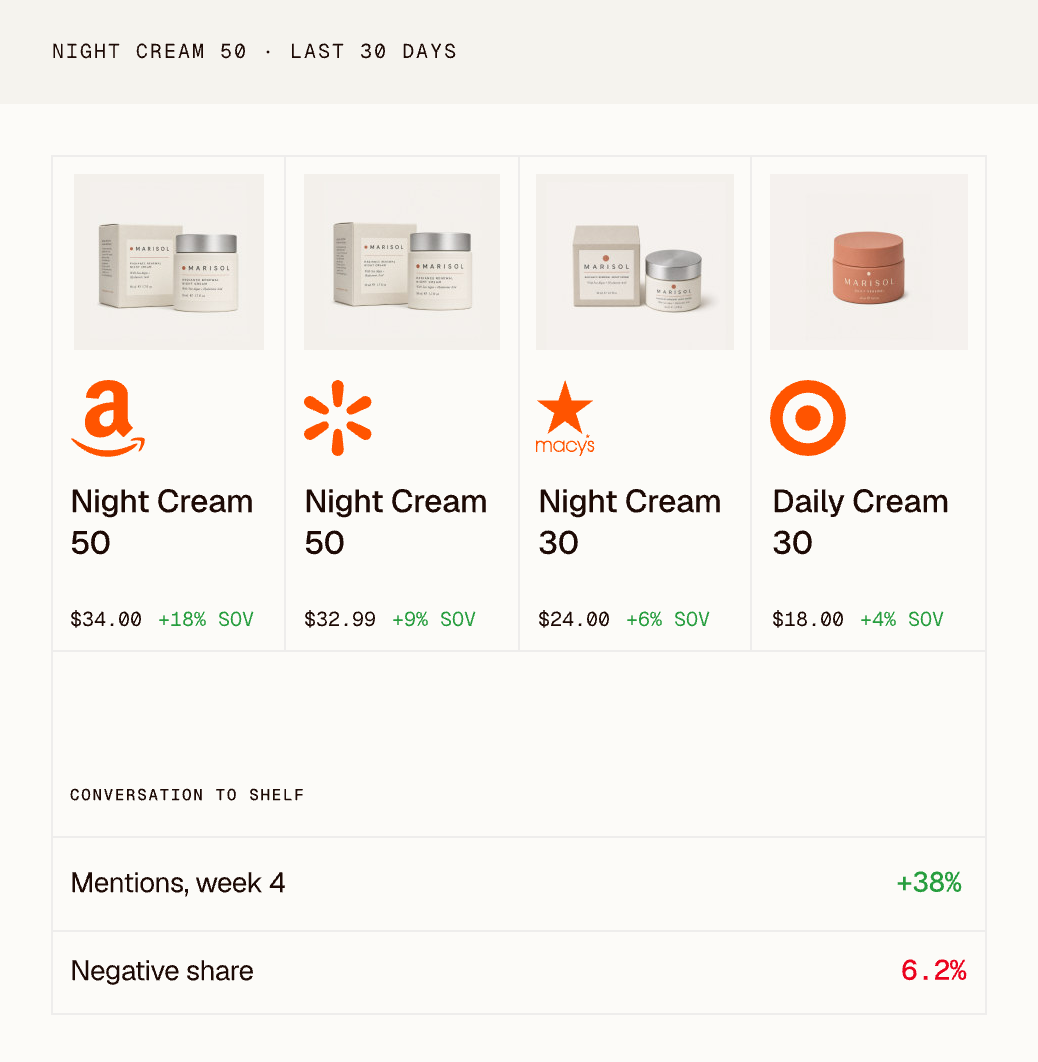
Watching how your products perform across every place they are sold, rather than one retailer at a time. That covers ratings and reviews, where you rank when someone searches, and what shoppers say about the product once they have it.
Clayface collects reviews and listings from marketplaces, retailer sites and your own store, then goes through the words in every review to find the subjects behind a score. It holds the social and forum conversation about the same product alongside, on one timeline.
Read the review text rather than the score. A rating is an average and tells you nothing about cause. Group the reviews by subject and one or two will usually account for most of the fall, often something like packaging or delivery rather than the product itself.
The subjects behind a score and what they cost you, the complaints appearing on social weeks before anyone writes a review, where the product sits in retailer search, and which rivals sit above it.