Voice of the customer data from reviews forums and social in one place
Fix the right products, build what customers are actually asking for, and plan the next quarter on counts rather than anecdotes. Clayface turns voice of the customer data from your site reviews, marketplace listings, forums and social video into one organised view, sorted by the product each person is talking about.


Social Listening
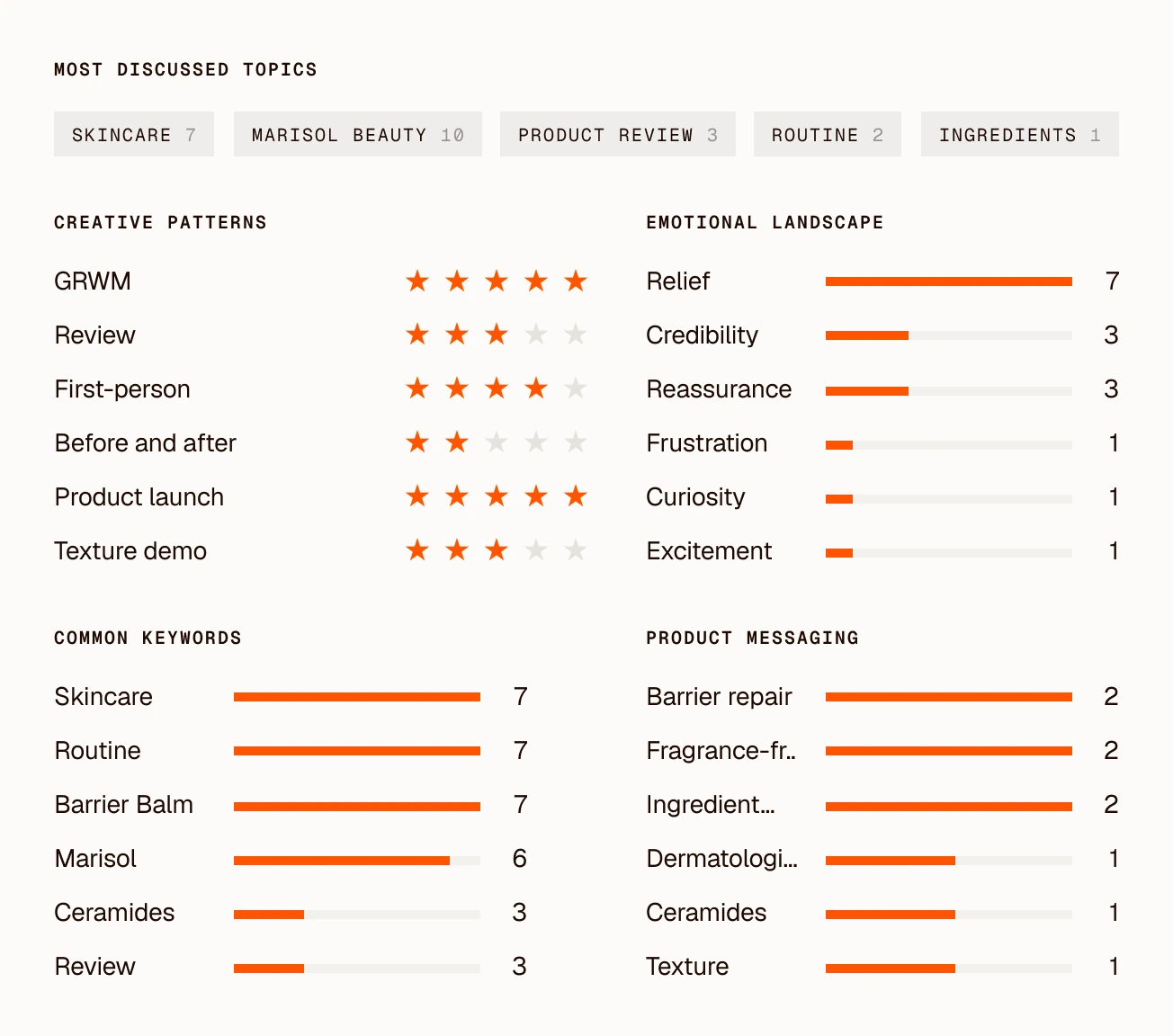
Track mentions across Instagram, TikTok, YouTube and X, along with video intelligence that equips you to read on-screen text, audio, products and logos inside the clip.
Learn more
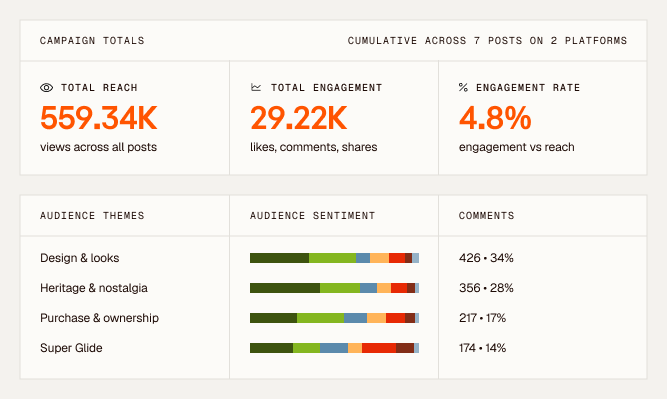

Brand Sentiment
Every mention scored for sentiment and mapped over time, so you can see what moved the needle and when the mood shifted.
Learn more
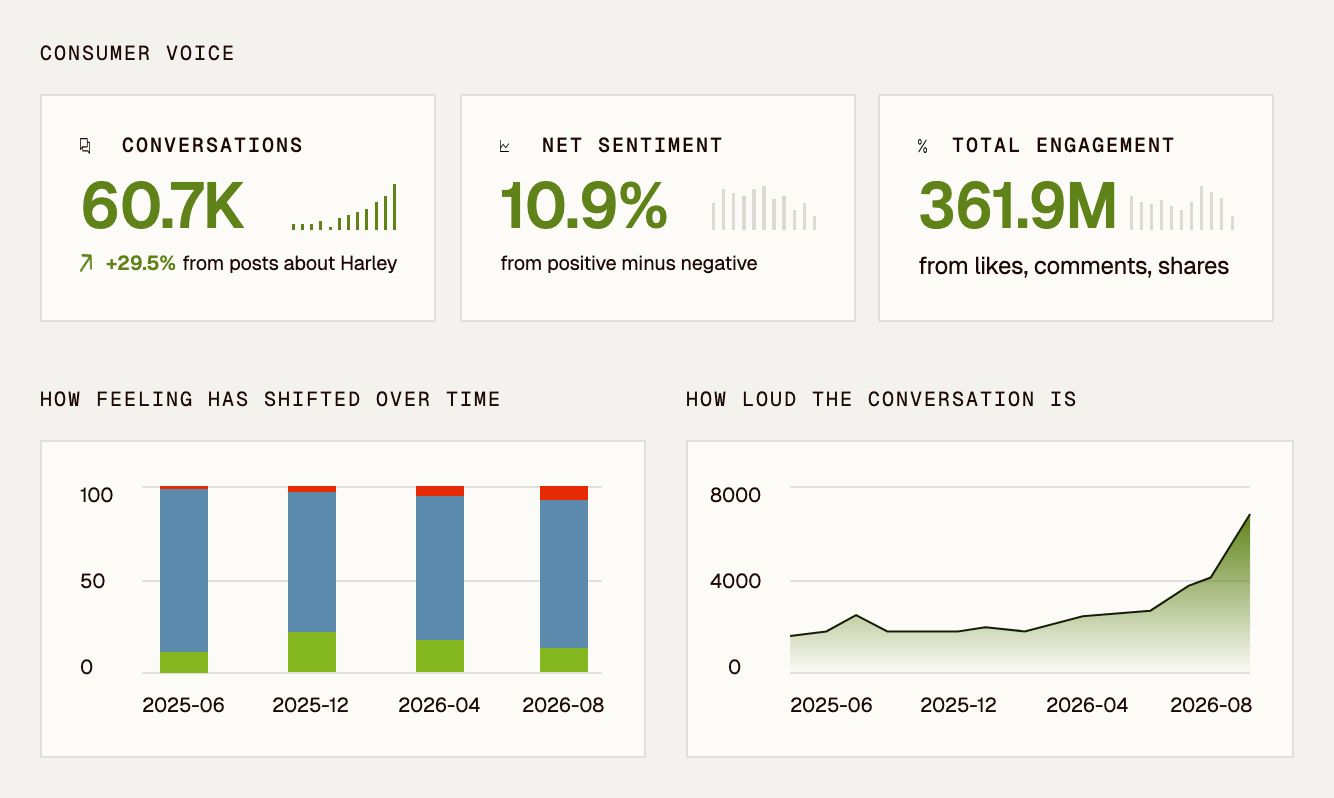

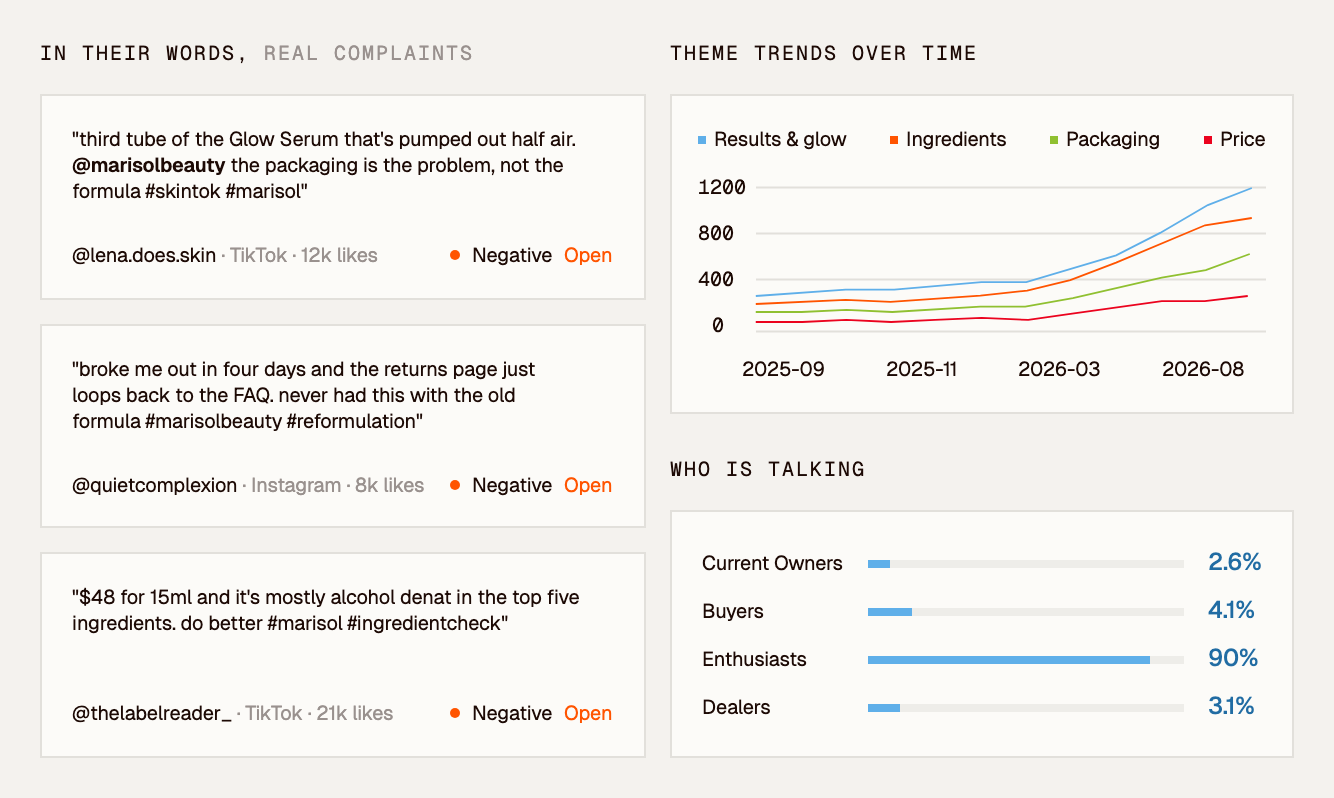
Voice of Customer
Every mention scored for sentiment and mapped over time, so you can see what moved the needle and when the mood shifted.
Learn more

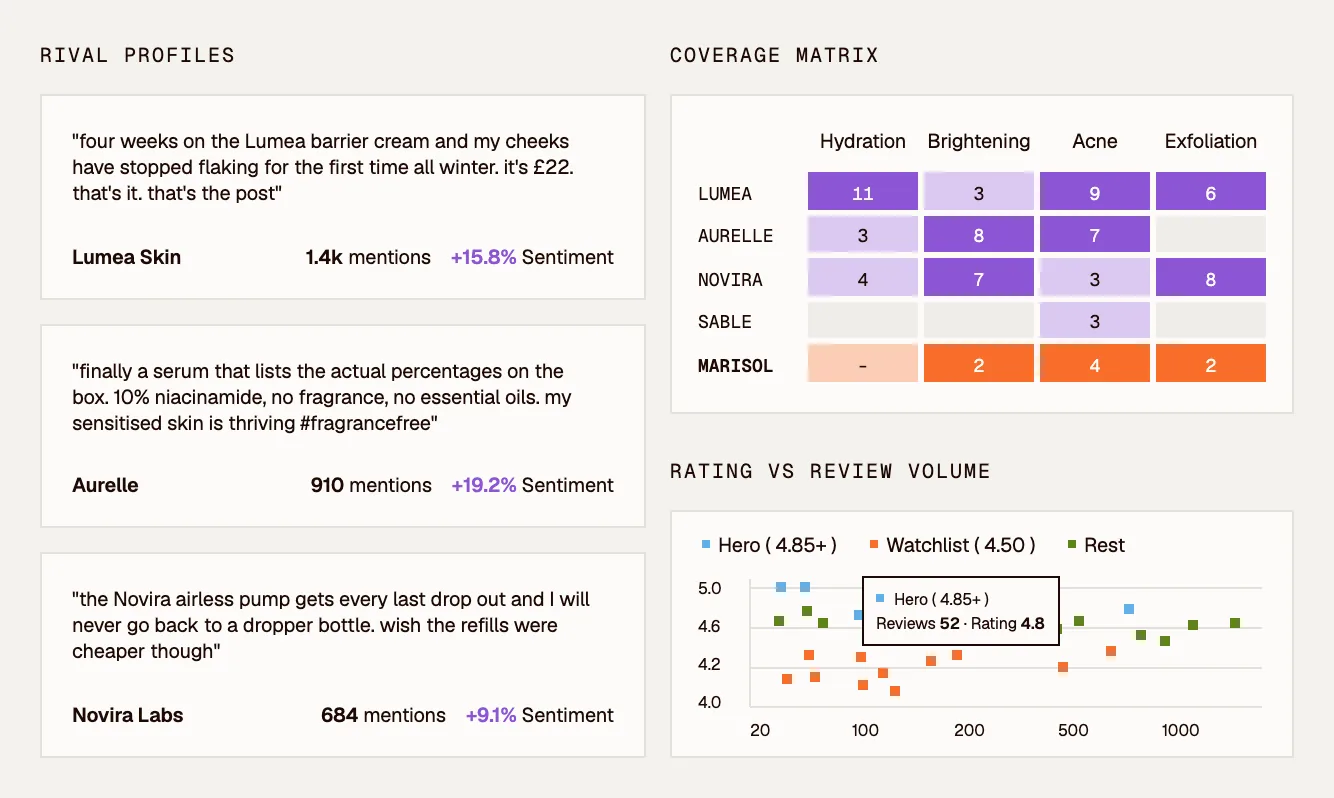
Competitor Analysis
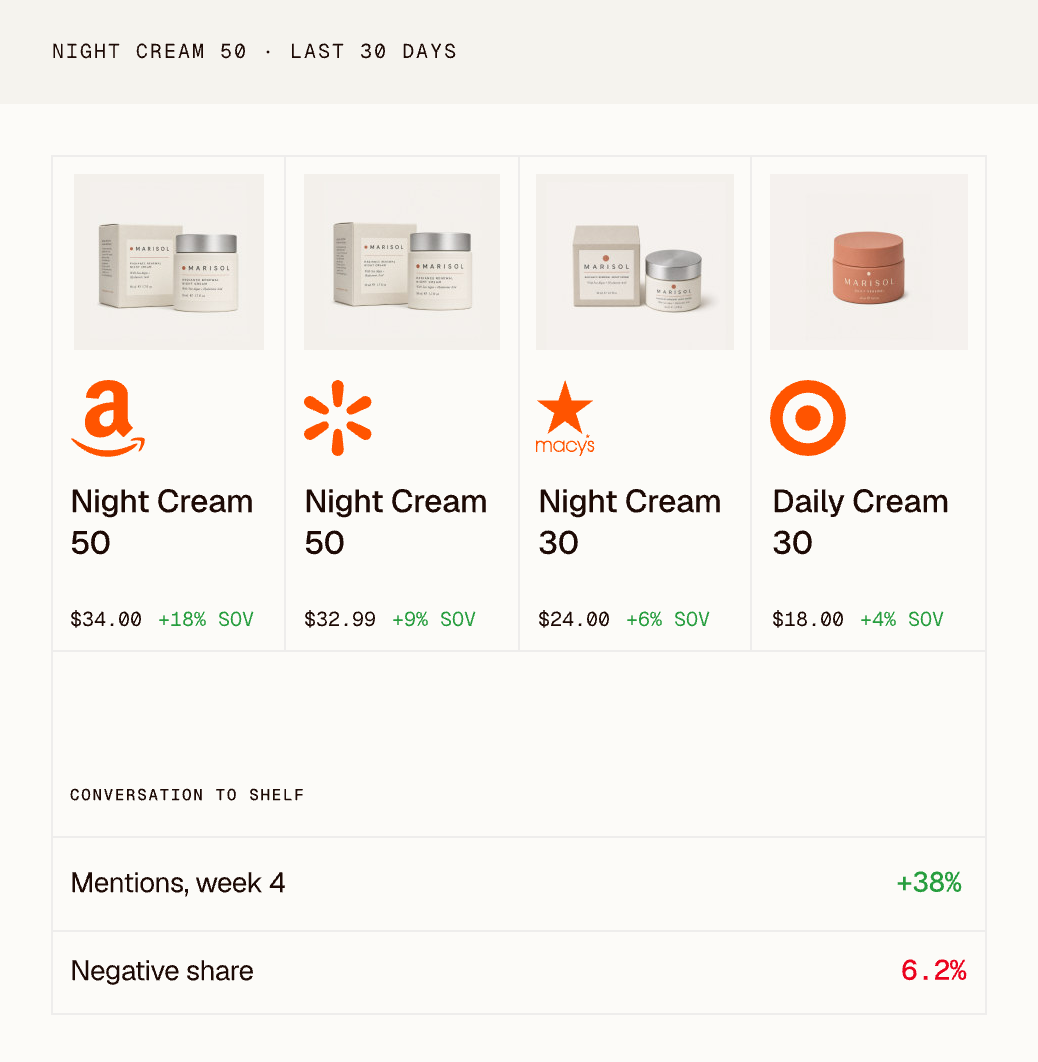
Benchmark share of voice, engagement and sentiment against any competitor. Spot their launches, gaps and unhappy customers as they surface.
Learn more











What voice of the customer analysis tells you
Product feedback
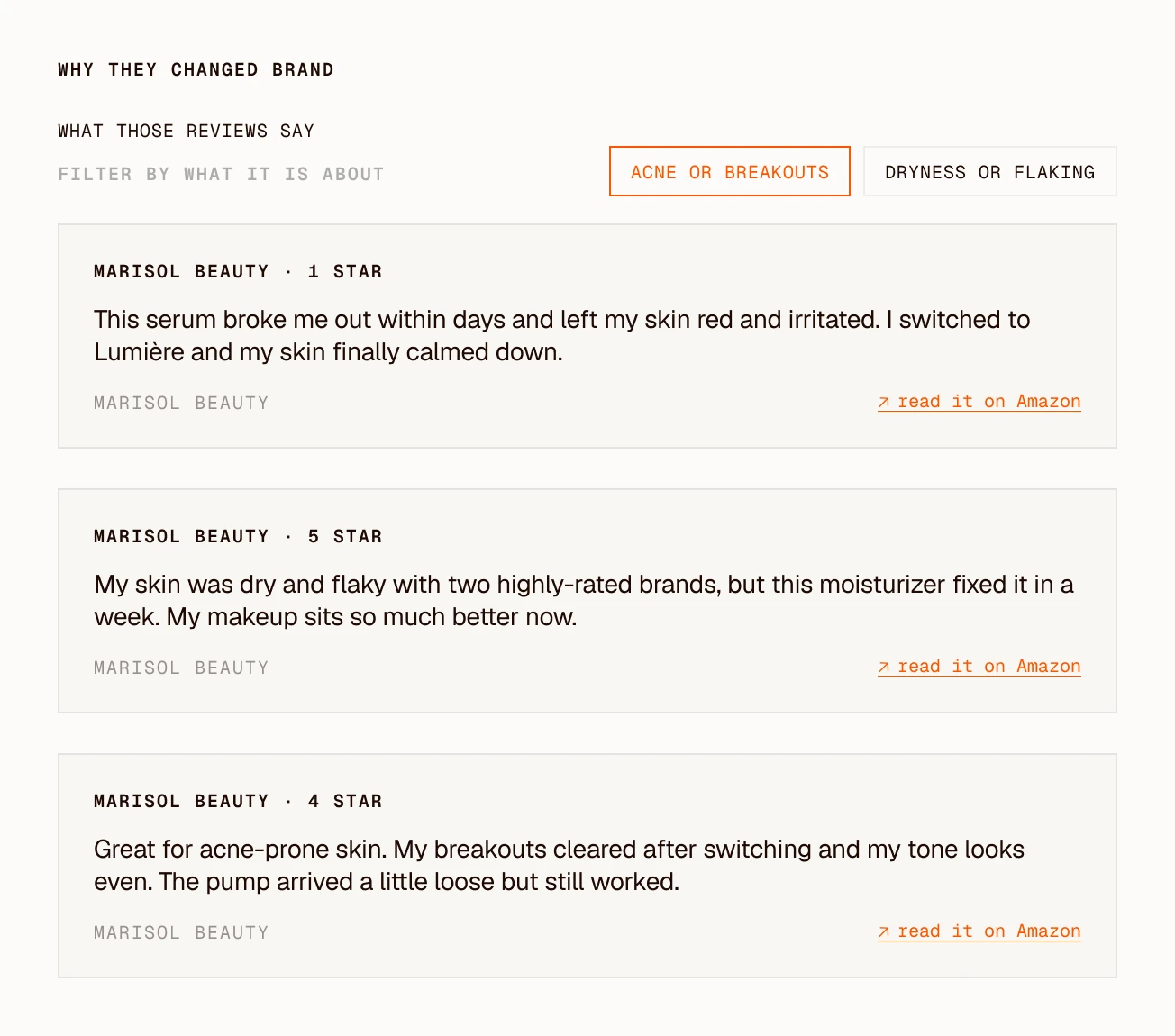
Product feedback resolved to the product it concerns
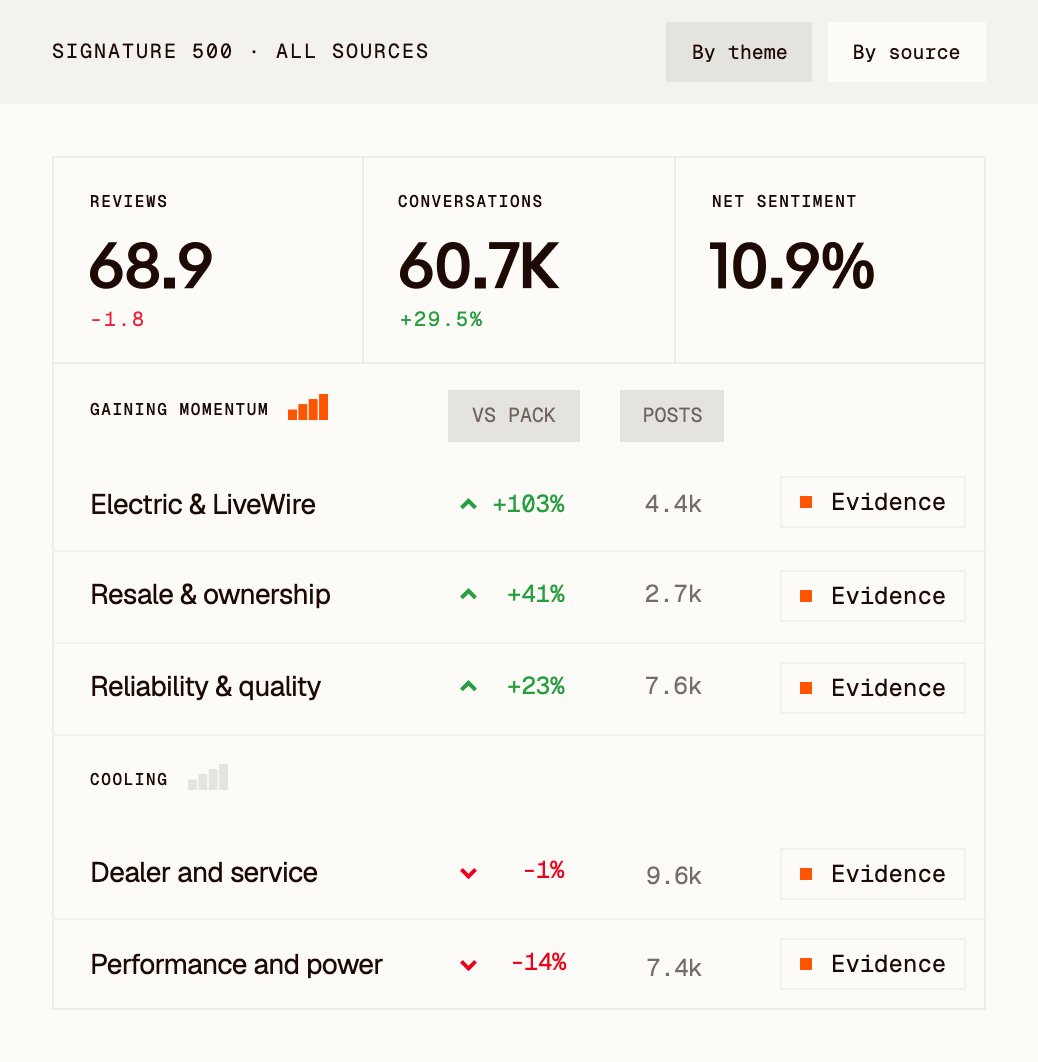
What is working and what is not, mapped to the line, model or variant it refers to rather than the brand as a whole. Each product carries its own feedback history, so a change in formulation, supplier or packaging shows against the product that changed.
Unmet needs
Feature requests gathered from video comments and forums
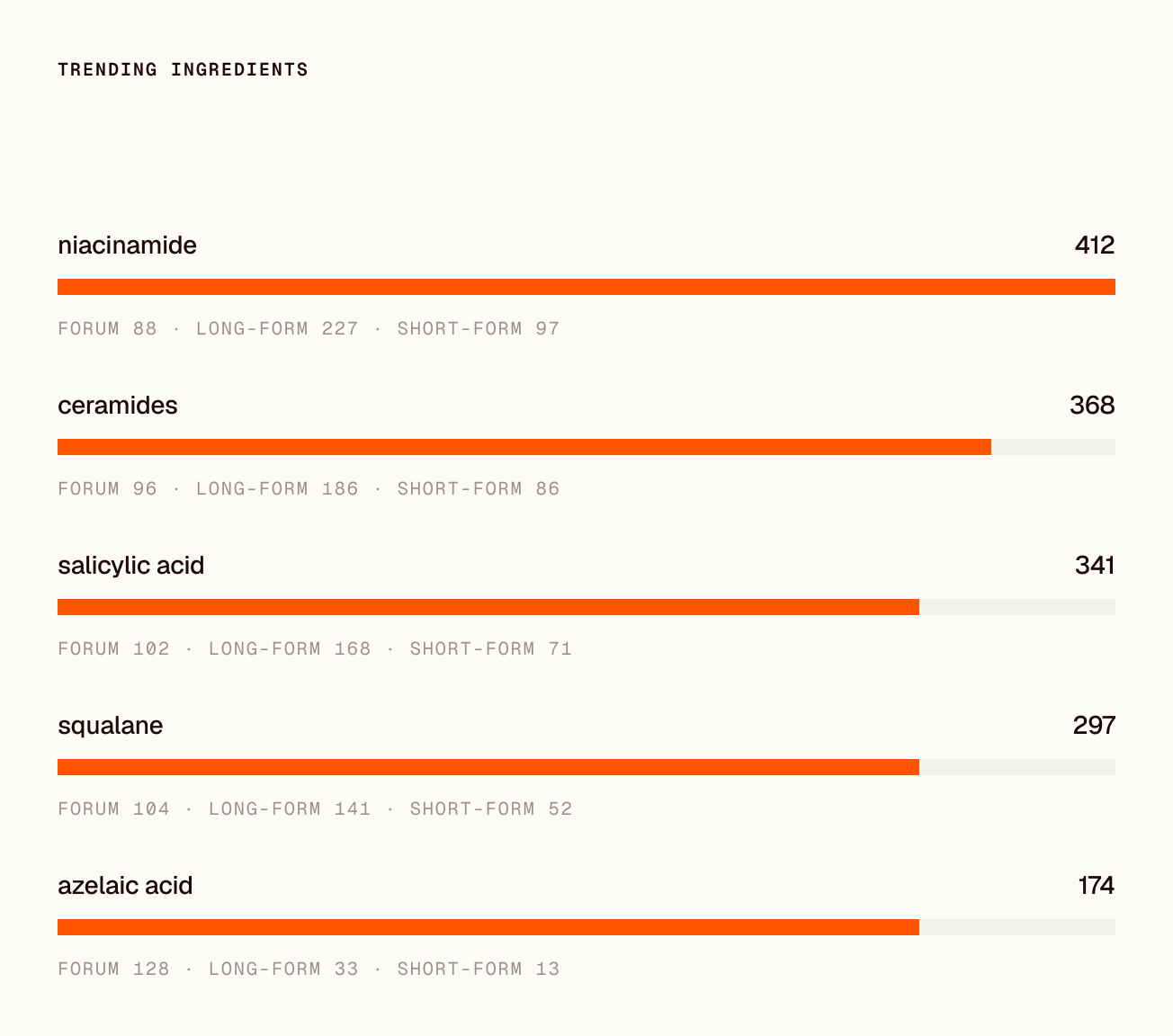
The people who love your product are already saying what they want next, in videos, in comment threads and in forum posts nobody is reading. Clayface pulls those requests out of every corner of the web and stitches them into one organised list, ranked by how many people asked.
Purchase blockers
Reasons customers hesitate before buying
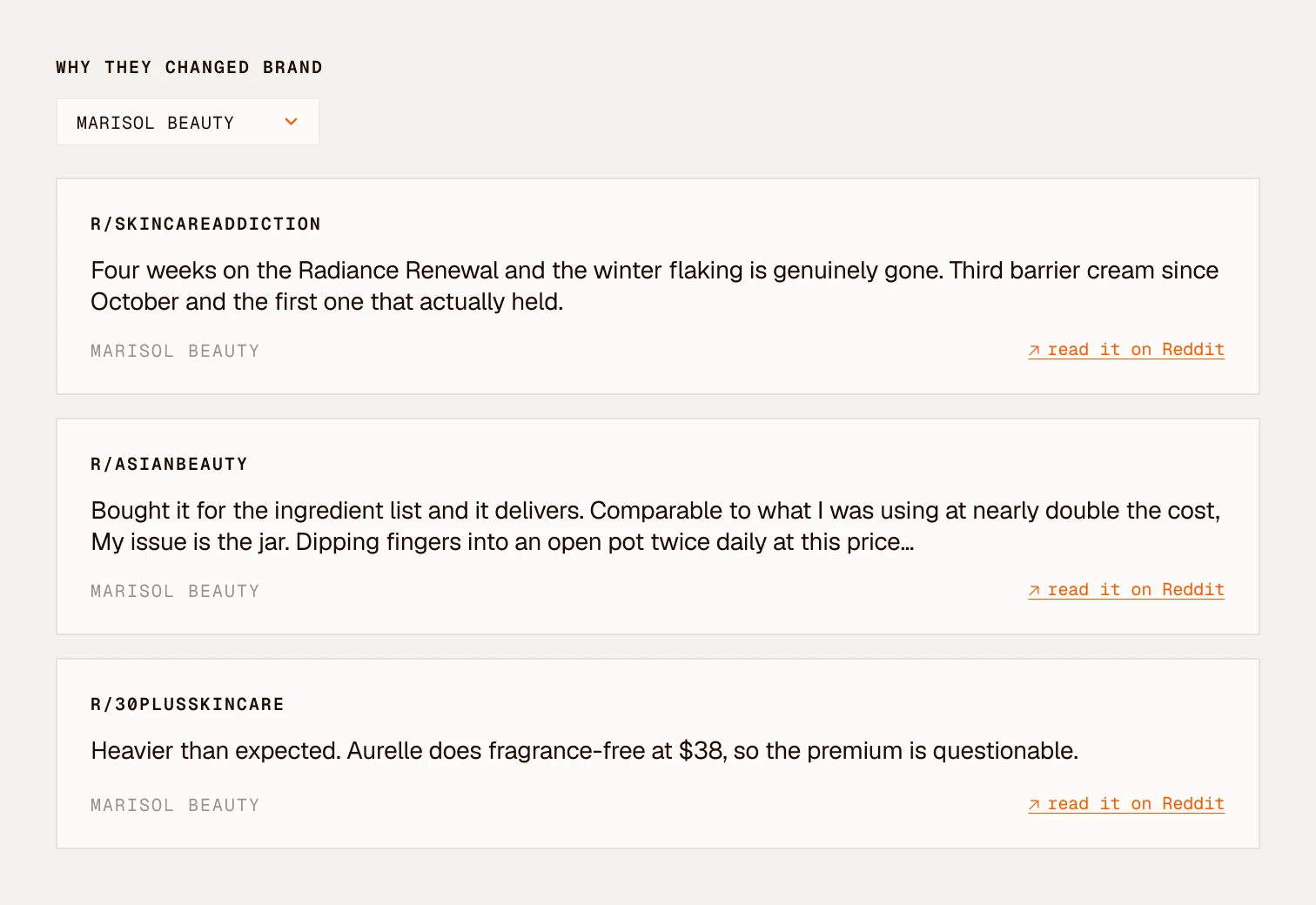
Questions left unanswered on a listing, price objections and comparisons against a rival, taken from the conversation around the purchase rather than after it. Each blocker carries the products and the markets where it appears most.



475M+
creators database
25+
Social media platforms covered
5B+
Signals processed monthly


Why Our Customers Believe Us
“Our survey gave us the score. Clayface gave us the reasons behind it, from conversation we were never going to capture in a questionnaire. Reading the two together is what let us make a call on the product line instead of just reporting a number.”
“A problem with one of our components surfaced in forum threads and video comments within days. We confirmed it and had a fix moving inside a few weeks, where before we would have waited for the next feedback cycle to even know it existed.”
“Reviews from our own site and across the marketplaces showed us how each product was trending and what customers actually liked about it. On top of that, video and text posts were treated as feedback as well, which gave us far more to work with when planning the next quarter.”

Add a dimension to your customer feedback
Frequently asked questions

Voice of the customer is the collected record of what customers say about a brand, its products and their experience, used to guide product and service decisions. It is built from surveys, interviews and reviews, and increasingly from the public conversation customers have without being asked.
Because it is the only input that comes from customers rather than about them. Sales figures show what happened; voice of the customer data shows why, which is what tells a team whether to change a product, a message or a process.
A VoC program is the standing process a company uses to collect, classify and act on customer feedback, usually owned by insights or CX. Most are built around survey waves, and the strongest ones pair those waves with a continuous source so the two corroborate each other.
Surveys, interviews, support tickets and reviews each capture a different part of it. Public conversation adds the customers who never respond to any of those, and much of it now sits in video where the opinion is spoken rather than typed. Clayface reads that layer alongside the written sources.
Group comments into themes, resolve each one to the product it refers to, then rank themes by how many people raised them rather than how loudly. Themes are most useful when they can be cut by product, market and audience rather than fixed in advance.