Trend Intelligence Built to Show You What to Make Next
Clayface picks up a new theme while it is still small, counts how many months of head start you have, and matches it to the products you sell and the ones you do not sell yet.


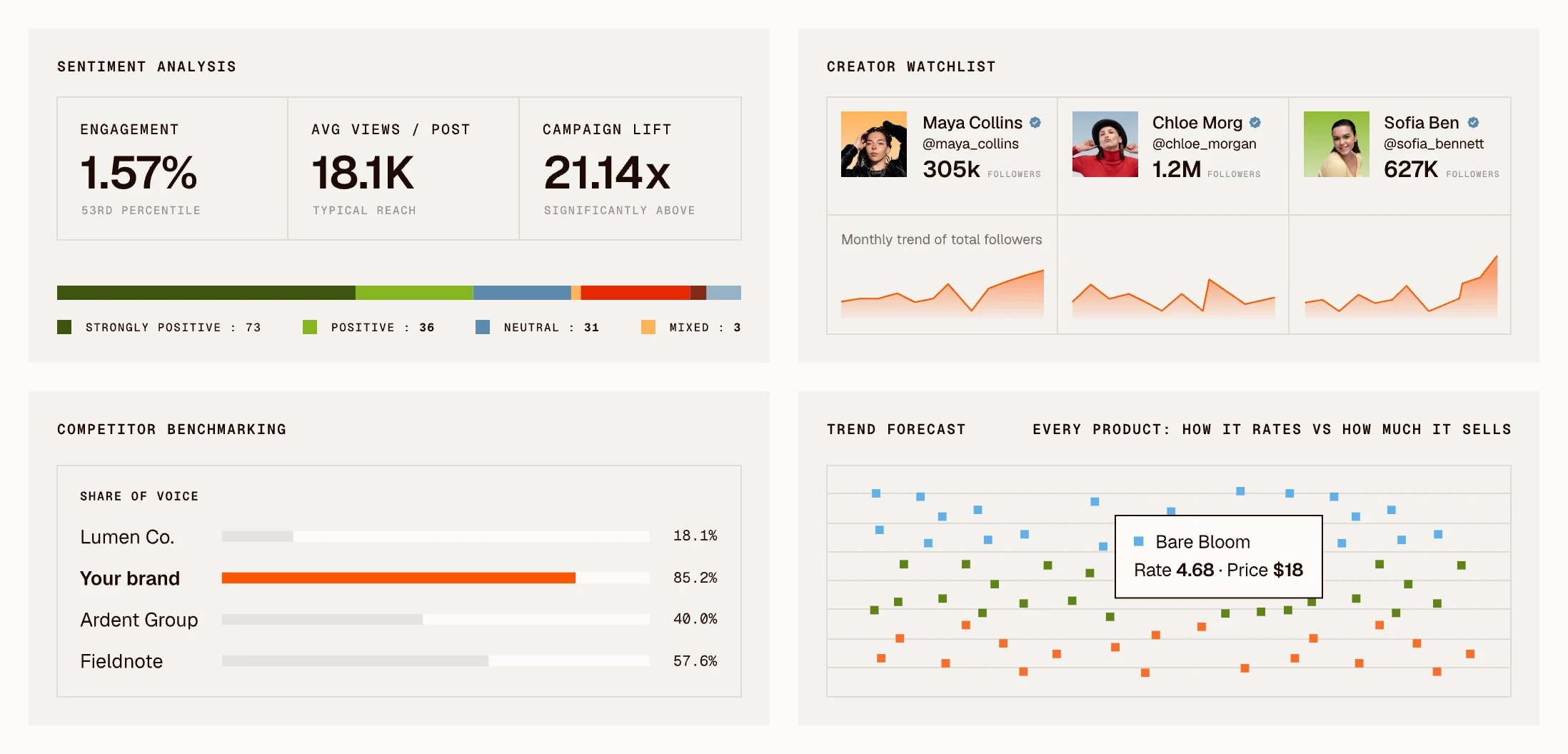
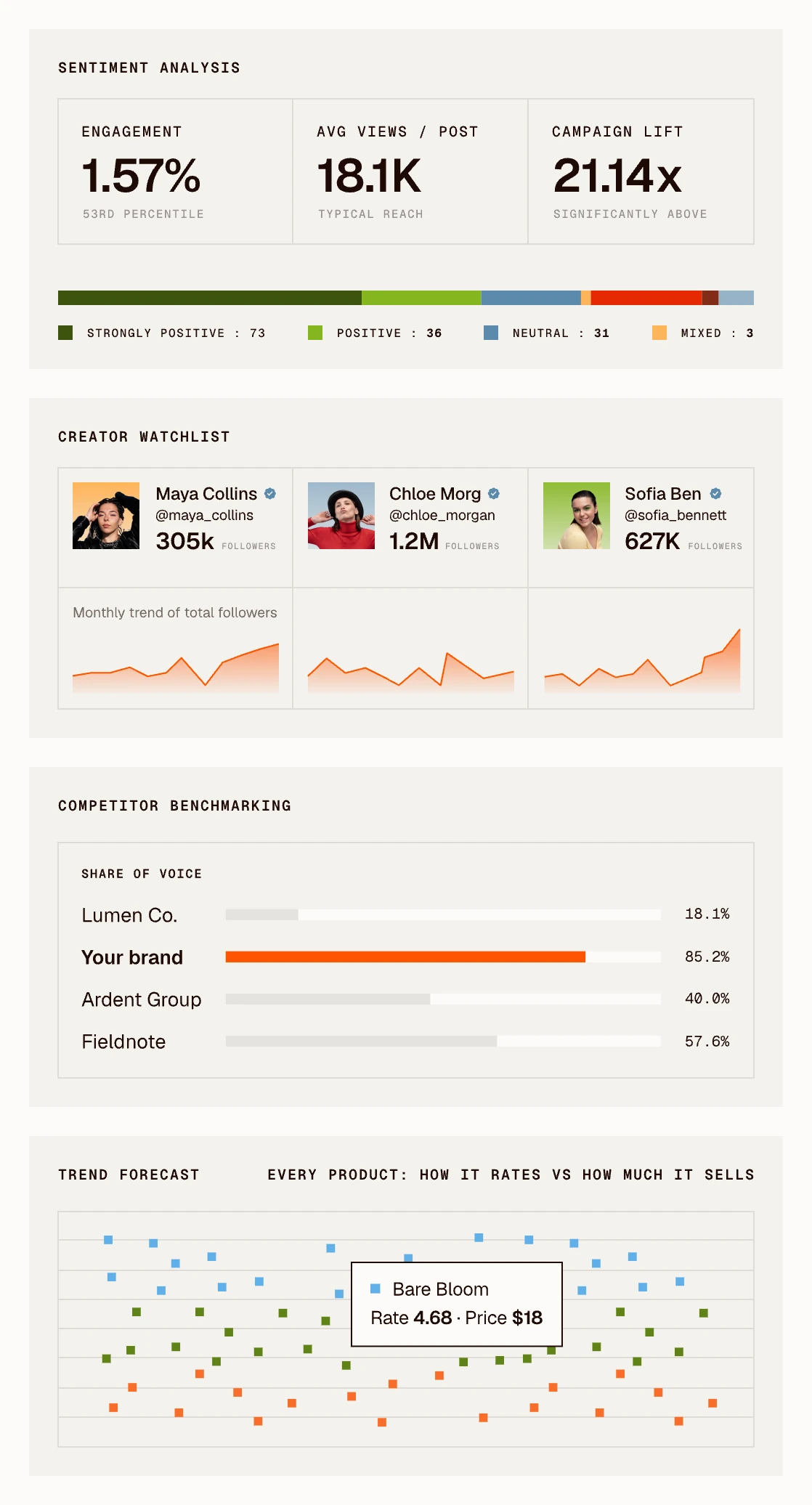











Four Steps From the First Mentionto a Product Brief
Read Every Place PeopleTalk About Your Category
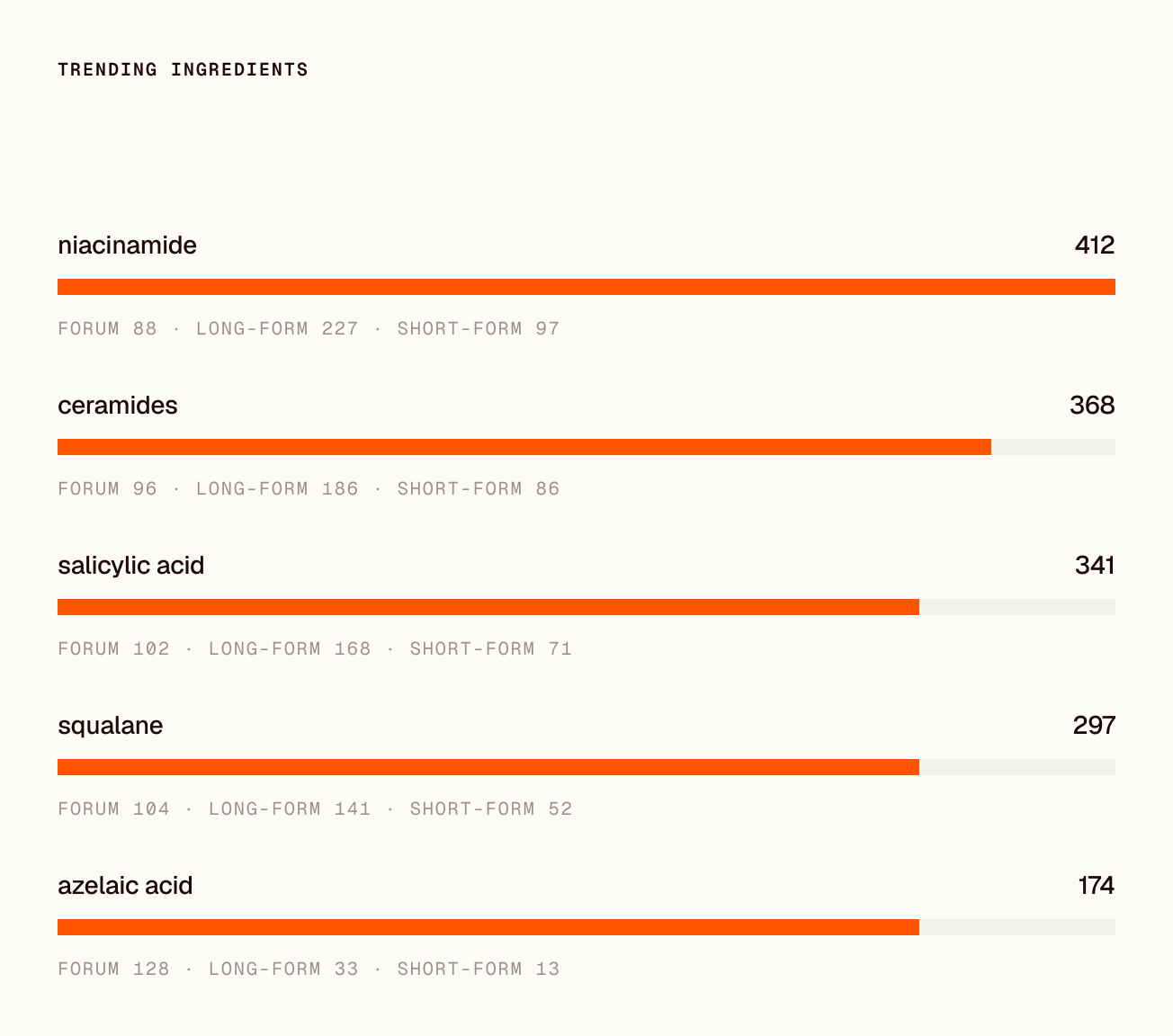
Posts and comments across 25 social platforms. Owner forums and Reddit threads. Product listings on Amazon, Walmart and retailer sites, and every review sitting underneath them. And the video on all of it. Something said out loud in a video counts the same as something typed in a comment.
See the sources in your category
Count the Monthsof Head Start You Have
Clayface records the week a theme first appeared anywhere and the week it turned up on a shelf or a product listing. The months in between are your runway, and that is a figure you can put in a plan.
See a runway on one themeLine Each Theme UpAgainst What You Sell
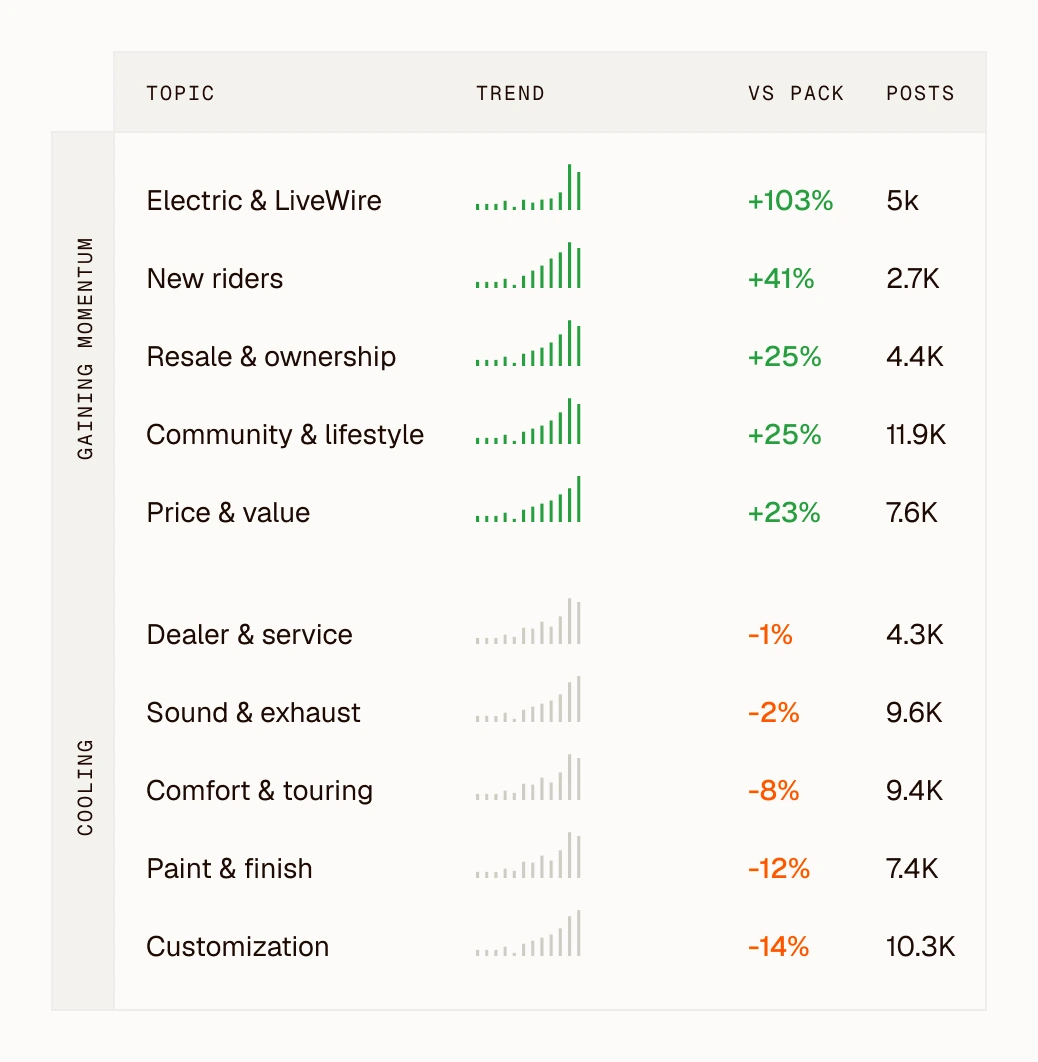
Every theme is matched to your nearest product, which sorts them into three lists: the ones you already cover, the ones you nearly cover, and the ones nobody in the category sells yet.
Match a theme to your rangeHand Your Teama Ranked List Every Week
The themes arrive ordered by how fast each one is growing, filed under your own product families, and the list rebuilds itself every week so nobody on your team has to.
Walk through a finished brief



4 months
median head start from first online mention to shelf
25+
platforms watched for new themes
475M+
creators in the database
Why Clayface Trend IntelligenceFinds Themes Other Tools Miss
Clayface trend and innovation intelligence runs on the Phyllo data layer. Most tools count how often a word gets typed. Clayface also hears what is said out loud, ties every theme to a real product code, and puts the conversation next to what people are actually buying.
What People Say Out Loud Still Counts
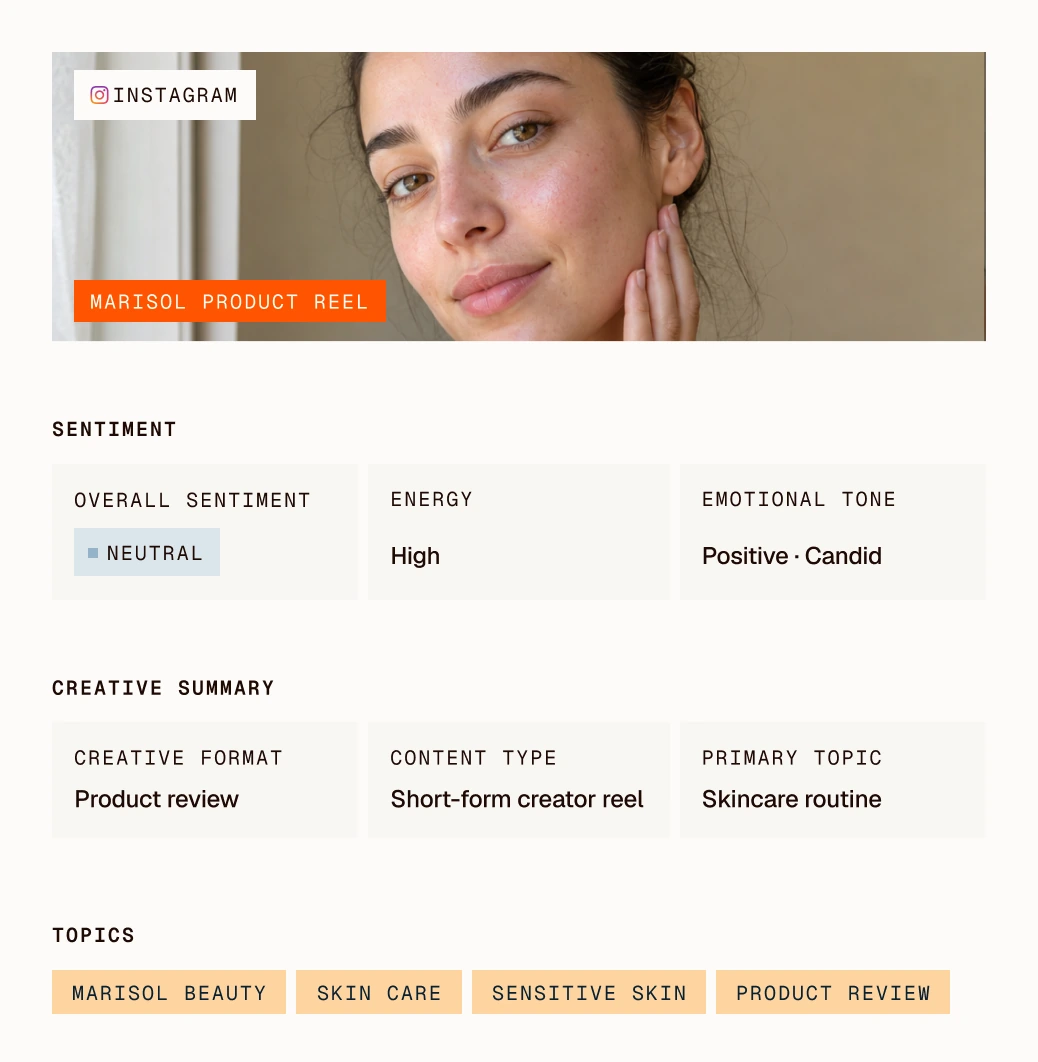
A keyword tool reads the caption and stops there. Clayface listens to the audio, reads the text on screen and sees the product held up in frame, so a flavor named in a video counts even when nobody writes it down. On TikTok and Reels that is where most of the talking happens.
See Clayface in Action→
Every Theme Opens to the Posts Behind It
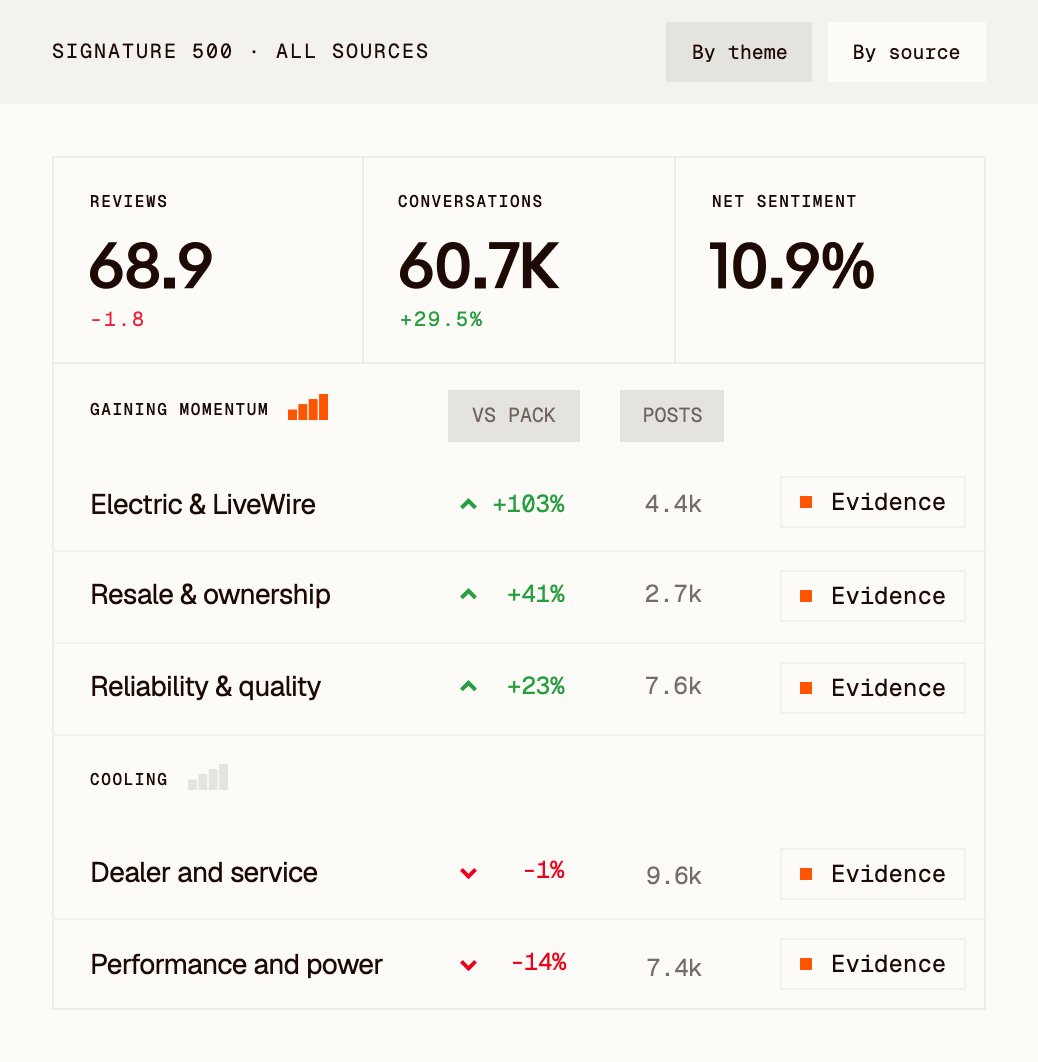
Click any theme and you get the posts, videos and reviews that built it, each one dated and linked. Before anybody signs off a product brief they can read the evidence themselves, rather than taking a number on a chart on trust.
See Clayface in Action→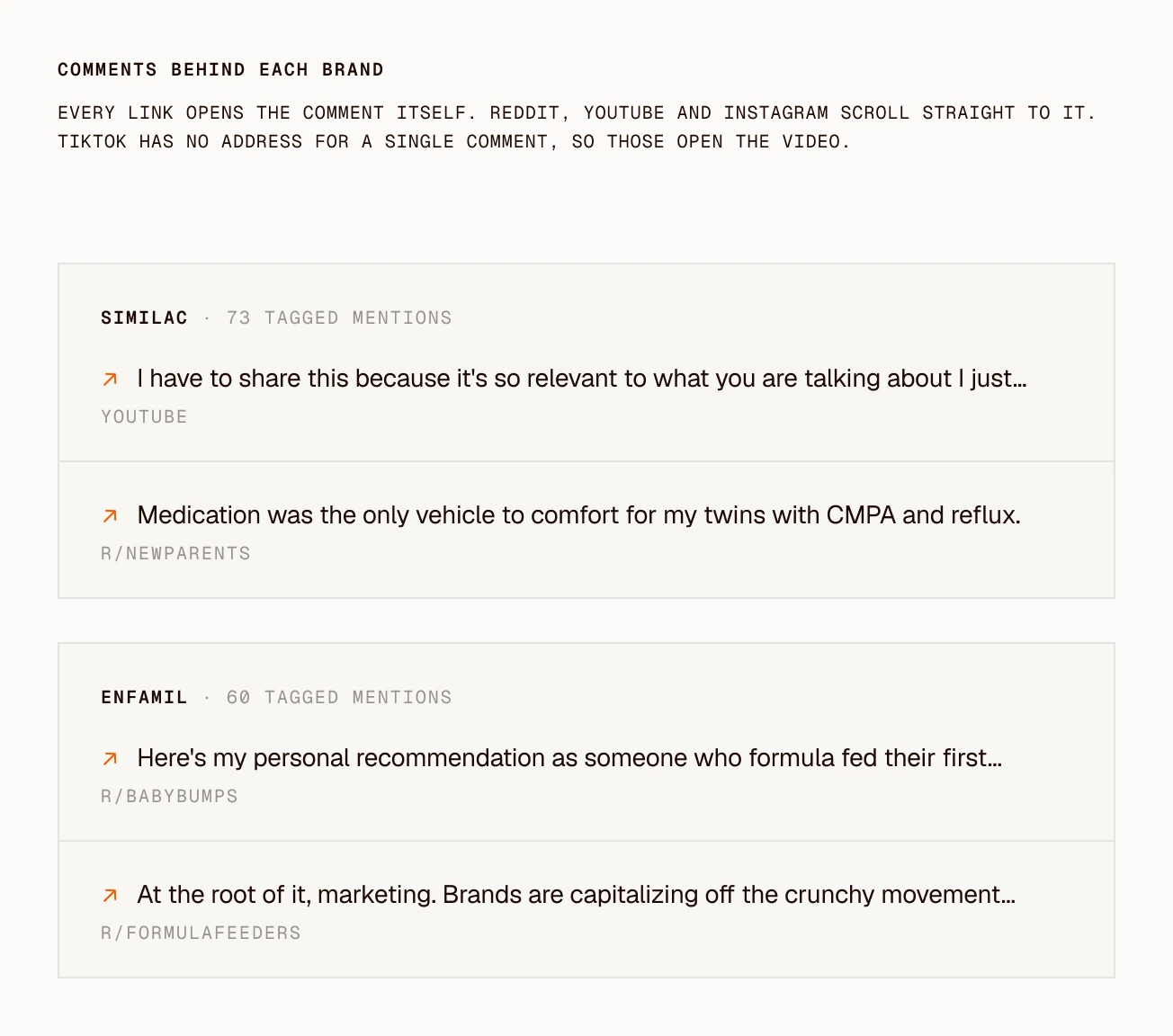
Themes Arrive Under Your Product Families
Most tools file findings under categories a software company invented, so somebody has to translate them before anyone can use them. Clayface takes your families and model names in first, and every theme comes back sorted into them.
See Clayface in Action→
See Whether the Talk Turned Into Buying
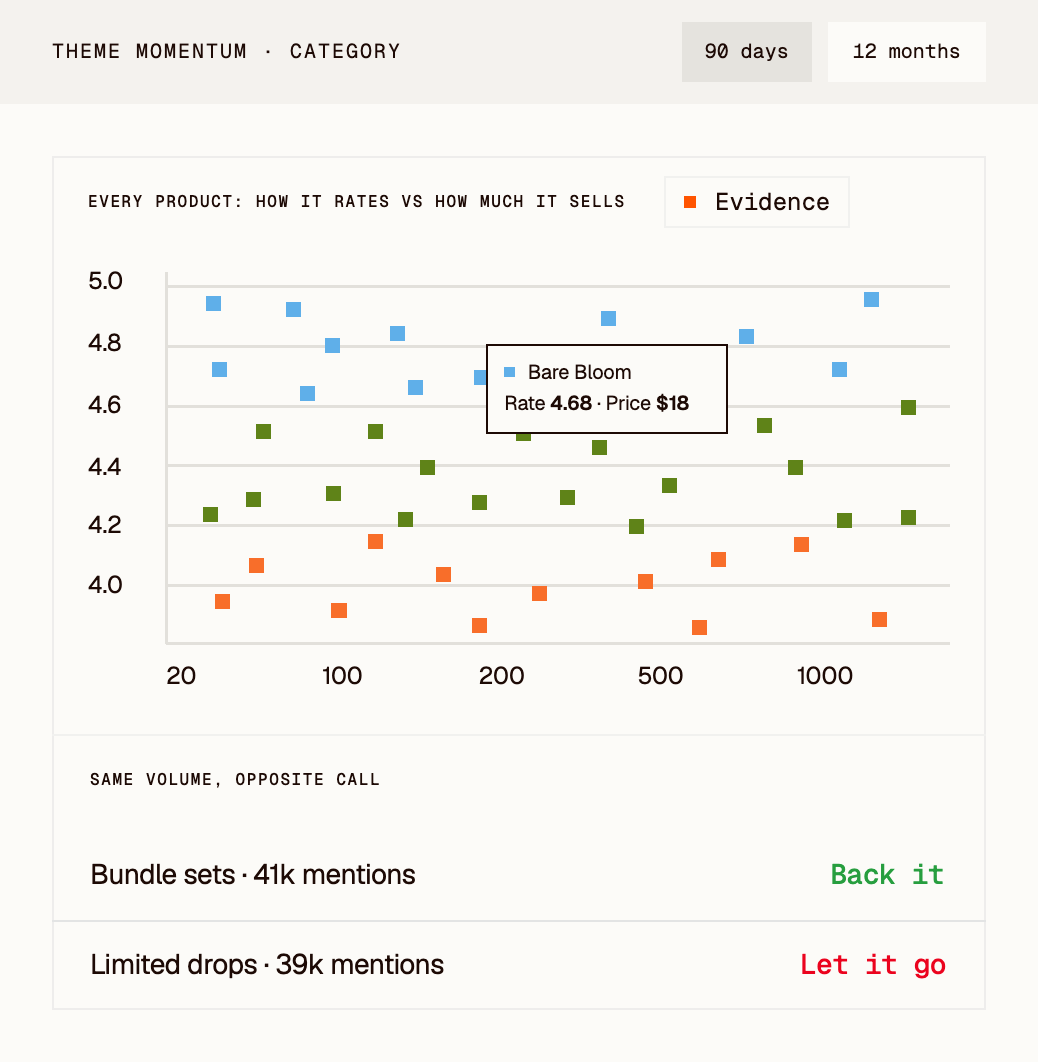
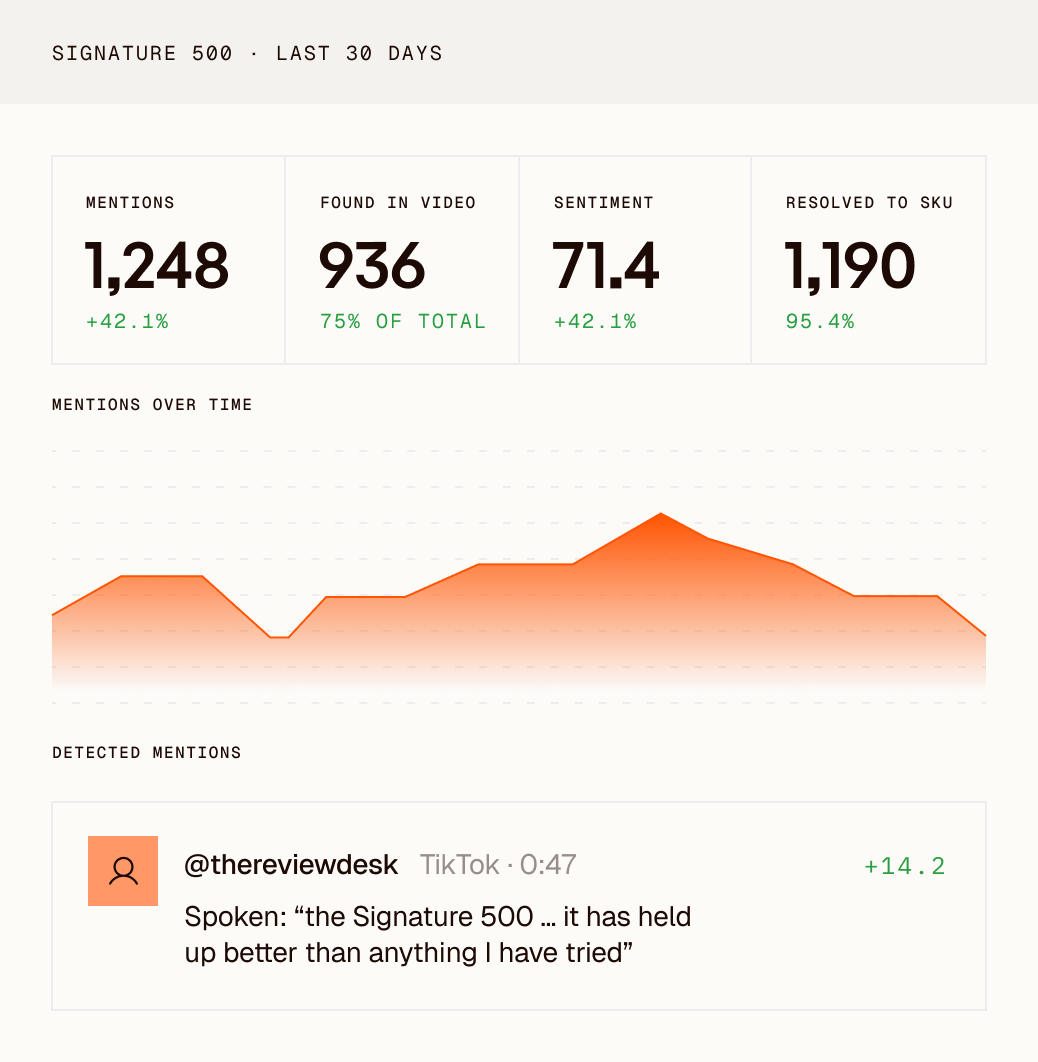
Listings, prices and reviews from Amazon, Walmart and retailer sites sit beside the social conversation on the same product code. When a theme grows you can check whether the ratings and the reviews moved with it, instead of hoping they did.
See Clayface in Action→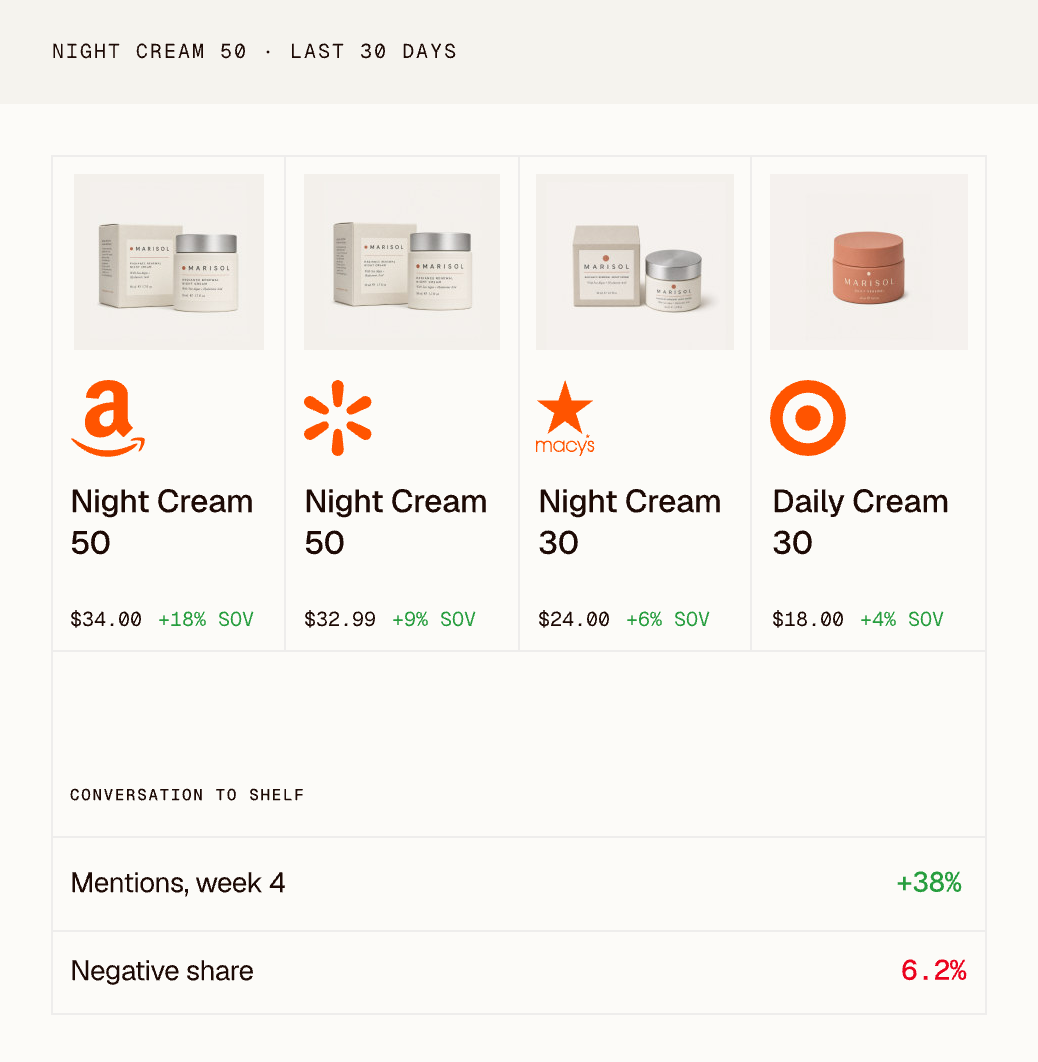
Seasonal Demand Is Counted Separately
Thanksgiving, the Super Bowl, back to school and the first hot week of summer all move what people want, and they move it the same way every year. Clayface counts those apart from everything else, so the holiday rush is never reported to you as a new idea.
See Clayface in Action→

Pick One Category and See What Is Coming
Name a category you already think you know. We will show you the themes growing inside it, how long each one has been running, and which of your products they land on.
Frequently asked questions

Trend intelligence means watching what people in your category say across social, forums, reviews and video, working out which themes are growing, and turning those themes into decisions about what to make. It runs continuously on the same sources, which is what lets you line this quarter up against the last one instead of starting the count again.
Trend analysis works out whether a theme is real and where it is heading. Trend intelligence carries that a step further and tells you what to do about it, by matching every theme to the products you already sell and to the gaps sitting in your range.
Usually months before it reaches a shelf, because the first mentions turn up in creator video, comments and forum threads long before anybody writes a trend report about it. Clayface flags a theme while the numbers are still small and records the date it did so, which means you can check for yourself how much time you were given.
Every theme gets matched against your own range, which produces three lists: what you already sell, what you almost sell, and what nobody in the category sells yet. That third list is where new products come from, and for most teams it is the reason they bring us in.
Your product families, model names and category structure go in before anything else, so every theme comes back filed under them rather than under a category tree somebody else designed. A finding lands in the same shape as the rest of your reporting and can go straight into an innovation brief.