Digital Shelf Analytics Built to Track Listings, Reviews, Rivals & the Talk Around Them
Your products sit on ten different stores and each one tells you something different. Clayface puts all of it in one place, then adds what people are saying about each product.













What Digital Shelf AnalyticsCovers Across Every Retailer
See Every ProductYou Sell on Every Store
One list shows each product and each store it should be on. Missing listings are flagged, so you find the gap before a sales rep calls to tell you.
See your shelf in one view
See How Your RangeCompares to Rival Brands
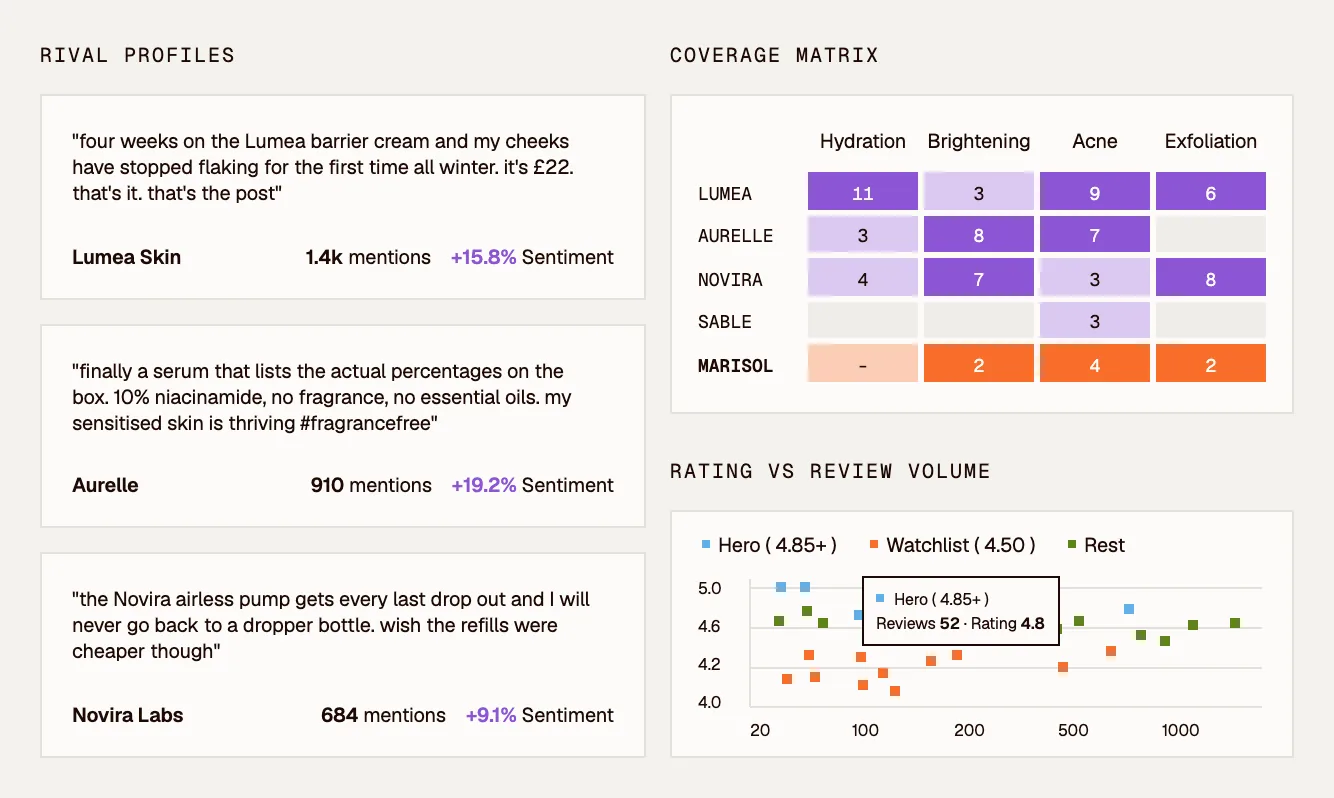
Your products and the brands you name, on the same stores over the same weeks. You can see who has more products on a shelf and who got there first.
Compare your range liveSee One Real ScoreInstead of Five Different Ones
The same product can hold a 4.6 on one store and a 3.9 on another. Clayface gives you the single score that covers all of them at once.
Pool the reviews on one product


100%
of reviews on a listing read, never sampled
25+
platforms watched alongside the shelf
5B+
signals processed every month
Why Clayface Digital Shelf AnalyticsSees What Other Shelf Tools Miss
Clayface commerce and retail intelligence runs on the Phyllo data layer. A shelf tool holds your listings. A social tool holds the conversation. Neither one holds both, so nobody can tell you why the shelf is moving.
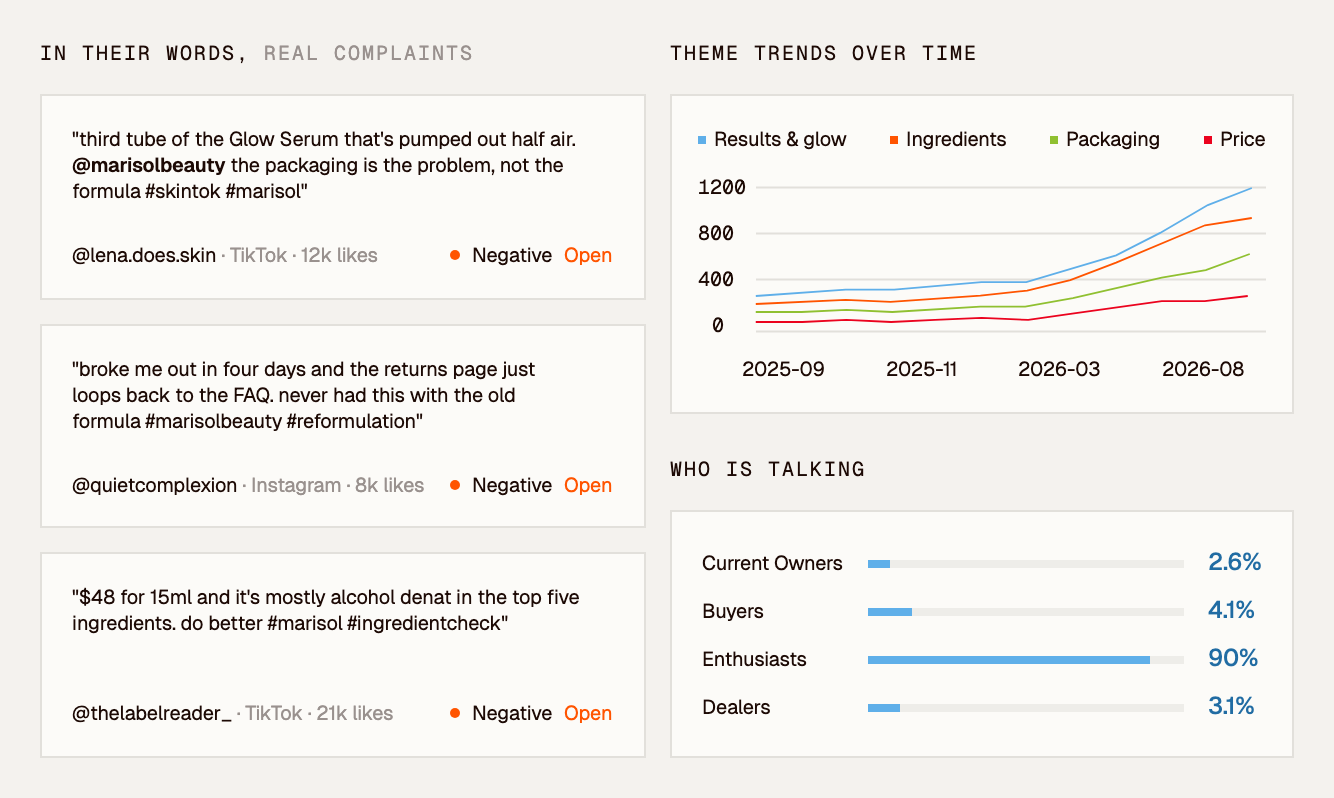
Hear the Complaints That Never Become Reviews
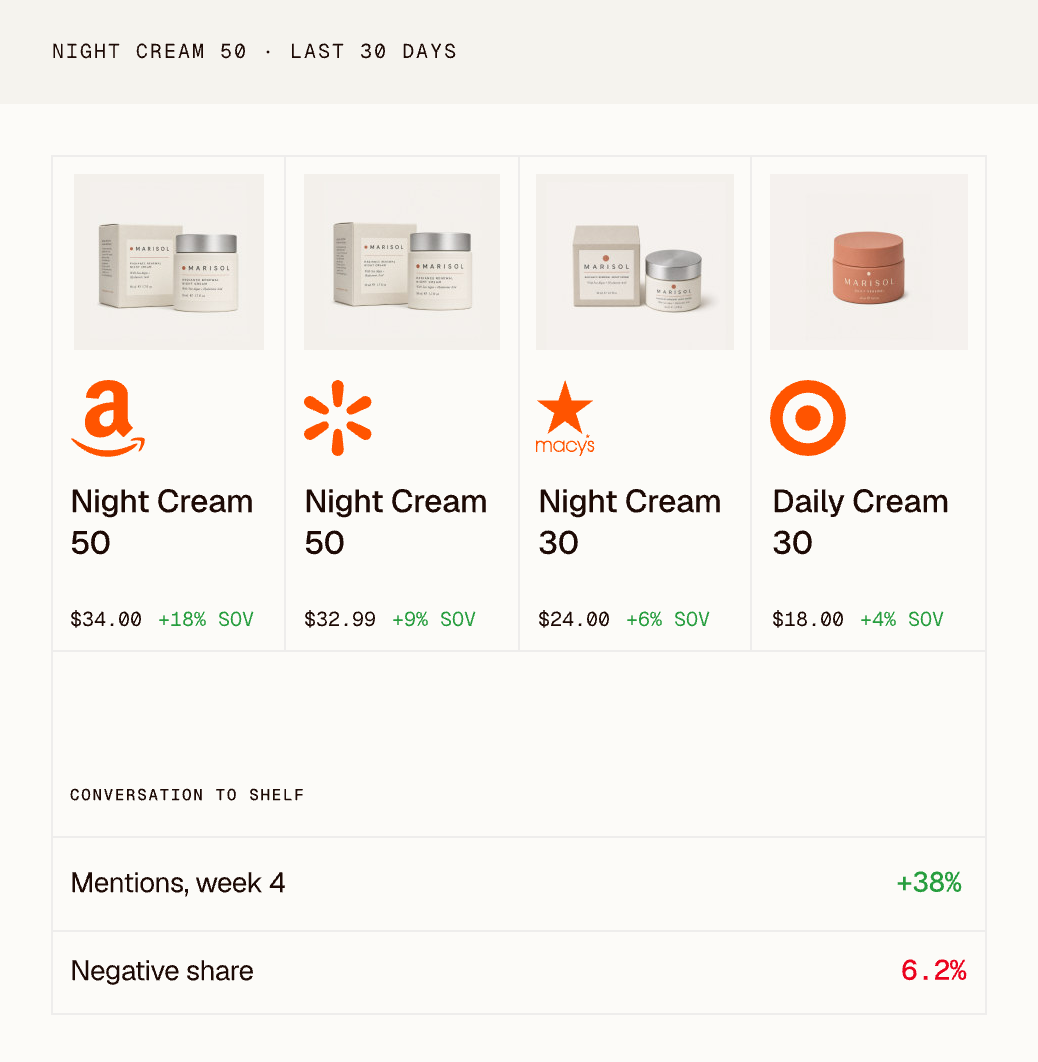
Most unhappy buyers post a video and never write a review. Clayface hears what is said, reads the words on screen, and files it with that product's reviews.
See Clayface in Action→
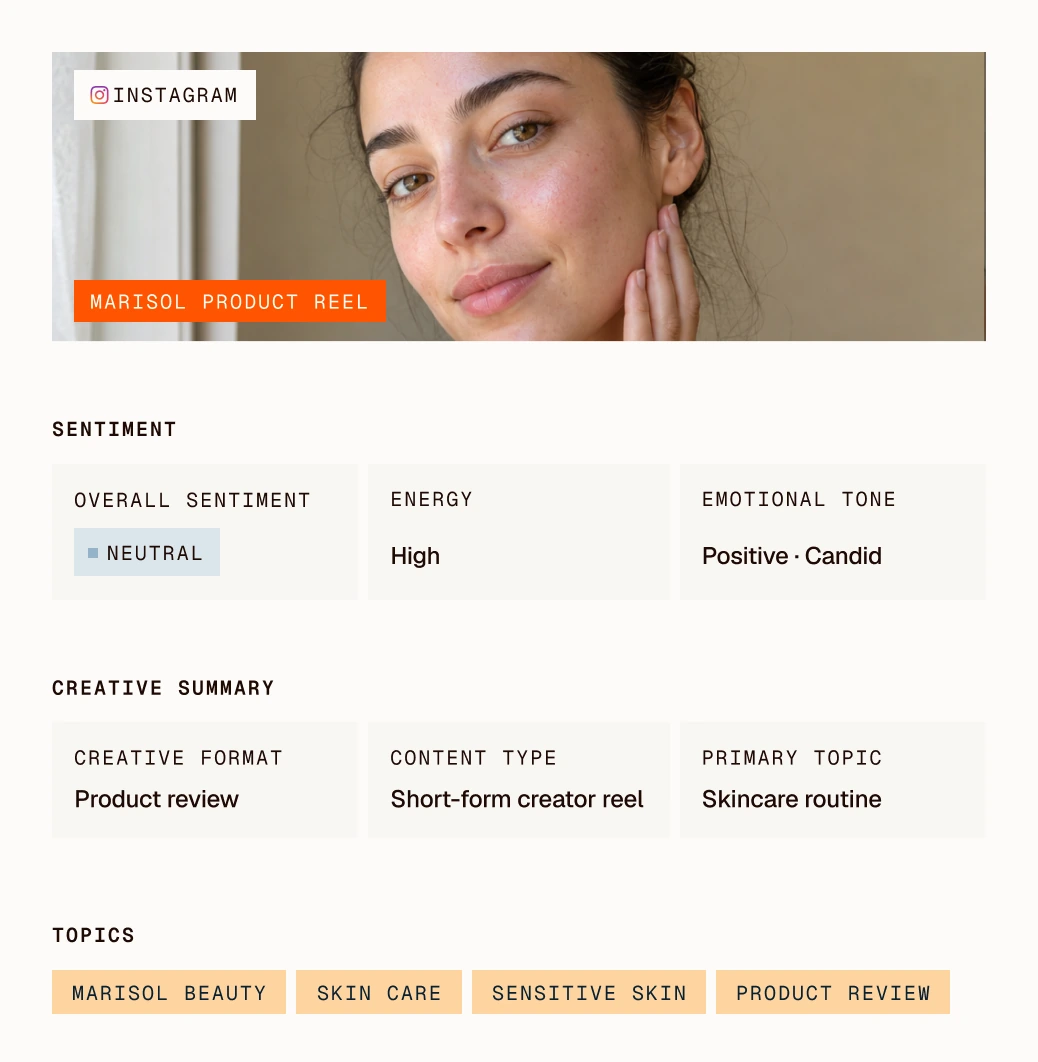
Know Who Wants to Buy and Who Is Just Talking
Plenty of people mention a product and never buy it. Clayface picks out the ones asking where to get it or saying they have given up on it.
See Clayface in Action→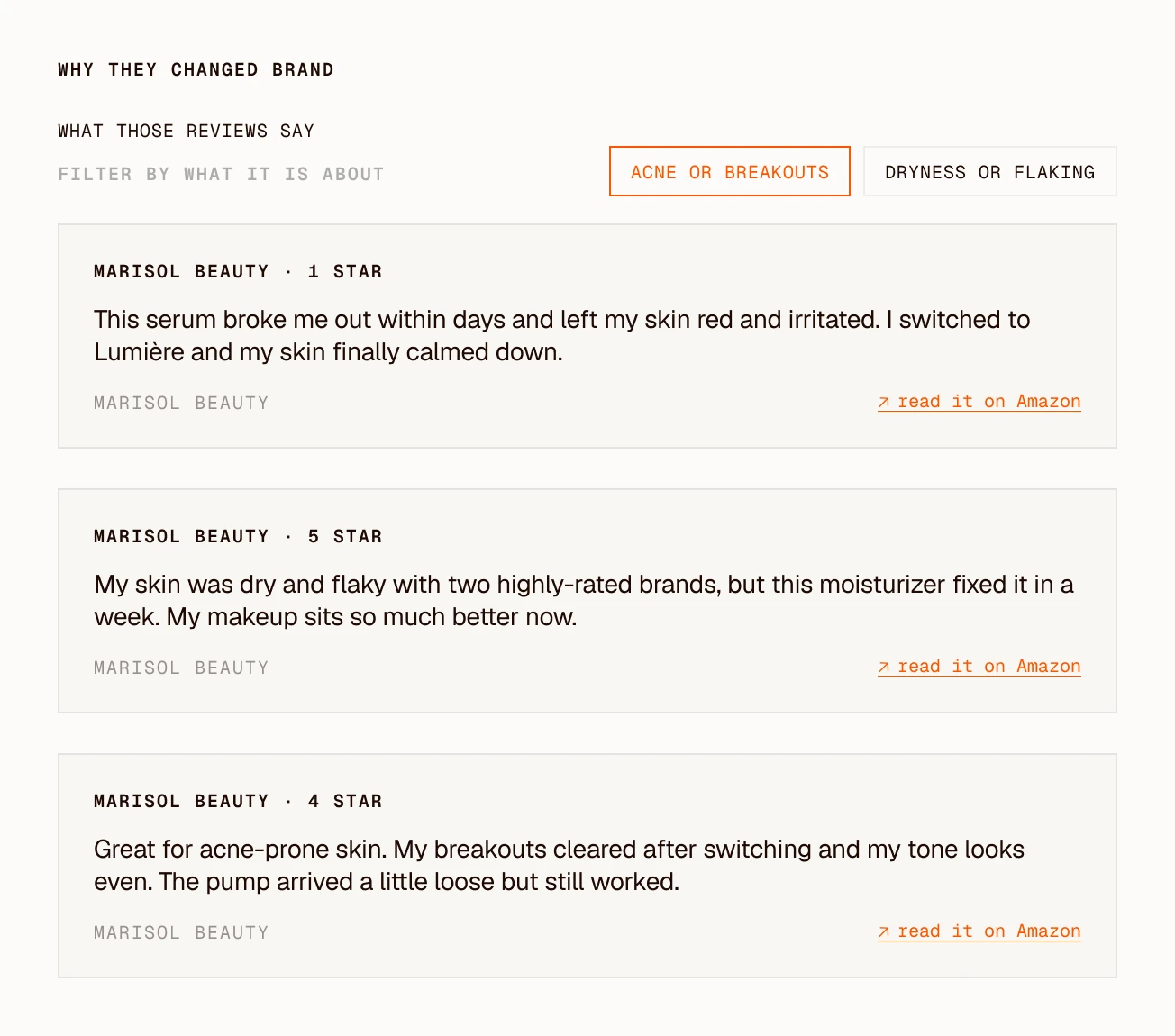
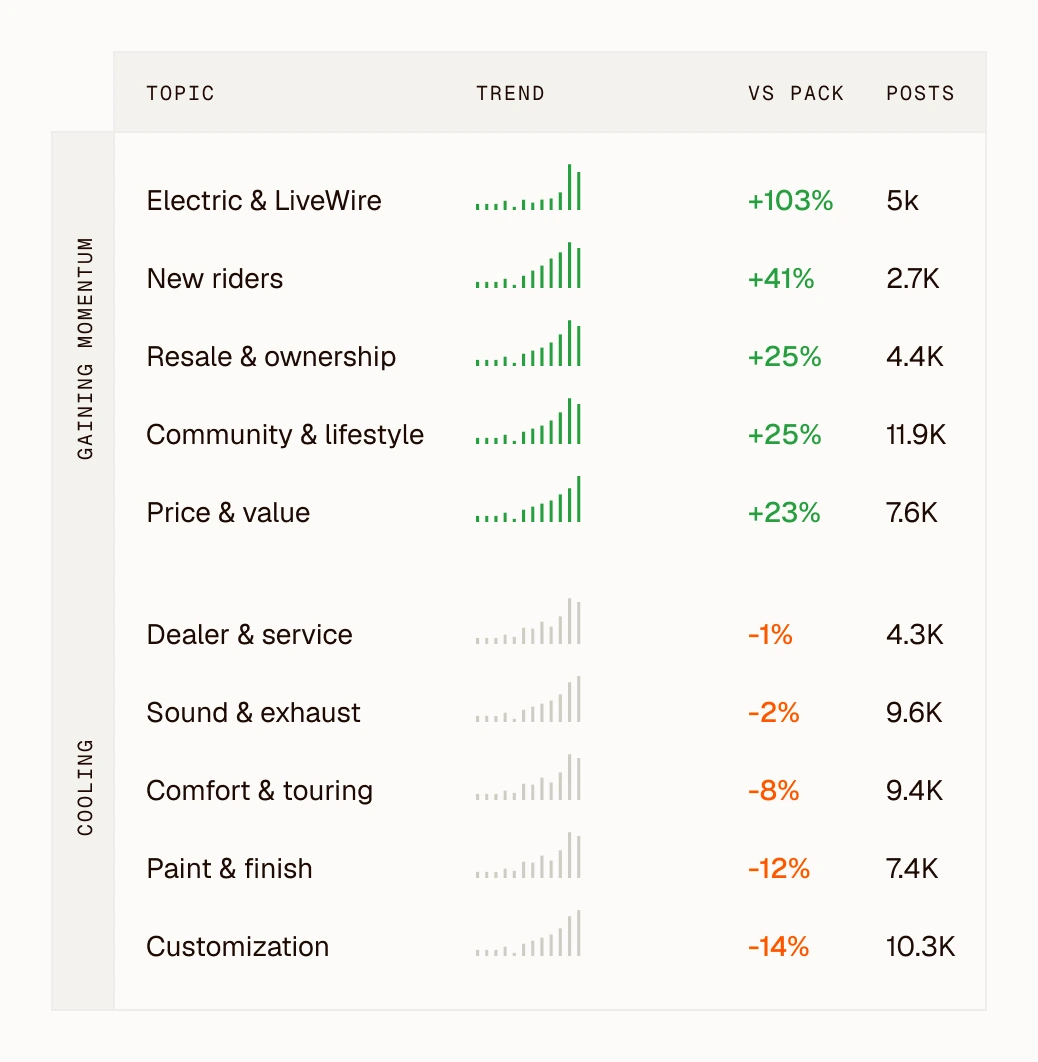
Get Answers Sorted by Your Naming Convention
Every store files your products into its own aisles, and none of them match yours. Clayface uses your product names, so the numbers match your other reports exactly.
See Clayface in Action→
One Product Has a Different Code at Every Store
Amazon, Walmart and your own site each give the same item a different code. Clayface matches them up, which is the slow job nobody wants to do by hand.
See Clayface in Action→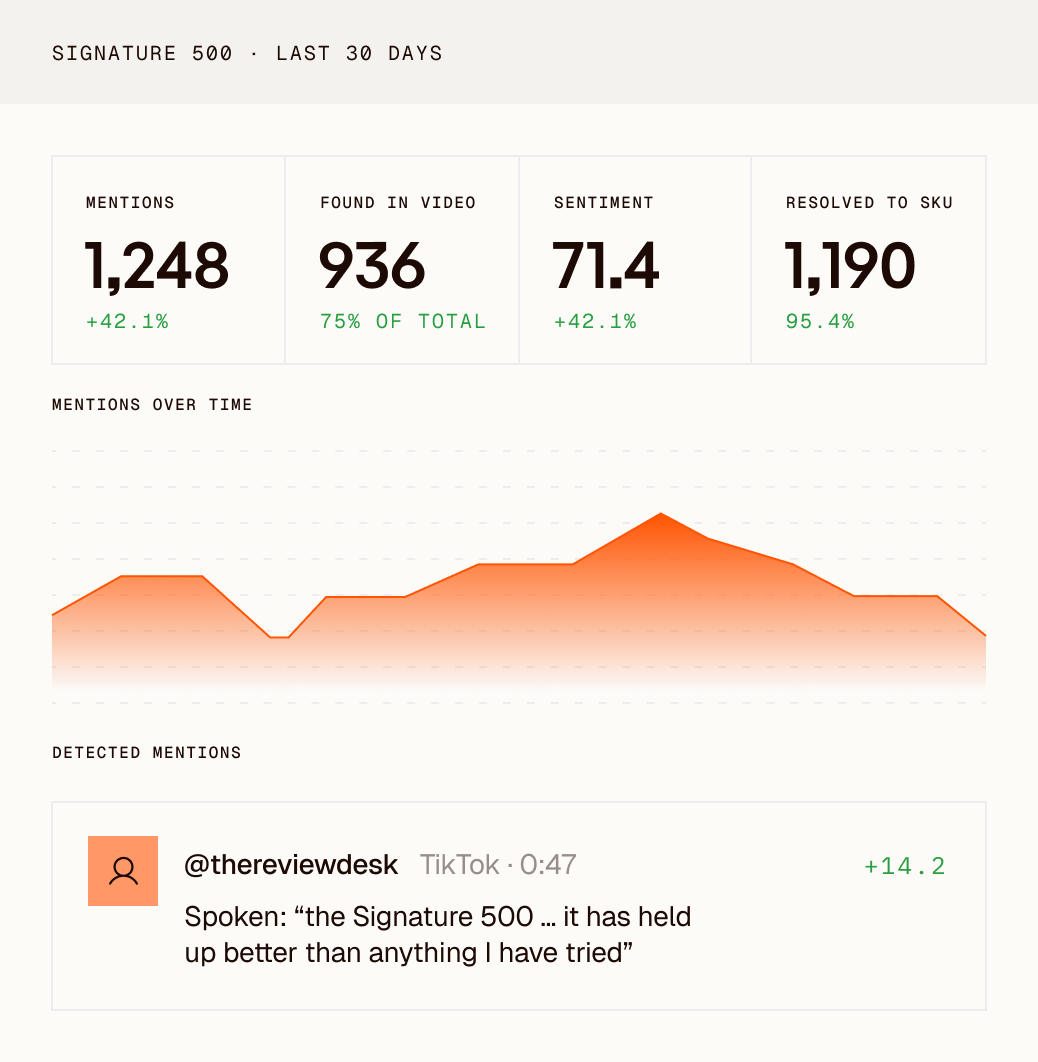
Get a Shelf Check That Updates Itself Every Week
A shelf audit is right the day it is built and wrong two weeks later. This one updates itself and tells you exactly what changed since last time.
See Clayface in Action→

Pick One Product and See Its Whole Shelf
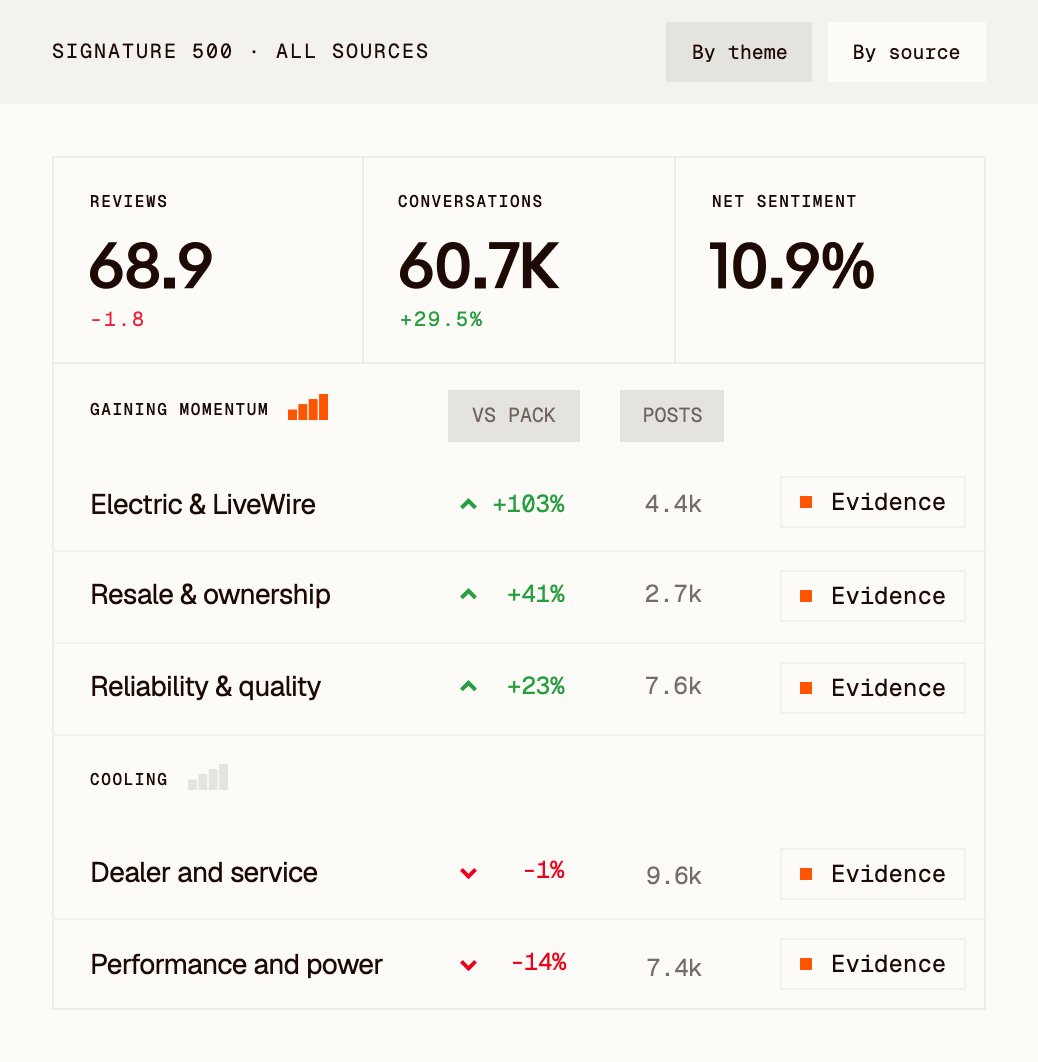
Name a product you sell on more than one store. We will show you every listing, every review added into one score, and what people say about it away from the shelf.
Frequently asked questions

Digital shelf analytics means watching how your products look and sell everywhere they appear online, instead of checking one store at a time. It covers which products are listed where, what the reviews on each listing say, and how your range sits against the brands you compete with.
Monitoring watches one product closely and explains why its rating moved. Analytics steps back to the whole shelf, covering every product on every store, how the range is doing and where the gaps are. Most teams want both, and they run on the same data.
Marketplaces, retailer sites and your own store, along with the reviews sitting on each listing. You tell us where you sell and those are the ones we watch, so the view matches how you actually go to market rather than a fixed list.
No. Clayface covers listings, reviews and the conversation around a product, not price changes, stock positions or anything happening on a physical shelf. Brands usually run a pricing tool alongside us and keep the two jobs separate.
Your product families, model names and category structure go in before anything else, so every listing and every review comes back filed under them. A shelf number then sits in the same report as the rest of your numbers, with nobody remapping anything first.