Social Listening for CPG Brands: A Category-Level Guide
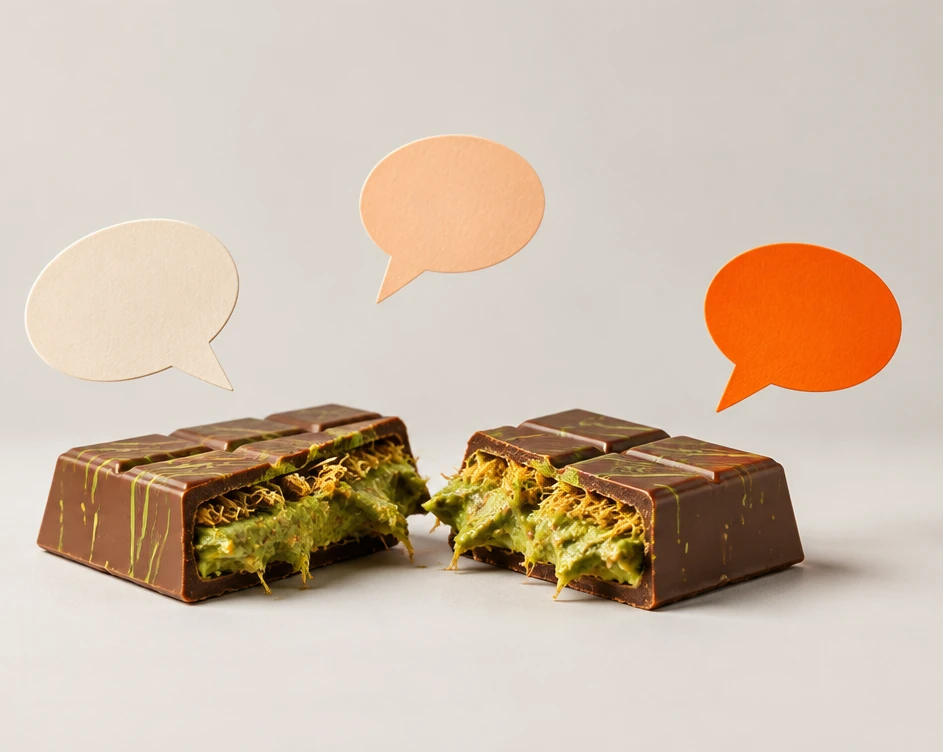
A few days ago, I walked into an ice cream parlour and noticed that a tub of Dubai chocolate kunafa ice cream was almost empty. It has been surreal to watch how this one flavor has slowly turned into a category of its own.
It started in December 2023, when someone posted a TikTok of themselves unwrapping a FIX chocolate bar in a car. At the time, the small Dubai chocolatier sold exclusively in the UAE and never exported its products.
Brands that invested in social listening followed growing conversations around Dubai chocolate and recognized its potential. Lindt, Trader Joe's, Costco, Baskin Robbins, and Läderach all sell their own versions now. In fact, Lindt's Dubai-style chocolate has sold 2M+ bars since its launch and has become a top-selling travel retail chocolate bar.
What's been even more nuts (pun intended) is watching pistachio kernel prices rise from £7.65 to £10.30 in just one year. Iran's exports to the UAE also rose by 40% in six months.
This is a classic example of why social listening matters for CPG brands. It helps you spot a category forming around your product while you still have time to do something about it. In this article, we’ll largely cover why social listening is harder in CPG than in other industries, what to track by category, and how to set it up.
What is Social listening for CPG brands?
Social listening for Consumer Packaged Goods brands includes tracking what people say and show about your products across social platforms, retailer reviews, and forums, then using those insights to make product, packaging, and marketing decisions.
Here’s an excellent example of social listening in the CPG sector.
Recently, Unilever used social listening to uncover over 3.5M posts showing people using Vaseline in ways the company had never originally intended. From setting eyebrows and making perfume last longer to shining shoes, consumers had come up with entirely new uses for a 150-year-old petroleum jelly that had traditionally been marketed for dry skin. Many of these posts didn't even tag the brand.
In March 2025, Unilever decided to put these hacks to the test in its own labs. Those that passed scientific testing received a “Vaseline Verified” seal. This led to two new products launched on TikTok Live in Thailand. Both reportedly sold one product every two seconds.
Vaseline's global brand director, Nathalia Amadeu, reinforced why social listening for CPG brands becomes so important: “It has been a journey of turning Vaseline into a social-first brand. We decided to stop talking and start listening more. A trend is a moment, an insight is a behavior. If it lasts one week or two weeks, it is entertainment. But if it is repeated and consistent, then there is utility in it.”
Why social listening is harder for CPG brands
There are two reasons why social listening for CPG brands works differently than it does for most other industries.
a. The product is the unit of analysis
Most industries, and even many CPG teams, track sentiment at the brand level. But a sentiment score for an entire parent company tells you very little about what consumers actually think of individual products.
A sentiment score for one flavor of a specific SKU is far more useful since it can tell the packaging team whether consumers like the new lid or help the R&D team understand whether a new formula is being enjoyed.

b. Much of the evidence is visual
Most people aren’t writing a review for your new cereal, but they might feature it in their morning routine video or show the box in a grocery haul.

Basically, the brand name never appears in the caption or description, despite the product being on screen. That means traditional keyword-based listening may fail to capture valuable instances.
A North American vehicle and lifestyle brand we worked with also experienced this. Its previous listening tool captured only about a fifth of its campaign content. Clayface picked up additional videos where creators talked about the product for a full minute without ever mentioning the brand in their captions.

Clayface does this by analysing what's spoken, written on screen, and visible in video frames, rather than relying on captions alone.
See what your current tool is missing
Run Clayface alongside your existing platform for 14 days on the same category. Compare what each one picks up, including the videos where nobody typed your brand name.
Start a free 14-day trialCPG social listening by category
These are the categories where the product is visual, bought repeatedly, and discussed by ordinary buyers.
| Category | Where most teams already look | Where the signal is that teams miss | What surfaces first |
|---|---|---|---|
| Food and beverage | TikTok, Marketplace reviews | Instagram Reels recipe content, Pinterest saves, Instacart and Walmart review sections, comment threads under recipe creators rather than the videos themselves | Uses you never designed for. Cottage cheese became a protein staple through recipe videos |
| Snacks | TikTok hauls, YouTube taste tests | r/Costco and r/traderjoes, where new SKUs get found and argued over before any press, plus TikTok Shop review sections | Copycat launches. Dubai chocolate had supermarket versions within months |
| Beauty and personal care | TikTok, Sephora and Ulta reviews | Instagram Reels routines, r/SkincareAddiction and r/AsianBeauty, and YouTube comment sections, which run deeper than the videos | Ingredient debates and dupe comparisons, usually before any brand responds |
| Household and cleaning | Marketplace reviews | CleanTok on TikTok and Reels, private Facebook groups, and Nextdoor, where local product recommendations circulate | Scent and format reactions. Refills get judged on packaging as much as performance |
| Pet | Marketplace reviews | Chewy’s own review section, breed-specific private Facebook groups, and r/dogs, r/cathelp, and r/AskVet | Formula changes. Owners notice a reformulation before the brand hears about it |
| Supplements and wellness | Marketplace, YouTube reviews | r/Supplements and r/Fitness, plus third-party testing discussions where efficacy claims get taken apart line by line | Demands for proof. Dosage and testing arguments move faster than marketing does |
What to track: CPG social listening by examples and scenarios
Here’s a detailed version of what exactly you need to be on the lookout for when it comes to social listening for CPG.
Flavor and ingredient trends
Remember when Gigi Hadid's spicy vodka pasta took over Instagram and TikTok? In 2023, Heinz and Absolut teamed up to launch their own vodka pasta sauce, turning a viral recipe into an actual supermarket product.
Ingredient tracking should reveal what trends can be put on grocery store shelves for home cooking.
What to track: Ingredients appearing alongside new product categories, how quickly those conversations grow, and whether interest lasts beyond the initial hype.
Packaging and format complaints
If you've been on the right side of Twitter or Instagram, you must have come across pictures of eggs coming in packets and peeled bananas wrapped in plastic.
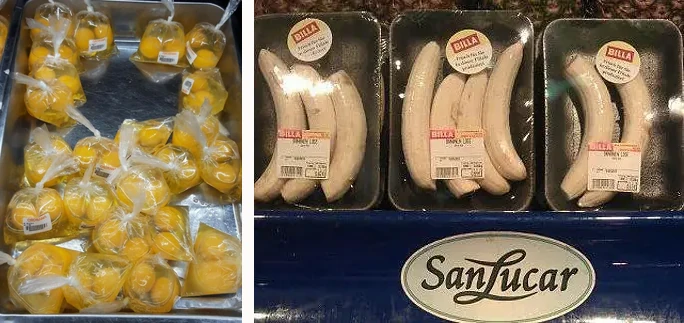
Things may not be so drastic, but when it comes to packaging, consumers rarely file support tickets about this. They complain in Amazon reviews, Reddit threads, or grocery haul videos, often about specific products.
What to track: Separate complaints about underfilled packaging, broken seals, difficult openings, and poor resealability. One negative packaging sentiment score cannot tell you which problem needs fixing.
Not ready to run a trial?
Get a free report on the conversation around your category, including the posts, comments, and videos your current setup is not counting.
Get a free reportUntagged creator mentions
You might think your competitor is less popular because they barely get mentioned on social media. But what if their products are appearing in hundreds of skincare routines without anyone tagging them?
Someone could spend a full minute recommending your competitor's moisturizer without ever typing its name, but a keyword-based listening tool would miss it entirely.
What to track: Brand and product appearances in spoken audio, on-screen text, and video frames alongside tagged mentions.
Crisis language
In October 2026, Kayem Foods recalled approximately 1.58 million pounds of meat and poultry products after a cooling system malfunction at one of its warehouses caused products to be stored at unsafe temperatures. Soon, a retail customer complained that the products arrived unusually warm.
Talk about a scandal. Just one complaint helped uncover a much larger storage problem, eventually leading to the nationwide recall.
What to track: Specific complaints such as "made me sick," "arrived warm," "expired," or "found something inside." Flag potentially serious issues immediately rather than waiting for hundreds of similar posts.
Comment sections
In 2019, The Atlantic published an article titled How Comments Became the Best Part of Instagram. Seven years later, the idea still applies to Reels, YouTube Shorts, and TikTok.
A creator's video might get thousands of views, but the 400 comments underneath it tell you whether people actually bought the product, liked it, or regretted the purchase.
What to track: Comments separately from the creator's original post. Clayface analyzes both, helping brands distinguish creator enthusiasm from actual consumer feedback.

Private groups and forums
Pet parents very often reach out to other parents online about any shift in their pet's behavior. As a pet food company, you are less likely to hear about a recipe problem through your official Instagram account. But in a breed-specific Facebook group, one parent can complain about their dog's stomach after a formula change, and 60 others will join the conversation. These discussions are difficult to find because many groups aren't publicly searchable.
What to track: Relevant breed communities, product forums, and category-specific groups. One of our powersports clients uses Clayface to track 20 motorcycle forums and private Facebook groups alongside public social conversations.
“We named the Facebook groups on a Tuesday and had them running by Thursday. Everywhere else that has been a month-long exercise that does not always end up working.” - Marketing Lead, Clayface Powersports client
Where to start Social Listening for your CPG brand
Start with one category question
The CPG market is dense. But none of what you've read here needs to turn into a six-month research project.
Start with one category question that could influence a decision this quarter. If you're a skincare brand, are consumers moving away from certain ingredients or just complaining about specific formulations?
If you're a snack brand, is the demand for high-protein products still growing, or have competitors moved on to high-fibre?
If you already have a tool, you do not have to replace it to test us. Instead, you can run Clayface alongside your existing platform during a 14-day trial.
Track the same category, compare the conversations each tool captures, and see the conversations your current setup might be missing.
Start a 14-day trial today.