YouTube Shorts Analytics: What Brands Can and Cannot Measure
YouTube Shorts analytics normally covers Shorts published on your own channel, tracking metrics like views, engaged views, subscribers gained, how many people chose to watch instead of swiping away, and how long they stayed.
These metrics tell you how your content performs, but they leave out something equally important to brands.
Brands also need to know which creators are talking about their products, what they're saying, how audiences are responding, and whether the sentiment is positive or negative. After all, what people say about your products in their own Shorts can matter just as much as how your own content performs.
YouTube Studio can show you when another creator tags your channel, but it doesn't track every time someone talks about your products or shows them in a Short. That doesn't make these conversations any less important for brands to measure.
Let me show you what I mean.
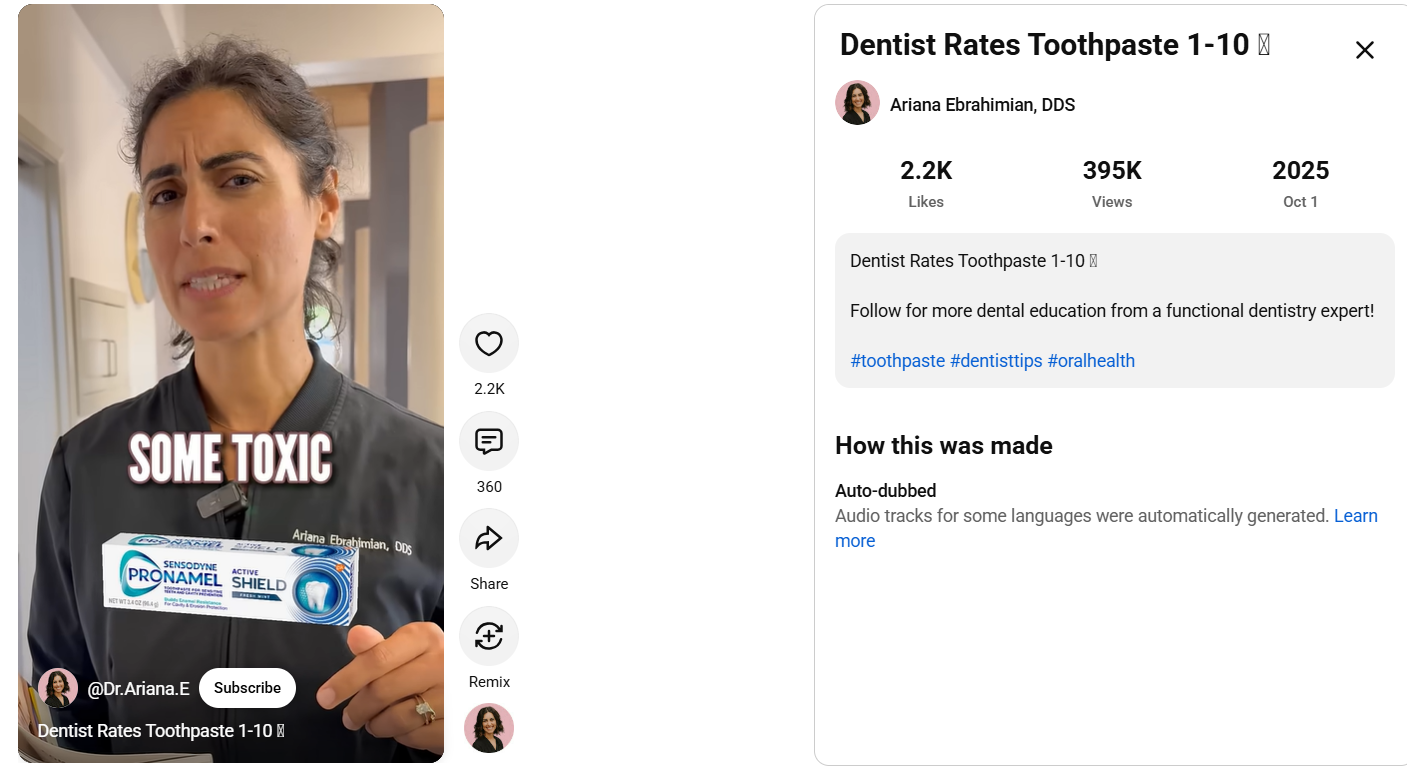
In this Short, a dentist reviews different toothpastes. She puts the Sensodyne Pronamel logo on the screen and gives it a 2 out of 10. She does the same with Crest 3D White, Colgate Total, and Tom’s of Maine, naming the ingredient she objects to in each one. Some of the ratings are zeros.
The Short has almost 400k views. For a lot of those viewers, this could now influence what they think when they walk down the toothpaste aisle.
Now look at the panel on the right. Neither the title nor the description mentions any of the brands. Not one of those brands is tagged.
The brand names appear in only three places: what she says out loud, the logos she holds up to the camera, and the text displayed on the screen. YouTube Shorts analytics inside YouTube Studio most likely doesn't have a clue.
Why YouTube Shorts deserve a place in brand analytics
Minda Smiley, a Senior Analyst at EMARKETER, said in a report by Pixability:
“Social teams will have to get more comfortable using YouTube even though it doesn’t fit neatly into the ‘social’ bucket.”
According to the report, YouTube Shorts reach over 198 million people in the U.S., compared to 56 million for the rest of YouTube combined. Just like TikTok, YouTube Shorts has become part of the wider social conversation.
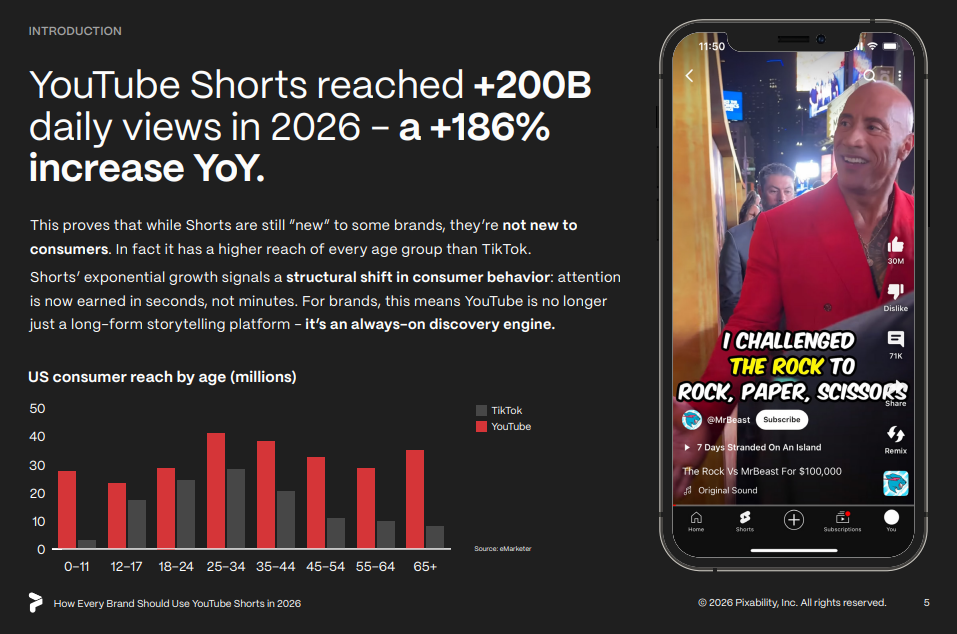
More people are discovering new brands and products on YouTube, and Shorts is becoming an important advertising channel. In 2025, 50% of U.S. agencies planned to include Shorts in their ad strategies.
In a study of 75,000 brands, Ahrefs found that brands mentioned more frequently on YouTube were also more likely to appear in AI-generated answers. This relationship was stronger than that for branded web mentions, search volume, backlinks, or website page count.
This suggests that what a dentist says about your toothpaste in a 40-second clip could also influence how your brand appears in AI-generated answers when shoppers ask which toothpaste to buy.
Therefore, for brands, YouTube Shorts analytics should go beyond their own channel and cover these 3 areas:
- Partnered creators and influencers: How their Shorts perform, what they say about your products, and how audiences respond
- Wider category conversations: What people are saying about competing products, which creators are driving those conversations, and how your brand compares
- Independent customer reviews: How regular customers review, recommend, or criticise your products, directly or indirectly, even without tagging your brand
The next five sections cover how to track these conversations and what brands can learn from them.
How many conversations about your brand are happening without you knowing?
Creators are reviewing your products, comparing them with competitors, and influencing buyers without tagging you. Clayface helps you find these conversations and see what people actually think.
Start a 14-day parallel runHow to track brand mentions across creators' YouTube Shorts
The first thing you see when you open YouTube Studio is a dashboard built around your channel. And that's a good thing, because you get access to all these useful YouTube Shorts analytics metrics:
- Latest content performance: How your most recently published video is performing
- Channel analytics: Watch time, views, and subscribers over the last 28 days
- Published videos: A snapshot of your recent uploads
- Latest comments: Comments you haven't replied to yet
- Recent activity: Your new subscribers and members
- Channel violations: Strikes and appeals
- Ideas for you: Suggestions for what to create next
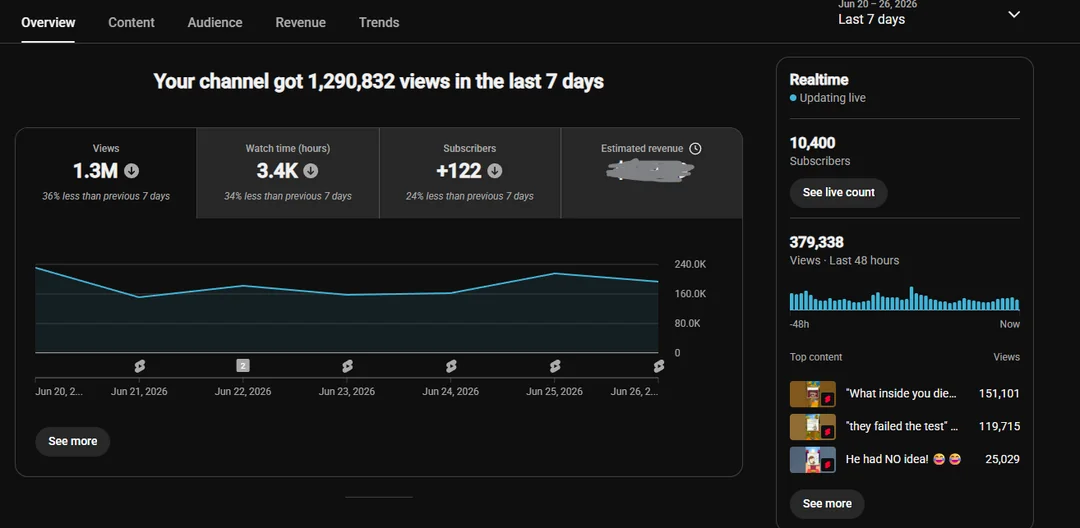
For individual Shorts, you can track how many times your Short was shown in the feed, how many people chose to view it versus swiping away, average view duration, and audience retention.
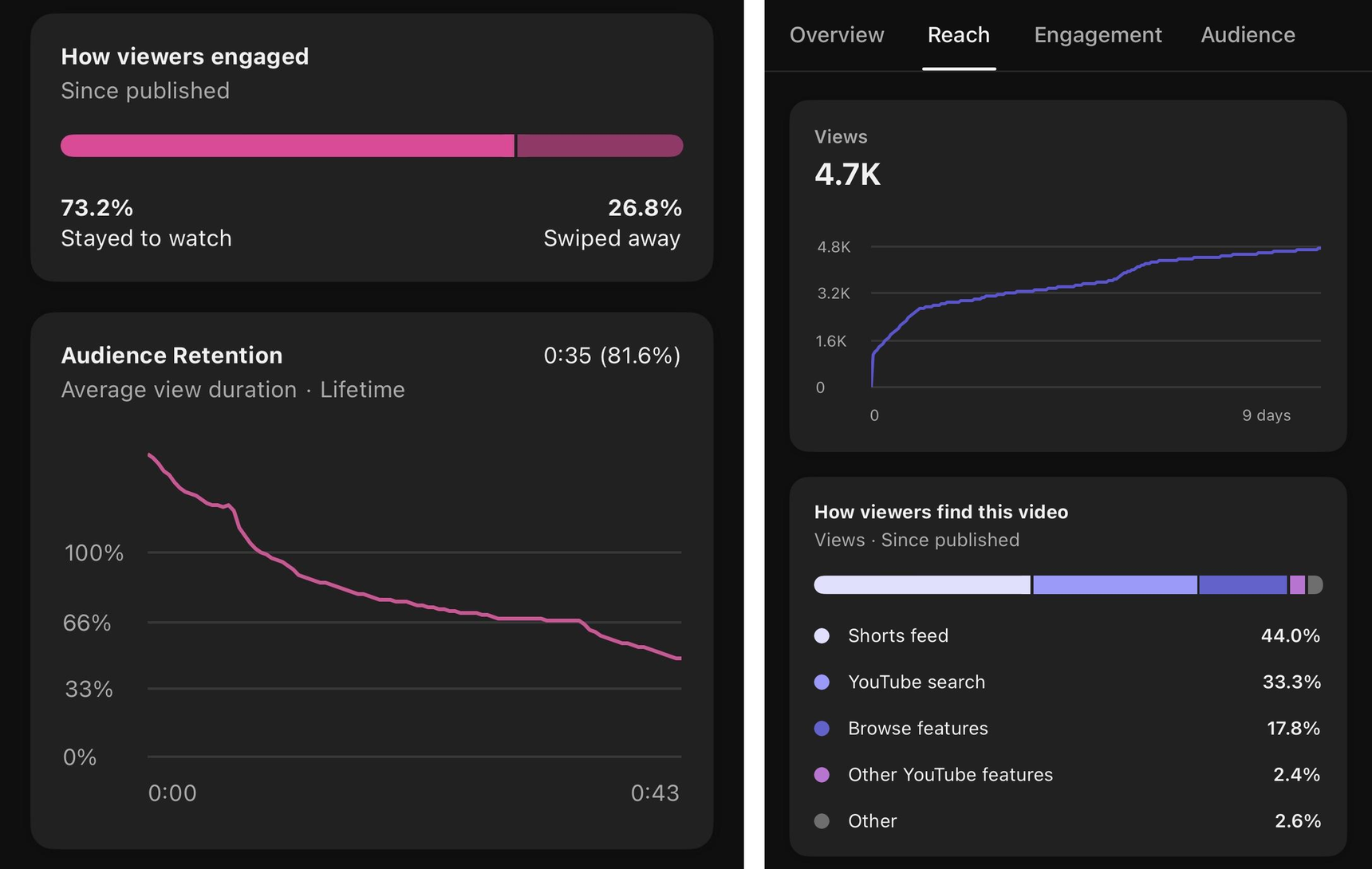
But brands have another important YouTube Shorts analytics metric to track: how often their products are mentioned in Shorts published by other creators.
So how do brands actually track this today? Most start with the manual version. Something like this:

To avoid spending hours searching manually, your next step is a social listening tool. That covers far more ground. To set it up, you need a keyword list that includes:
- Your brand name, including common misspellings
- Individual product and SKU names, since creators might say “Pronamel” without mentioning Sensodyne
- Branded hashtags and campaign names
- Competitor names, if you want to measure share of voice rather than just your own mentions
But even this list isn't enough and brings us back to our original problem.
How to analyze spoken mentions, on-screen appearances, and sentiment in YouTube Shorts
Similar to our previous dentist short, this creator takes a pair of $300 Nike running shoes onto a basketball court to see what happens. He says he likes the shoes, but then starts pointing out the problems. The sole rolls under him on hard turns, and the traction grips so well that he eventually breaks the shoe.
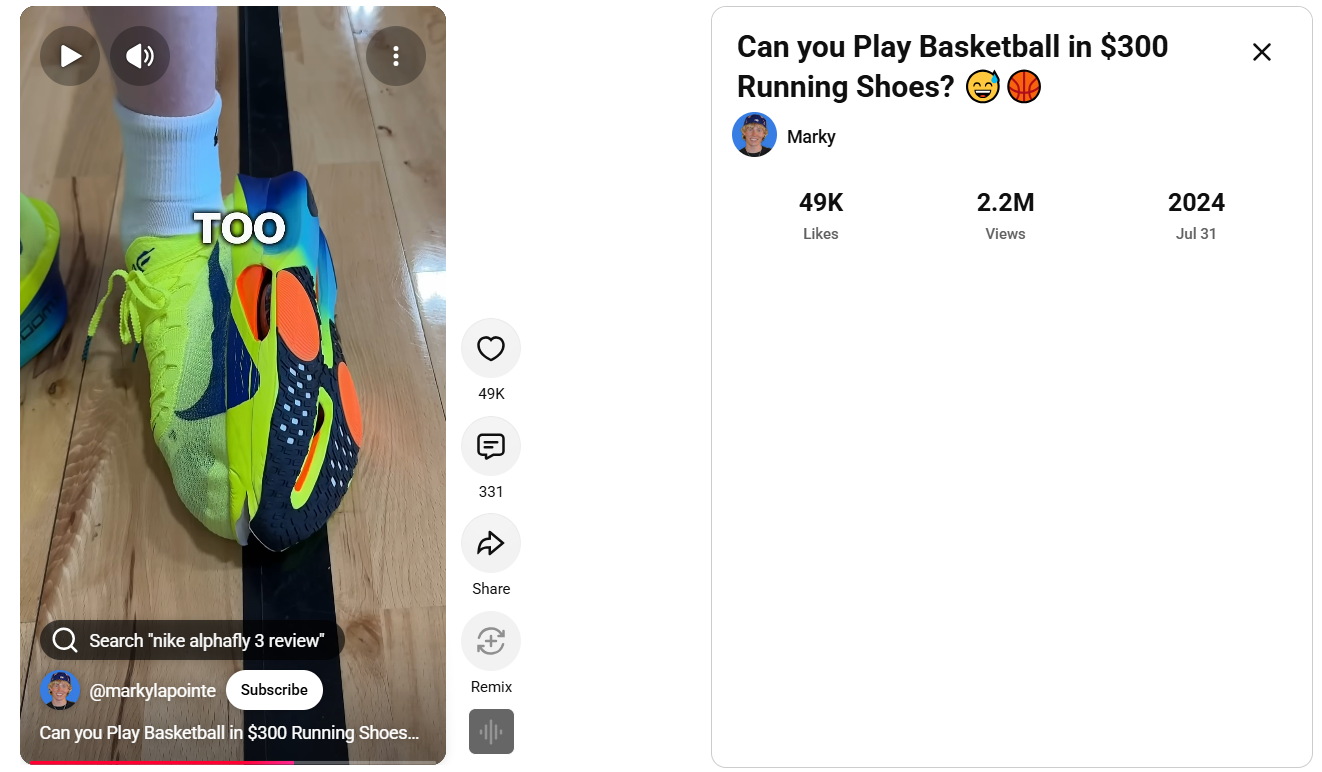
So while it's a positive review of a running shoe, it's also a warning about using it for basketball, all in the same 60 seconds. The Short has over 2 million views, but Nike isn't mentioned anywhere in the title or description.
See, most social listening tools read the same fields YouTube indexes, such as titles, descriptions, hashtags, and tags. So they find the Shorts that name you and miss the ones that only show you. To capture these missing signals in YouTube Shorts analytics, brands need video intelligence.
Take a look at how Clayface breaks down a creator's video:
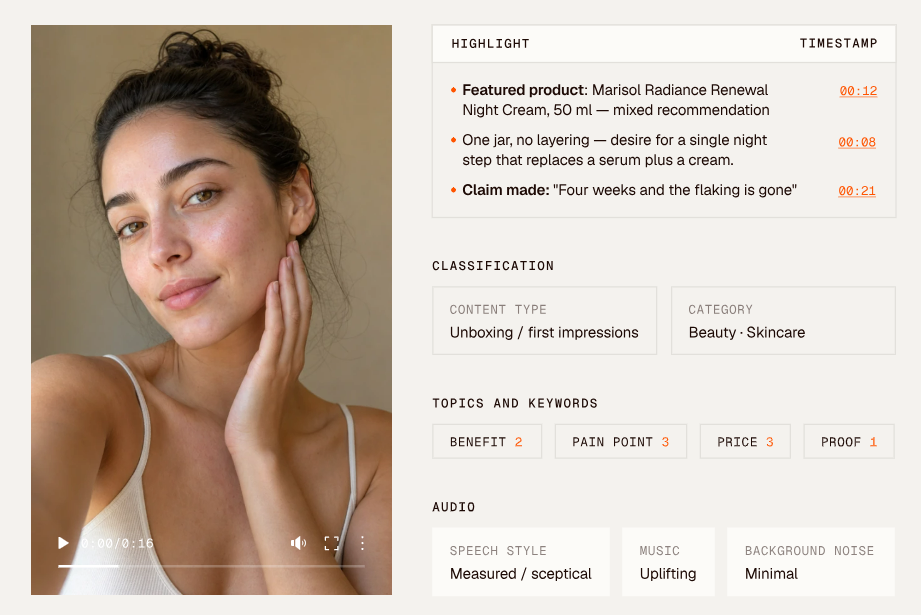
Instead of relying on the caption, Clayface analyzes what's inside the video. It transcribes spoken audio, captures on-screen text, and detects visible products and logos.
The dashboard then gives you a timestamped breakdown of the content, showing exactly where a product appears or a particular claim is made. It also classifies the content, identifies topics such as benefits, pain points, price, and proof, and provides information about the audio.
Clayface uses these signals to analyze sentiment, organize conversations into themes, and connect mentions to specific products rather than just the parent brand.
How to track YouTube Shorts comment sentiment and audience feedback
Returning to the dentist Short from the introduction, which had 360 comments, YouTube Studio gives you the number 360 and a feed to scroll through. But that's not enough.
The comment section offers one of the most direct insights into consumer thinking, like which toothpaste viewers switched to or which one their own dentist recommends. That's why comment sentiment deserves as much attention in YouTube Shorts analytics as views and engagement.
And the toothpaste brands featured in that video aren't dealing with just one Short. They're dealing with hundreds of videos like it across YouTube, TikTok, and Instagram, potentially adding up to tens of thousands of comments. That's why marketers have been looking for automated tools to analyze these conversations for a while now.
To actually make sense of thousands of comments and connect the insights to appropriate actions, take a look at what Clayface facilitates.
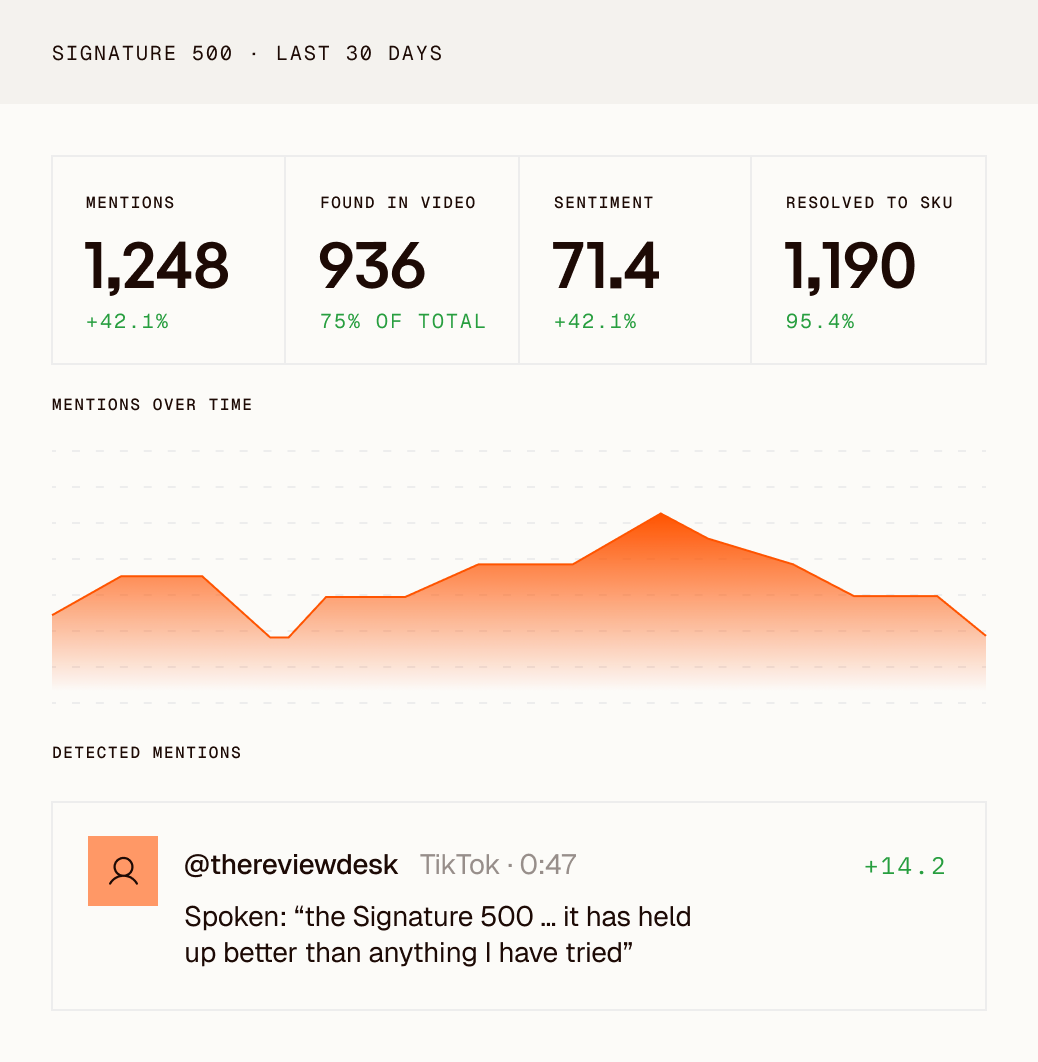
In this example, the dashboard tracks every single mention, including the number found inside videos. Below that, brands can see how mentions changed over time, which creators contributed to the conversation, and whether those mentions were positive or negative.
Clayface also goes beyond simply counting negative mentions. For example, a passing complaint in a comment and a detailed video criticizing a product shouldn't carry the same weight. Clayface considers factors like reach and intensity, helping brands understand which negative conversations could have a greater impact on how their products are perceived.
For YouTube Shorts analytics, this means brands can look beyond comment counts and identify which creators, videos, and customer opinions deserve their attention.
Your product could be in a viral Short right now. Would you even know?
A creator can show your product, mention it out loud, or criticise it without ever typing your brand name. Clayface picks up spoken mentions, logos, and on-screen text that keyword-based tools miss.
Start a 14-day parallel runCan brands track competitors’ YouTube Shorts metric?
Yes, but only the publicly available ones (views, likes, comments, and posting frequency). Competitors' swipe rates, retention curves, and average view duration are private to their YouTube Studio accounts.
But brands can go beyond these basic numbers. Here are some other metrics worth tracking and what they can tell you:
- Creator performance: Which influencers regularly feature competing products, how their videos perform, and which creator partnerships are worth exploring.
- Spoken and visual mentions: Which competing products, features, and claims receive the most attention, even when the brand isn't tagged.
- Share of conversation: How often people discuss your brand compared to competitors, and which products or categories drive those conversations.
- Comment sentiment: What customers praise or complain about, and which product weaknesses your brand could address.
- Content themes: Which product benefits, use cases, and video formats resonate with your competitors' audiences and are worth testing yourself.
Of course, you can't access all of this through YouTube Studio alone. You'll need to review competitors' public Shorts or use a social intelligence tool that analyzes video content and audience conversations.
Clayface applies the same analysis across your brand and its competitors, comparing share of conversation, sentiment, creator activity, and the topics customers associate with each brand.
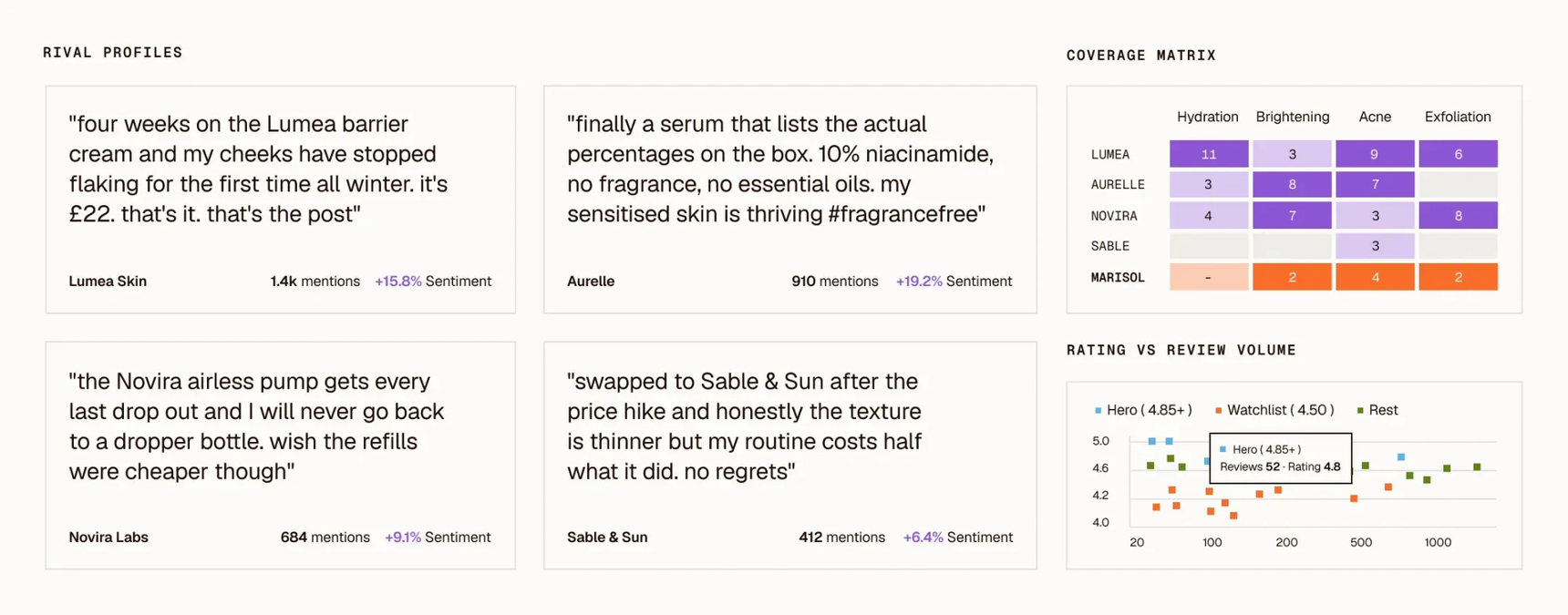
Look at the coverage matrix above. It shows how often different skincare brands are discussed around hydration, brightening, acne, and exfoliation. Instead of simply knowing which competitor has more mentions, a brand can see where its rivals are winning attention and which product benefits it isn't getting enough credit for.
These insights help brands decide which creator strategies are worth testing, which product claims deserve more attention, and where competitors are leaving gaps they could fill.
How to track YouTube Shorts analytics automatically with Clayface
We've covered the metrics brands should be tracking from audience sentiment to competitor activity. But keeping up with new conversations every day across hundreds of Shorts is where things get troublesome.
With Clayface, you only need to configure your brand, products, and competitors once. From there, tracking runs automatically on a schedule, picking up new Shorts and analysing spoken audio, on-screen text, visible products, and comments.
You can see what people are saying, which products they're discussing, and how those conversations are changing, all in one dashboard. And since these conversations don't stop at YouTube, Clayface also tracks TikTok, Instagram, and other supported platforms.
YouTube Studio tells you how the Shorts you've published are performing. But how much of the conversation happening around your brand are you missing?
Book a Clayface demo and see what your current tools missed last month.