Clayface Digital Shelf
Digital shelf analytics that explain what drives growth
Track your products on Amazon, retailer sites and your own store, then see what is driving the change. Clayface reads the text of every review and joins it to what people are saying on social and in forums.
Schedule your free demo
Book a walkthrough with your reviews, search position and social conversation side by side.
No commitment. We'll reply within one business day.











What digital shelf monitoringcovers for consumer brands
Review text, analysed
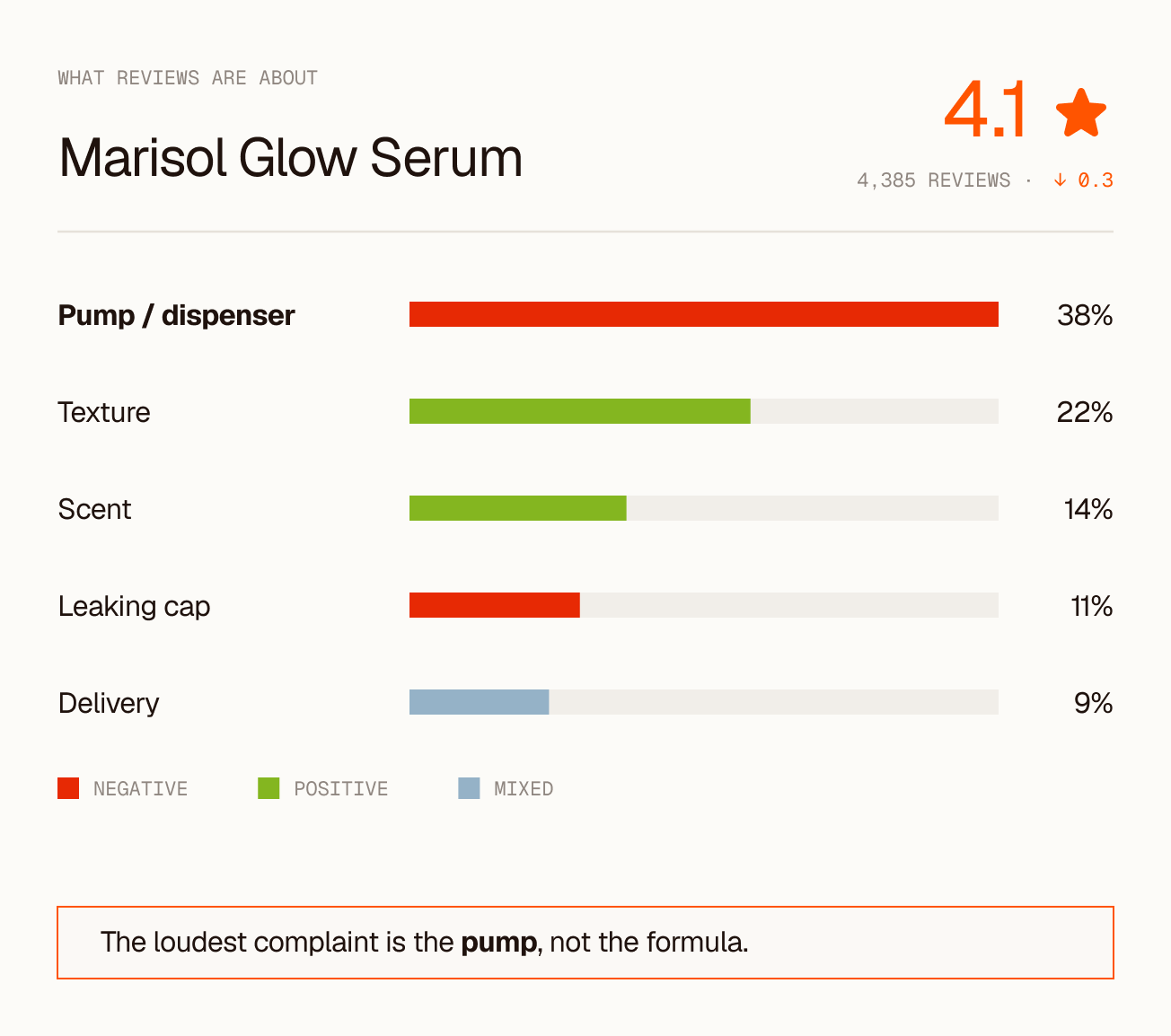
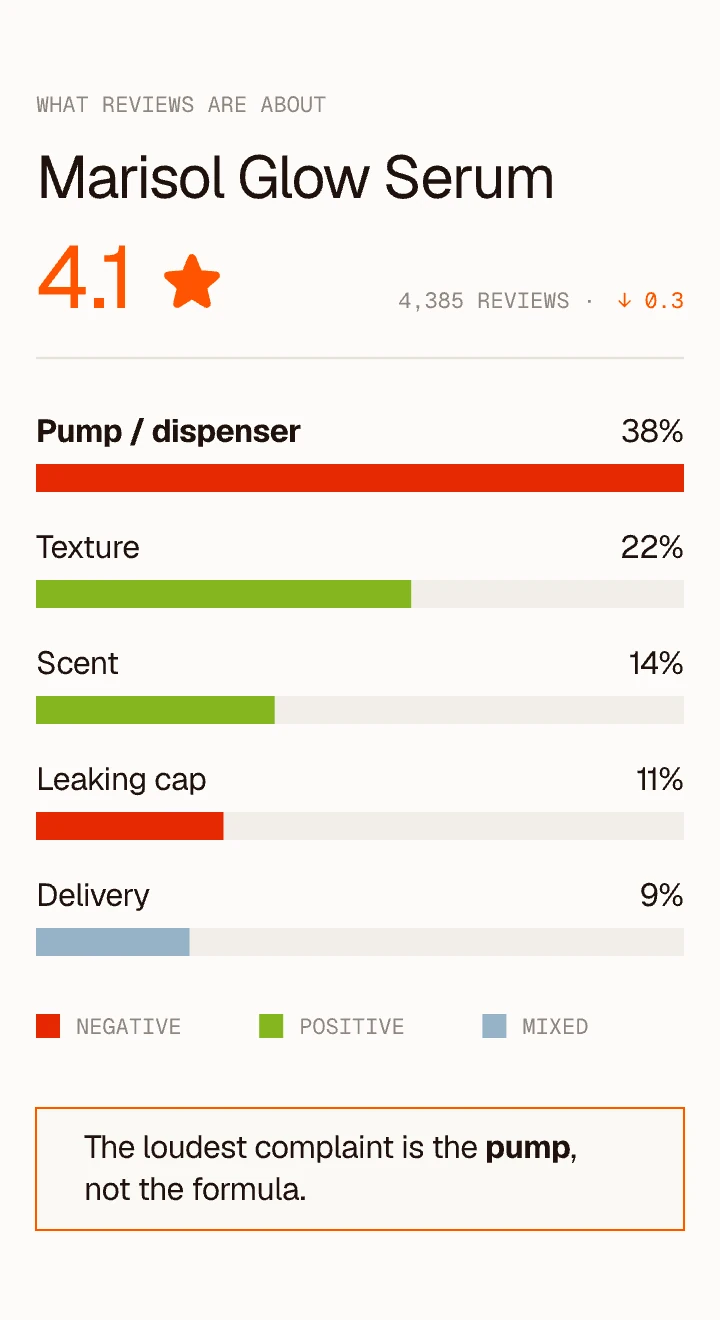
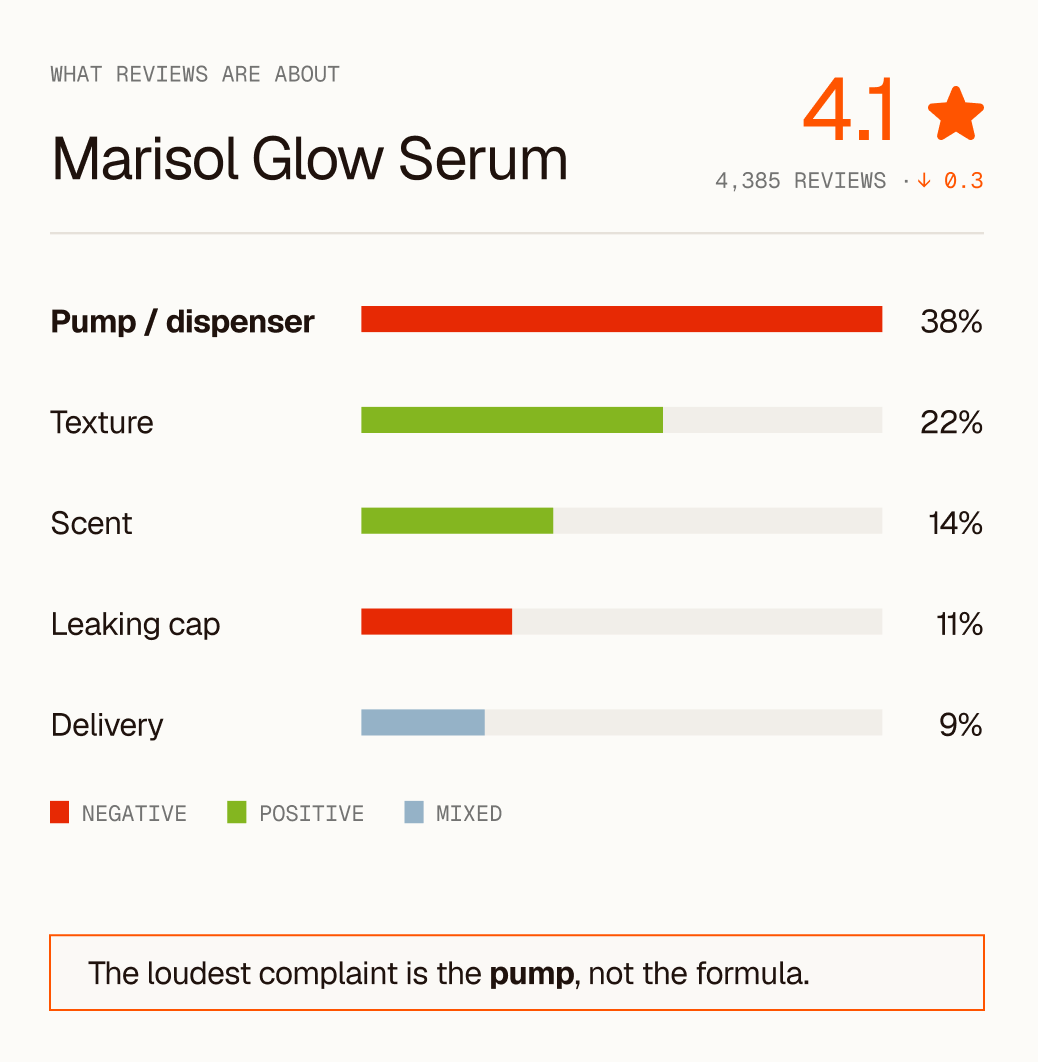
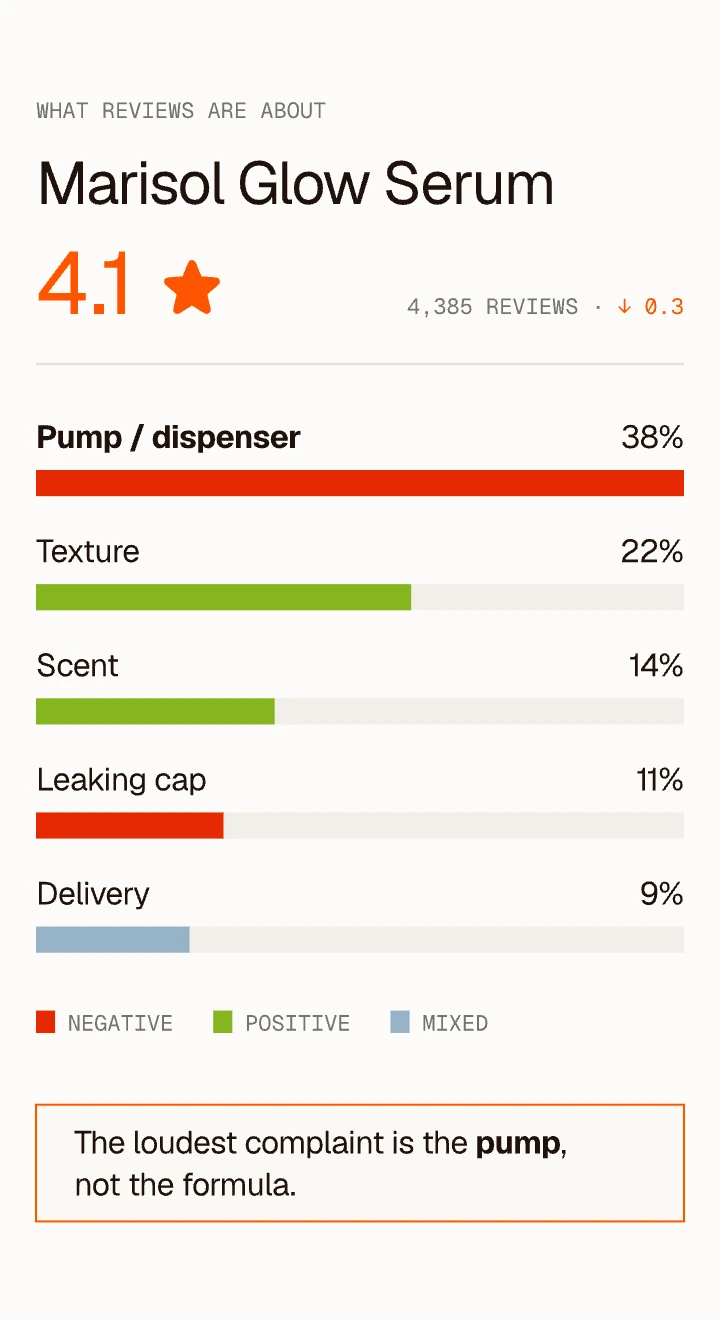
A star rating says something is wrong but not what. See the subjects people raise in every review, how often each comes up and which product each belongs to.
See Clayface in action
Search position, by product
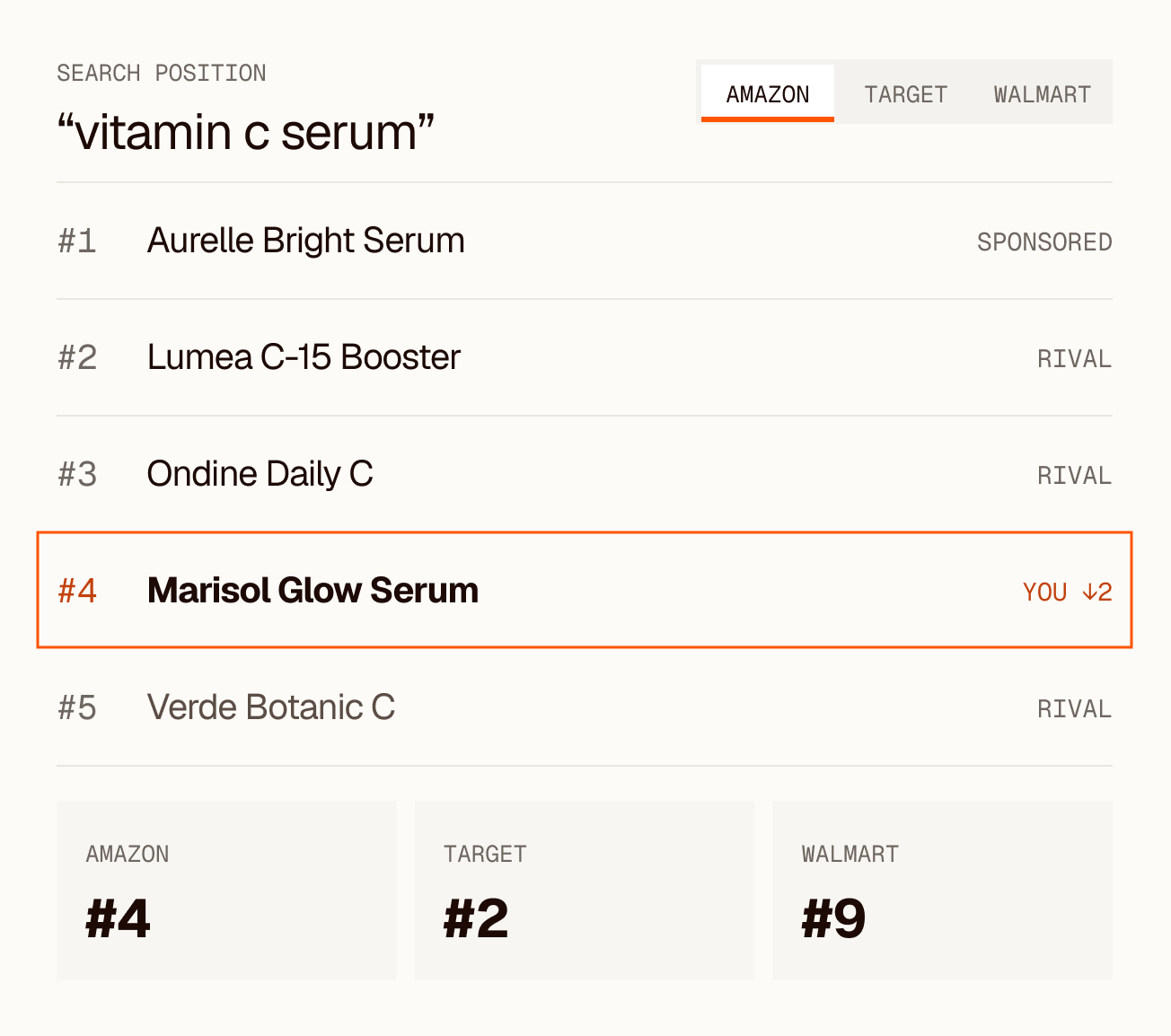
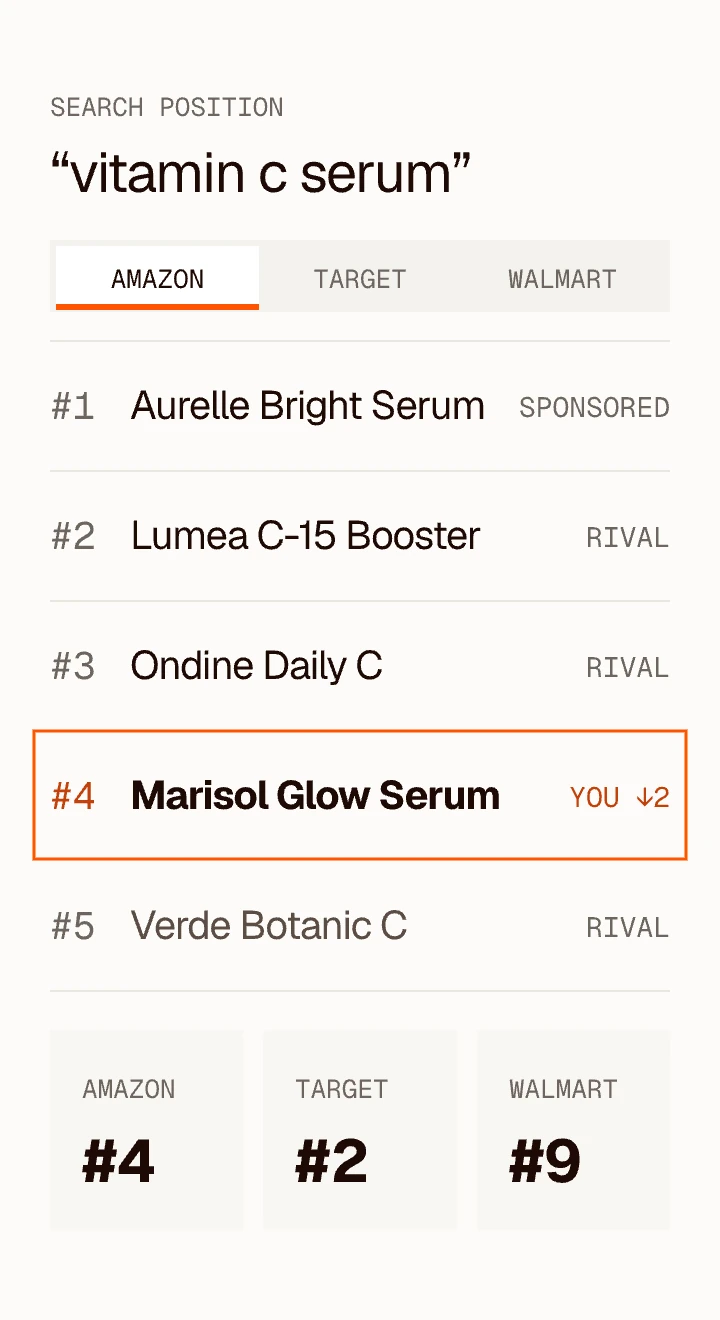
Shoppers look well beyond page one, so where you rank on each search matters across the whole results page. See where each product sits for the searches that matter and which rivals sit above it.
See Clayface in actionThe conversationaround the shelf
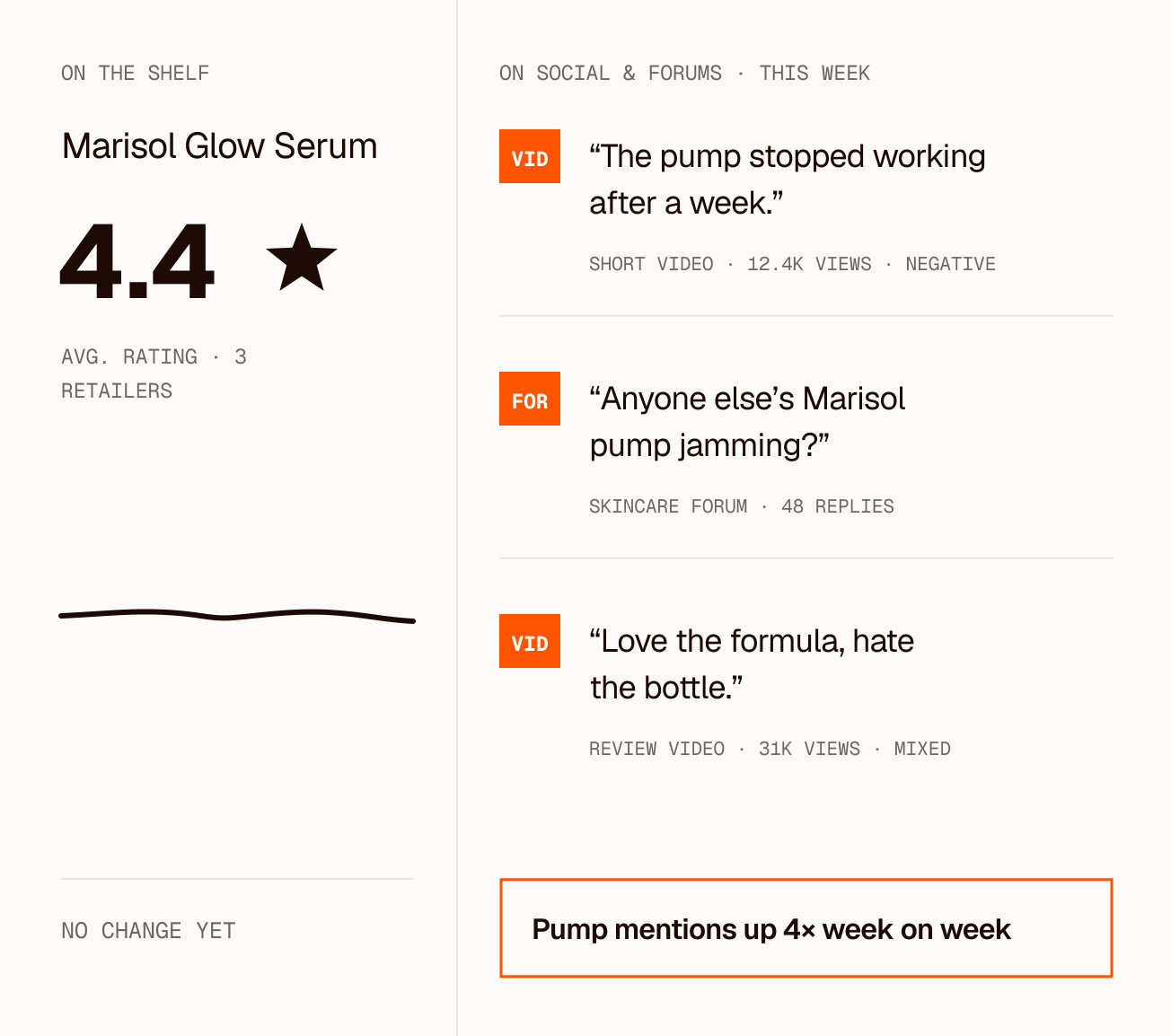
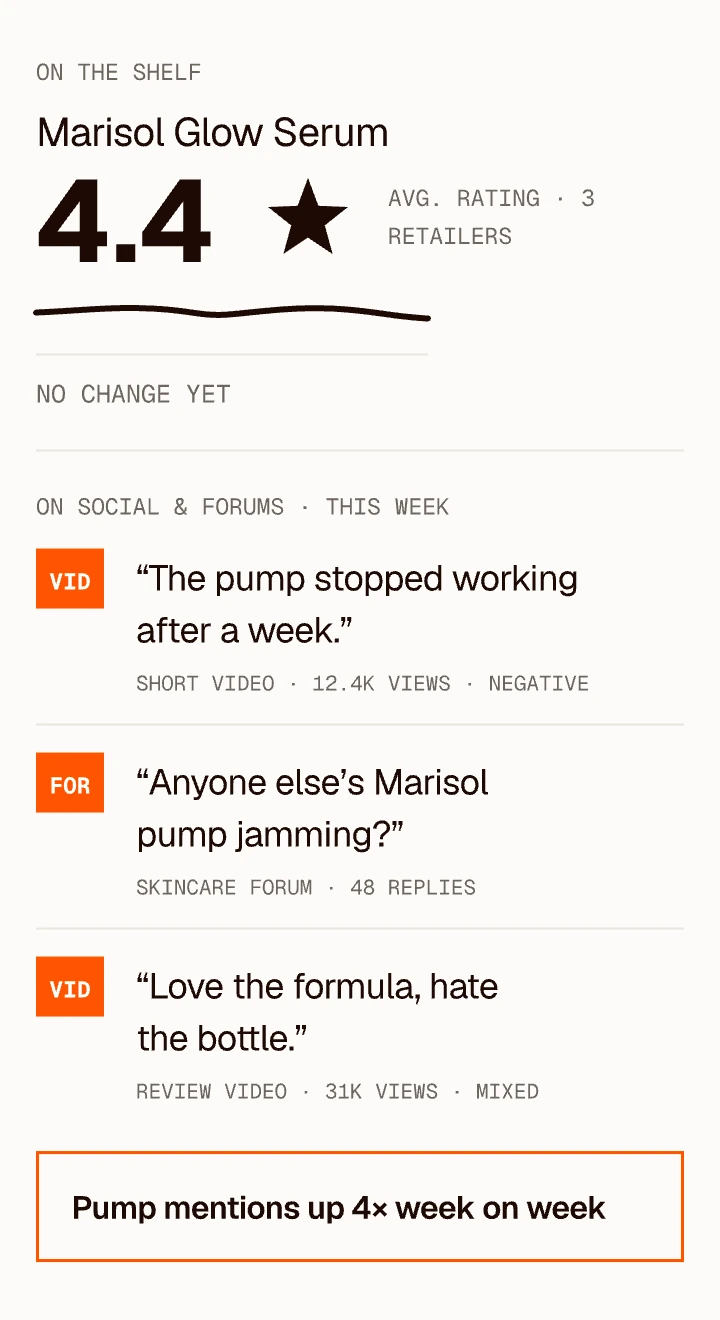
People complain in a video long before they write a review. See what is said on social and in forums, next to how the product is doing on the shelf.
See Clayface in action


Total shelf visibility. Zero blind spots.

Any marketplace, retailer or brand store

Every review read, every rival tracked

BI-ready outputs in your own product taxonomy
Catch the product fault before the rating falls
A large North American motorcycle and lifestyle brand saw customers posting about a fault six weeks before it reached their reviews
"People were posting about a fault six weeks before it showed up in our reviews. We fixed it in that window and the rating never moved."

Find the real cause behind a half-star drop
A global beauty retailer saw one product lose half a star across three retailers in a month.
"One product lost half a star across three retailers in a month. It turned out to be the packaging, not the product, and we would never have found that in a rating."

Five digital shelf featurescut to your product structure
Clayface joins retailer listings, review text and social conversation on one timeline, and shows it in your own product families and models rather than a vendor's category tree.
Understand what every review says
Every review is read and grouped by subject, so you can see which one or two issues account for most of a score drop, and which product each belongs to.
See Clayface in Action→
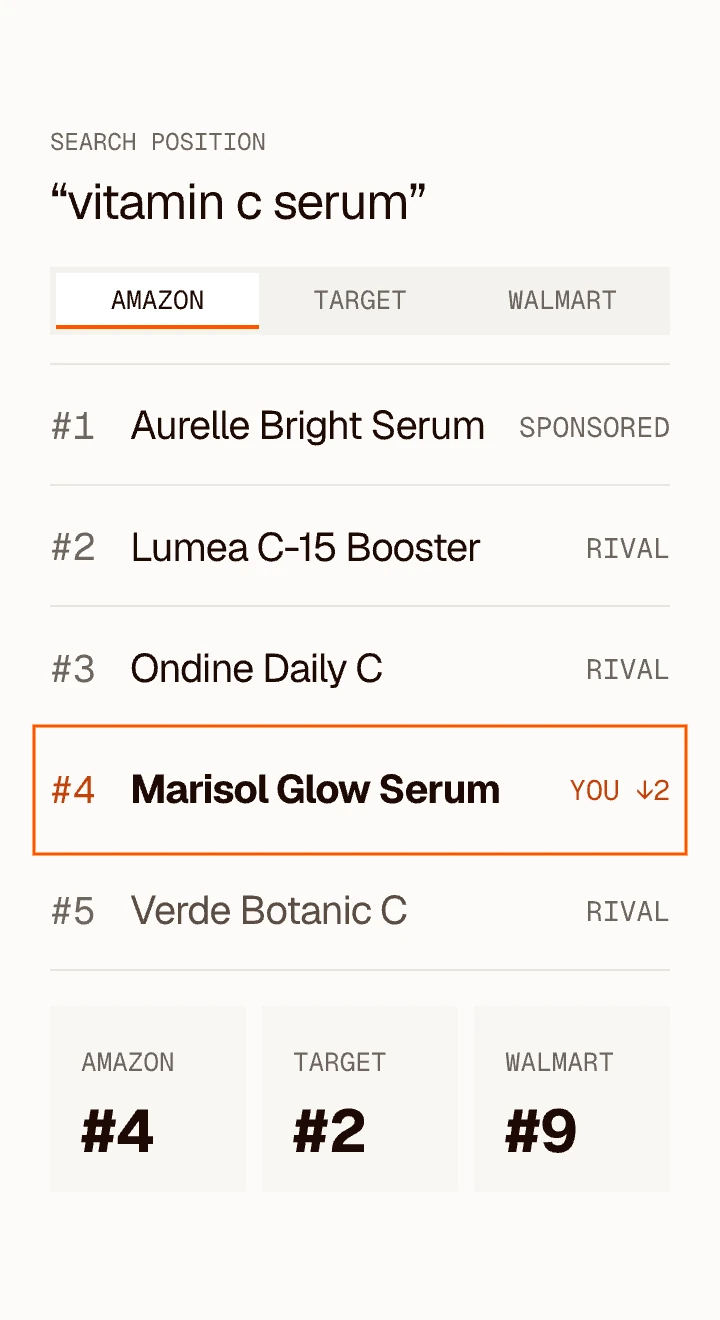
See where you land when someone searches
Track where each product ranks for the searches that matter and which rivals sit above it.
See Clayface in Action→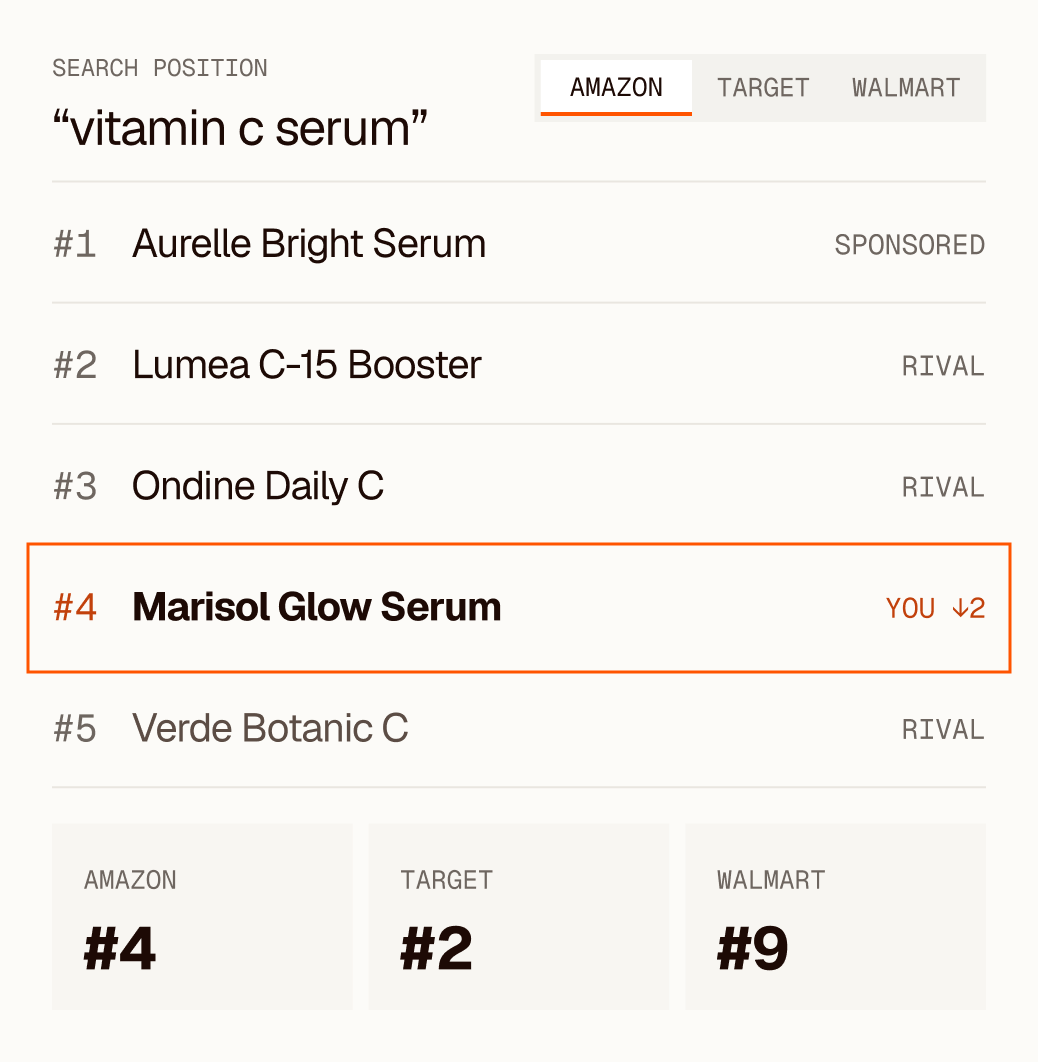
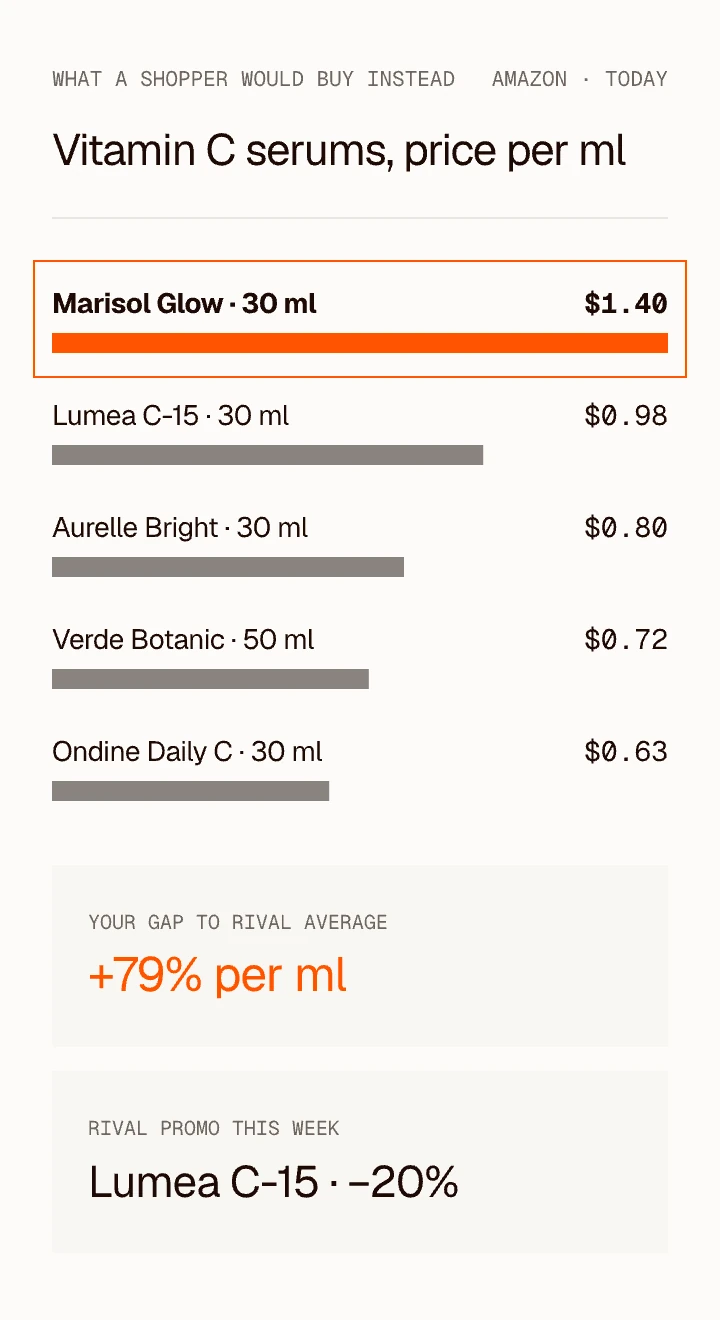
Compare against what a shopper would buy instead
Put your products next to named rivals, priced per unit, so you can see where you are expensive and where you are exposed.
See Clayface in Action→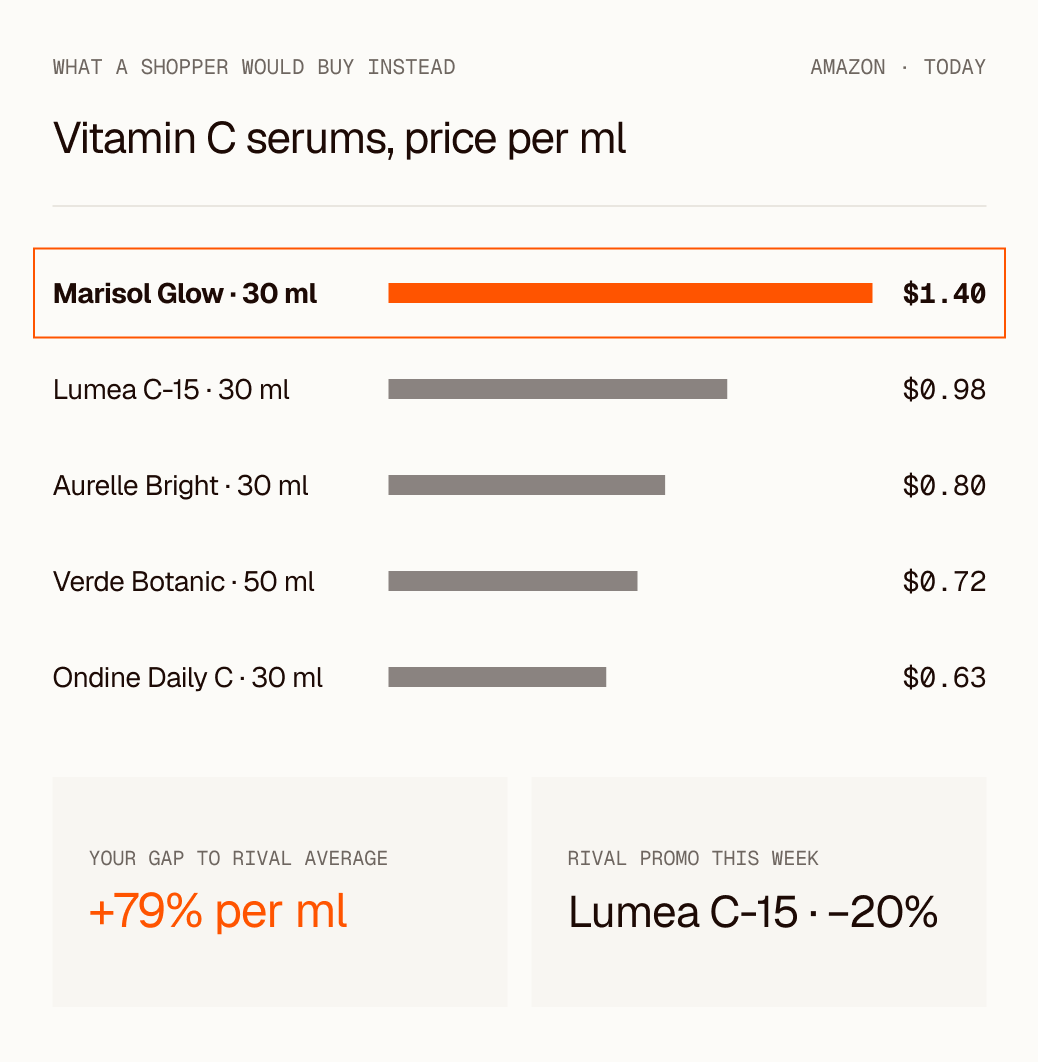
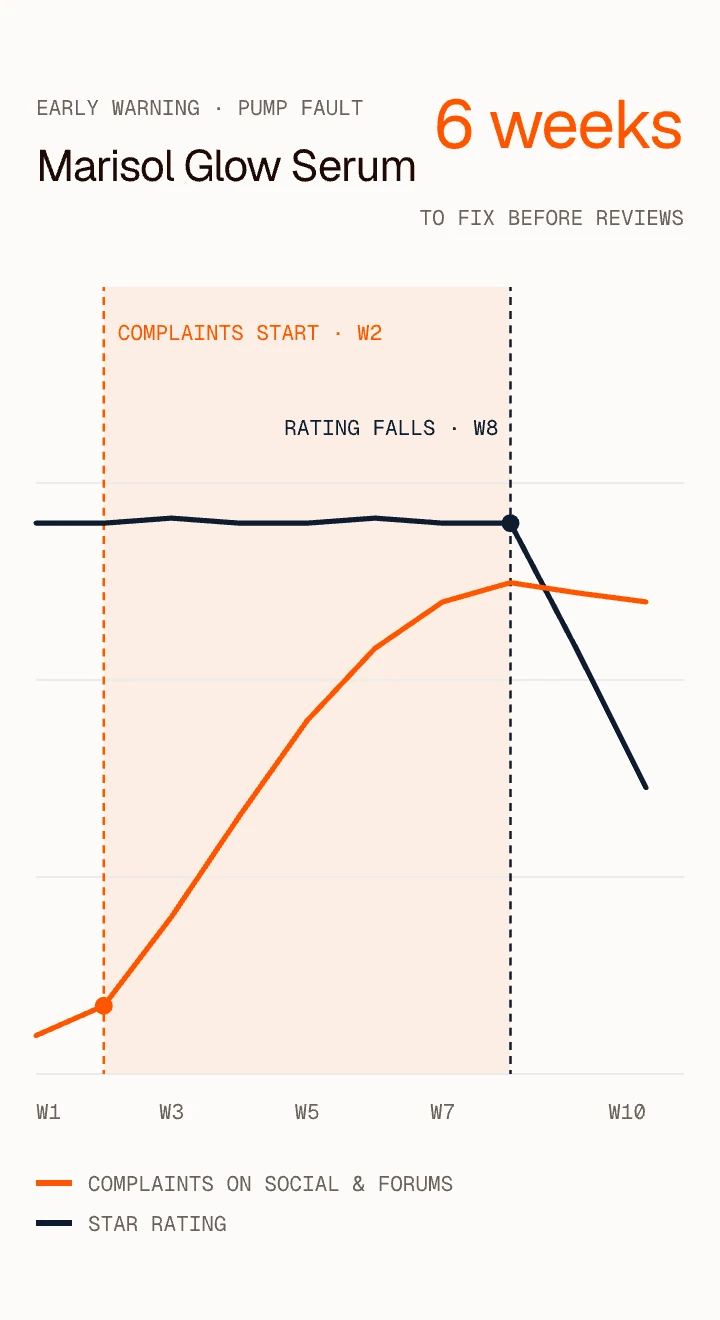
Spot a problem weeks before the rating moves
Reviews arrive late. Clayface watches the earlier signal on social and in forums, so a fault shows up while you can still act.
See Clayface in Action→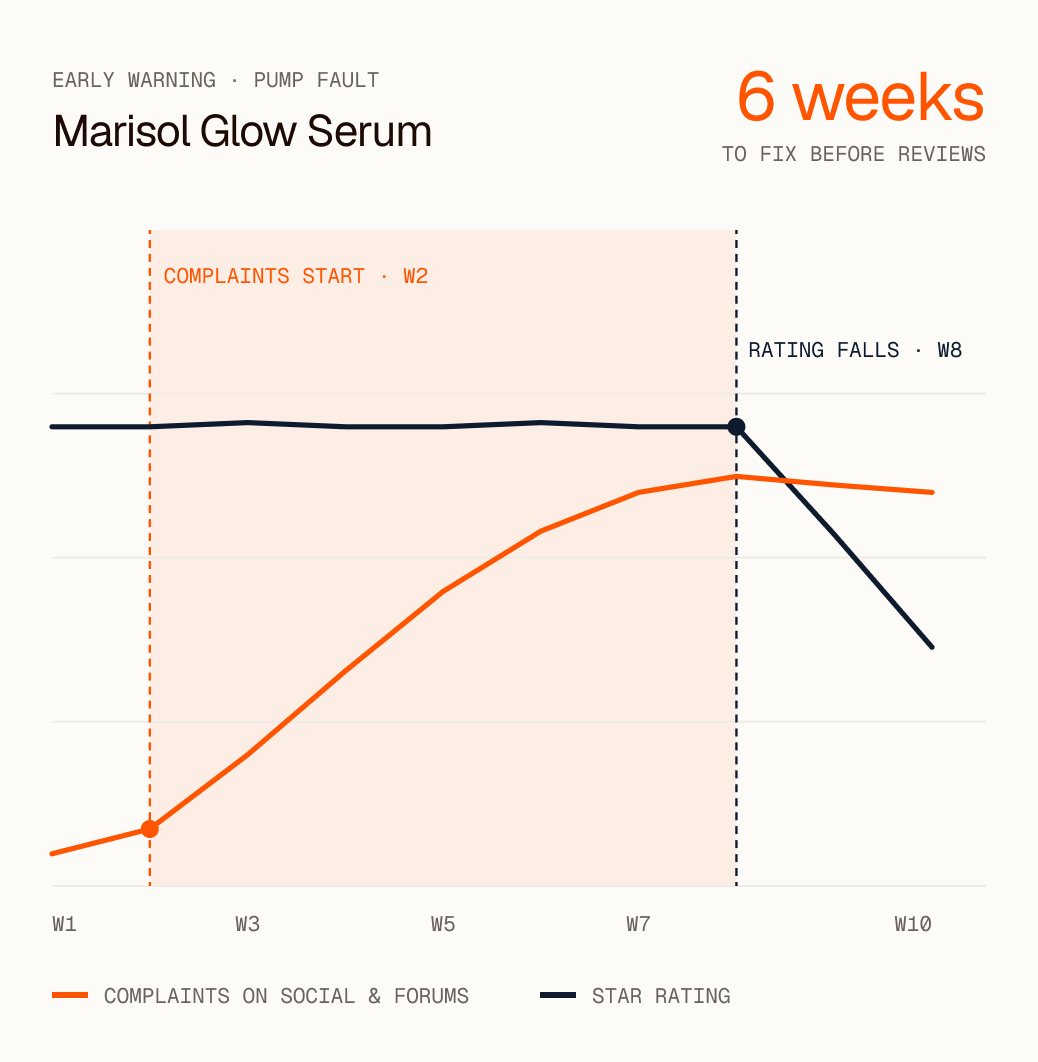
Join the shelf to the conversation around it
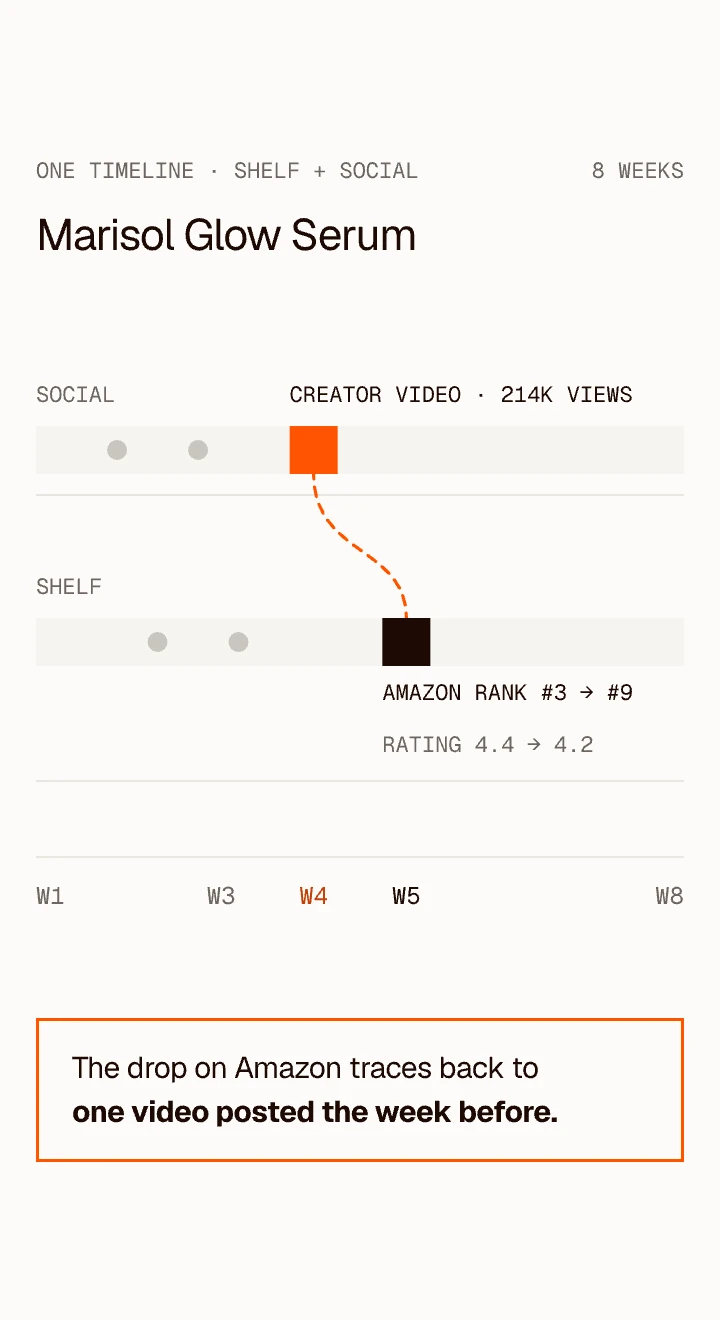
Listing data and customer conversation usually sit in two tools. Clayface holds both, so a drop at one retailer can be traced to a video posted the week before.
See Clayface in Action→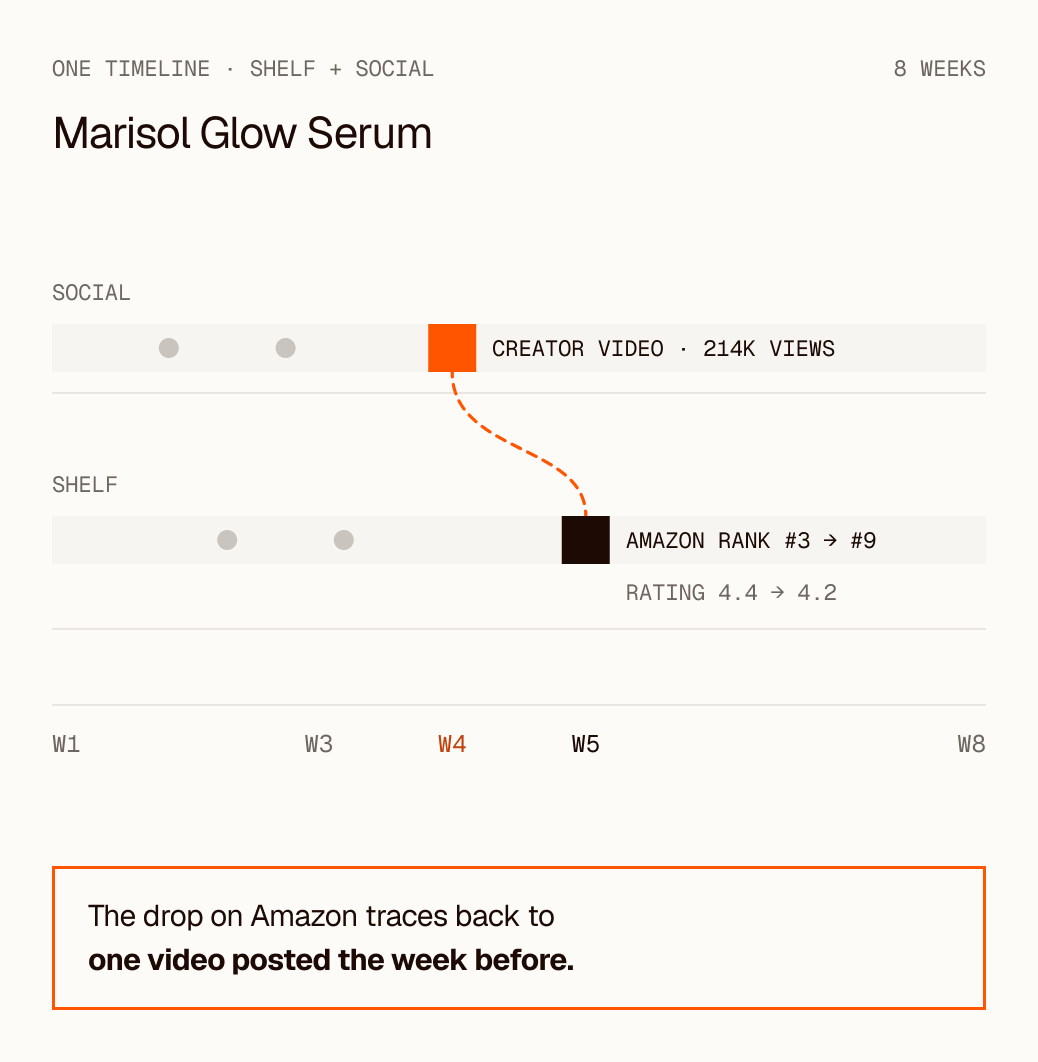
Why Our Customers Believe Us
"Our listing data and our social data lived in two tools that never spoke to each other. Having both on one timeline is what made the pattern obvious."
"People were posting about a fault six weeks before it showed up in our reviews. We fixed it in that window and the rating never moved."
"One product lost half a star across three retailers in a month. It turned out to be the packaging, not the product, and we would never have found that in a rating."

Find out why your ratings moved
Book a walkthrough and see your own products, reviews and social conversation on one timeline.


Frequently asked questions

The digital shelf is everywhere your product is sold or shown online: Amazon and other marketplaces, retailer sites, your own store and the search results that lead to all of them. It is the online version of how your product looks and performs in a shop.
Watching how your products perform across every place they are sold, rather than one retailer at a time. That covers ratings and reviews, where you rank when someone searches, and what shoppers say about the product once they have it.
The subjects behind a score and what they cost you, the complaints appearing on social weeks before anyone writes a review, where the product sits in retailer search, and which rivals sit above it.
Clayface collects reviews and listings from marketplaces, retailer sites and your own store, then goes through the words in every review to find the subjects behind a score. It holds the social and forum conversation about the same product alongside, on one timeline.
Read the review text rather than the score. A rating is an average and tells you nothing about cause. Group the reviews by subject and one or two will usually account for most of the fall, often something like packaging or delivery rather than the product itself.