Video Content Analysis: What Are Your Social Listening Tools Missing?
Paper still life of a cream phone card with an orange play button, a peach sound-wave strip, two speech bubbles and a paper magnifying glass

Short-form video has become a huge part of how consumers discover and discuss products across Instagram Reels, TikTok, and YouTube Shorts. Yet a creator might demonstrate a product flaw without ever naming the brand in the caption.

So, when social listening tools rely on captions, hashtags, and tags to find these conversations, they risk missing them altogether, creating a video discovery gap.

Understanding what's actually being said requires listening to the audio, recognizing products on screen, and examining viewer comments, an arduous task to perform manually at scale. That's where video intelligence might save the day.

In this blog, I'll explore what conventional monitoring overlooks, how brands can benefit from richer video insights, and how to check whether your current video content analysis tool is capturing the full picture.

Does video intelligence actually pay off for brands?

In 2018, BÉIS launched its Weekender bag, which quickly became a customer favorite. 8 years, over 2 million units sold, and countless dupes later, you'd think the brand had cracked the perfect travel bag. Well, almost.

Despite its popularity, customers shared a few grievances that were circulating through TikTok and Instagram videos and social media comment sections for years. The shoulder straps were uncomfortable, the rigid frame ate into packing space, and accessing the bottom compartment was a hassle.

In July 2026, BÉIS finally gave its bestseller a makeover, using the same customer feedback.

Customers loved the new bag but more importantly, they were appreciating the fact that BÉIS had listened to them. The brand managed to improve its product and strengthen its relationship with customers in the same move, killing two birds with one stone.
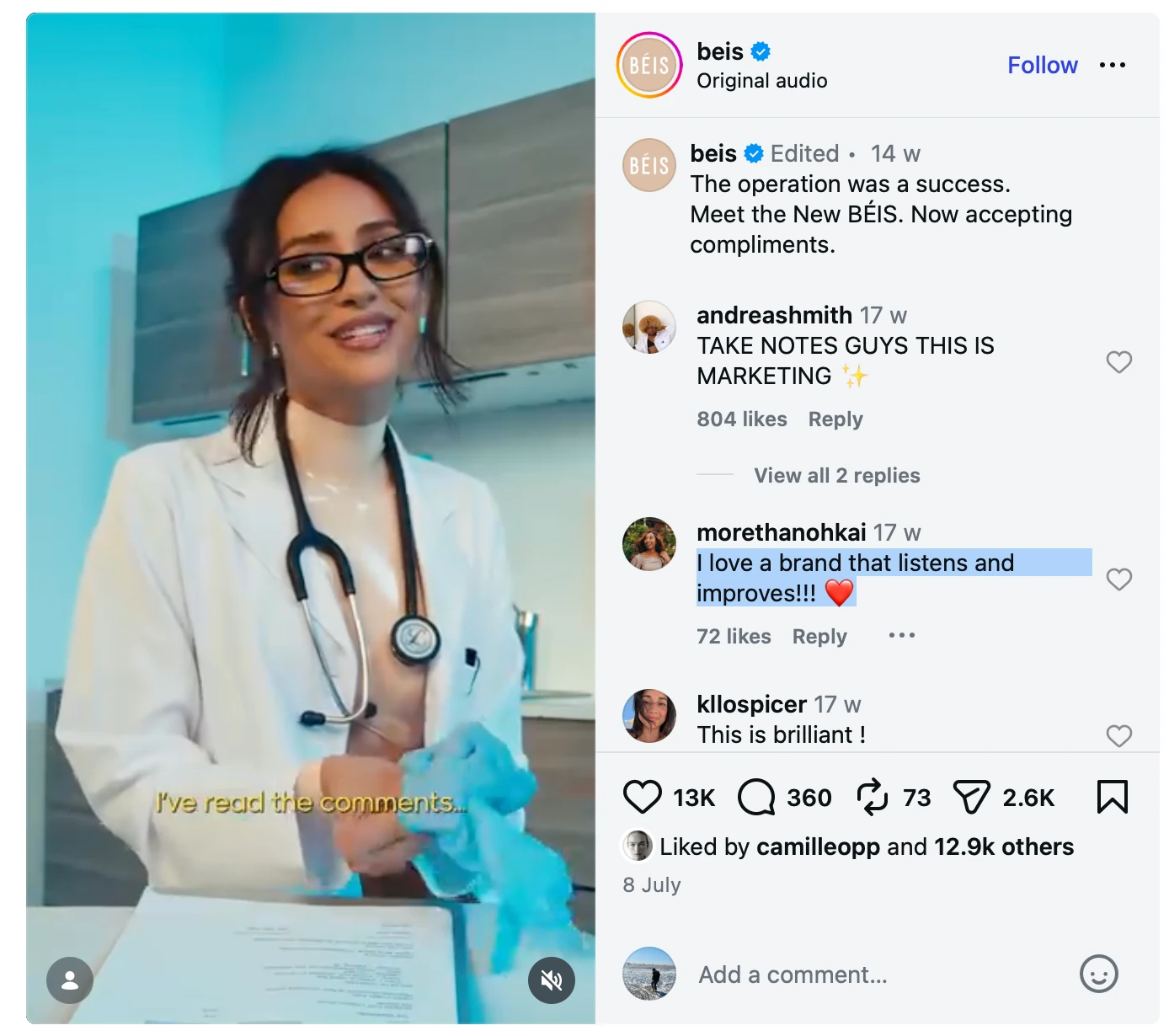
And the conversation only started with the relaunch. Instagram is full of creators reviewing the upgraded bag, comparing it with the original, and showing what has actually changed.

Pause to think about how often consumers share feedback like this through Instagram Reels, YouTube Shorts, unboxings, and product reviews. They demonstrate problems, compare alternatives, and explain why they're switching brands, often without spilling all the tea in the caption.

If your social listening tool only tracks captions, hashtags, and tagged mentions, how much of that feedback is slipping through?

That's the video coverage gap we're exploring in this article. We'll look at what conventional monitoring can miss inside videos and how to check whether your current video content analysis tool is giving you the full picture.

What are social listening tools missing inside videos?

The caption doesn't even begin to scratch the surface of what might be discussed inside a video. Someone might mention 3 competing brands, demonstrate a faulty product, and explain why they wouldn't buy it again, all without typing a single brand name.

That information exists across these four layers of video content, and each reveals something different about the consumer's experience.
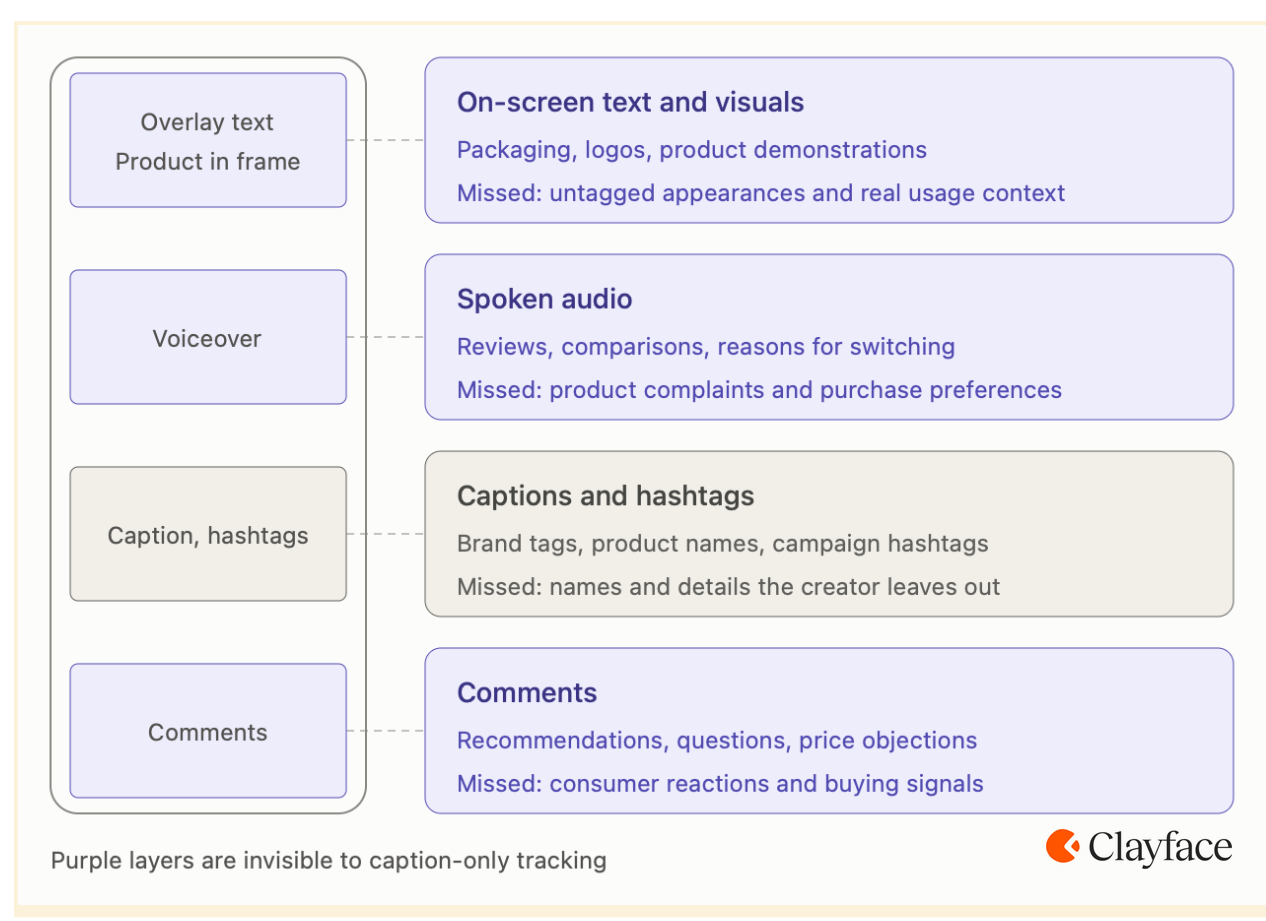
Diagram of the 4 layers inside a video: on-screen text and visuals, spoken audio, captions and hashtags, and comments, with only captions and hashtags visible to caption-only tracking
Only 1 of the 4 layers inside a video is text a keyword can match, and that is where the video coverage gap begins

Let me demonstrate exactly what I mean by decoding this YouTube video by Sydney Morgan.

The video title and description give us a useful starting point. We know it's a comparison of teen skincare brands, and several brands are explicitly named in the description, making the video discoverable through keyword searches.

But knowing which brands appear in a video is quite different from knowing how they fare.

The spoken audio reveals the particulars of Morgan's experience. At 1:13, she's puzzled by the packaging of a Yes Day moisturizer. At 8:23, she finds BYOMA's cleanser a little stripping, although she later praises its moisturizing gel cream. By 14:22, she's struggling to open a Bev toner.

Meanwhile, the visuals show the products, their packaging, and how Morgan handles and applies them, adding context to what she's describing. The comment section offers another avenue for understanding whether viewers agree, disagree, or have experiences of their own.

So, while a keyword search could discover this particular video, it wouldn't necessarily capture the substance of Morgan's reviews.

This is the distinction between video discovery and video analysis. And this is exactly where a more detailed analysis earns its keep. Look at the skincare video analysis in Clayface below.
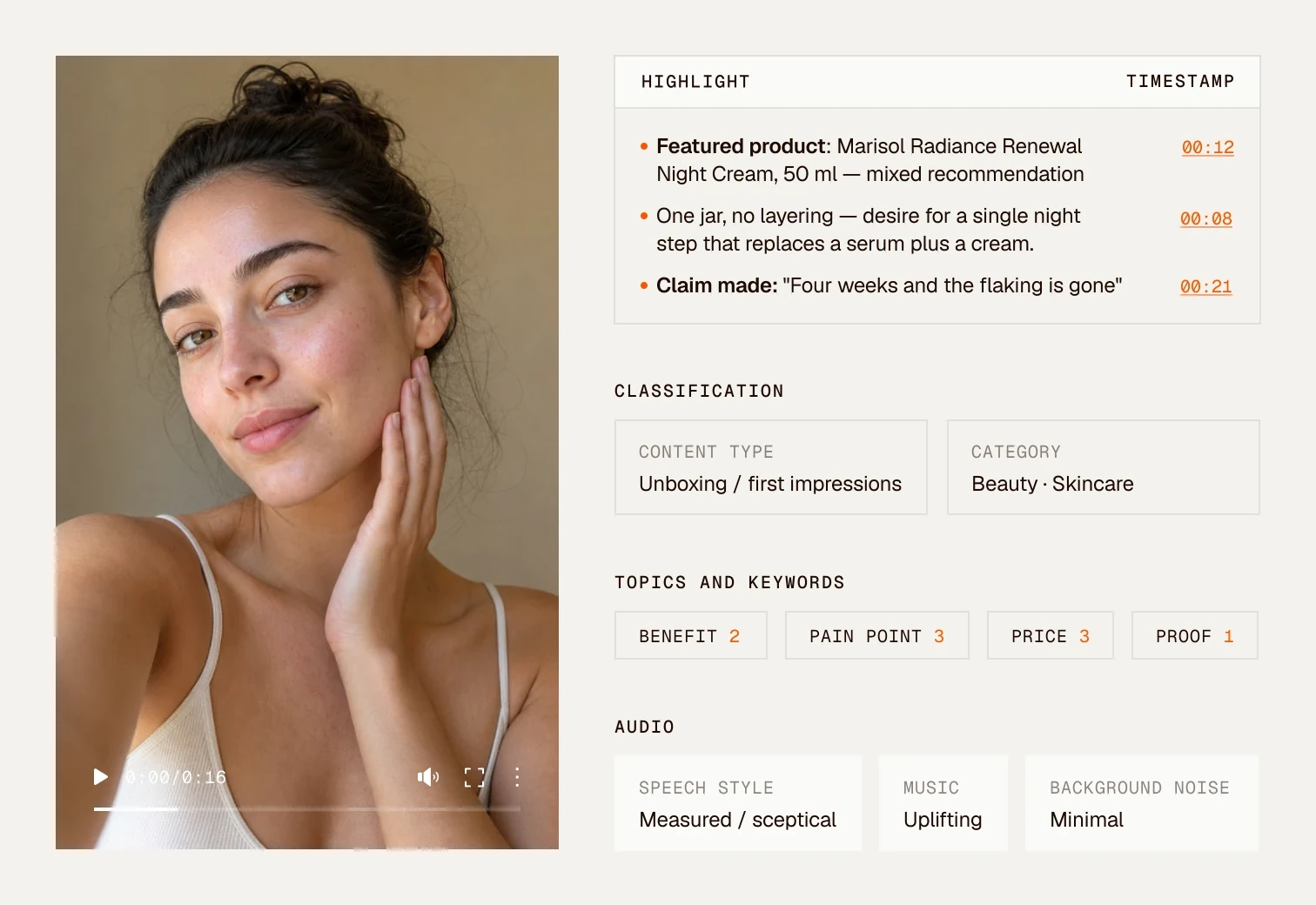
Clayface video analysis of a skincare unboxing Reel showing the featured product, timestamped highlights, content classification, topic keywords and audio signals
Instead of logging one more mention of a night cream, Clayface pulls out the mixed verdict, the timestamp it was said at, and the single jar preference sitting behind it

Instead of merely recording a mention of a night cream, the dashboard identifies the featured product, flags the recommendation as mixed, and picks up a niche consumer preference.

When similar observations surface across hundreds of videos, brands can easily start identifying recurring consumer needs.

How to check if your video content analysis tool is missing brand mentions

So, the million-dollar question is, can your video content analysis tool actually detect spoken mentions, product appearances, and customer conversations beyond captions and hashtags?

I've put together 3 simple audit steps to help you find out exactly what your current tool captures and what it leaves out.

Step 1: Find videos your tool should be capturing

Start by collecting 10 to 15 public videos from Instagram Reels, YouTube Shorts, and long-form reviews. Look beyond videos that explicitly name your brand, and include product demonstrations, competitor comparisons, and discussions happening in the comments.

To show you what I mean, I tried this exercise with Owala, a popular reusable water bottle brand. Here's the mix of videos I found on YouTube:

Video typeExamples to look atWhat to capture
Tagged mentionsOwala FreeSip Review and Owala FreeSip #ShortsBoth explicitly name Owala which make them useful baseline mentions your tool should find
Spoken and visual mentions5AM Day in My Life and 31 Water Bottles TestedLook for products shown or discussed within broader videos; these are not confirmed untagged mentions, since Owala appears in their descriptions
Competitor comparisonsHydro Flask vs. Owala and Stanley, Yeti, Owala and Five OthersCapture which products win on insulation, portability, durability, or ease of use, and why
Comment discussionsOwala Test Results and Why Are Owala Bottles Popular?Look for experiences, buying objections, and viewer questions that add something beyond the video itself

This screenshot is from the comment section of one of the videos.
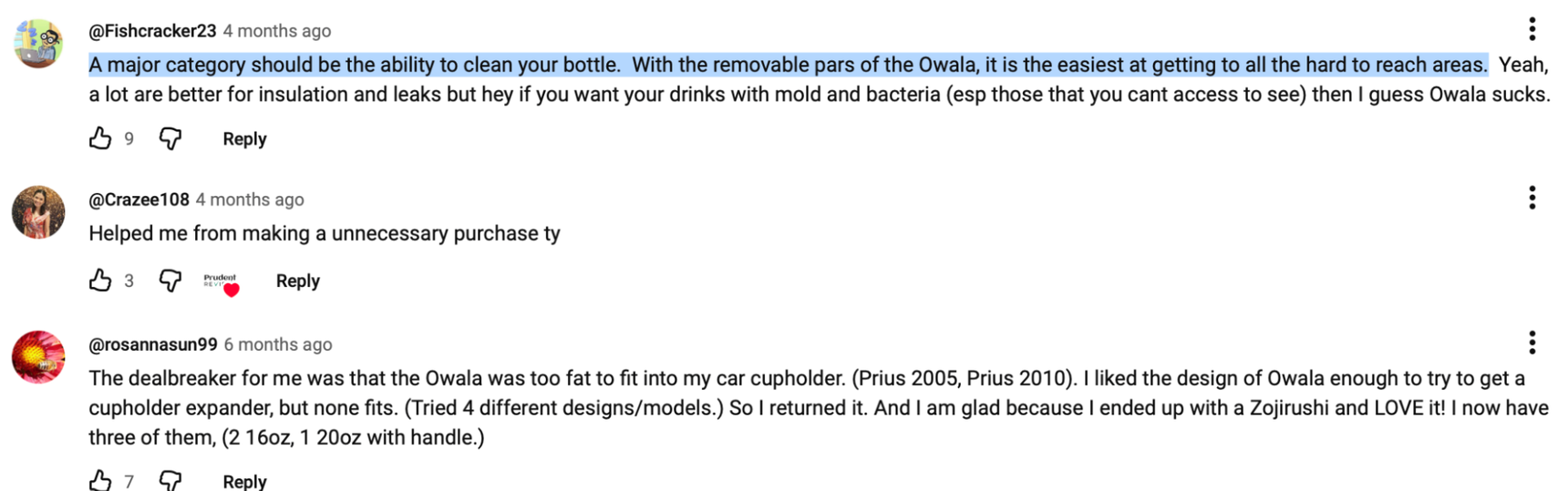
I'm sharing this to show you how much additional information the comments contribute. We have a product advantage, a specific usability complaint, a competitor switch, and evidence that the review influenced someone's purchase decision.

Once you've gathered your examples, record each video's URL, publication date, product names, and relevant timestamps in a spreadsheet. Include a short note describing the feedback, and whether the brand was tagged, spoken, or shown. Create something that looks sort of like this:
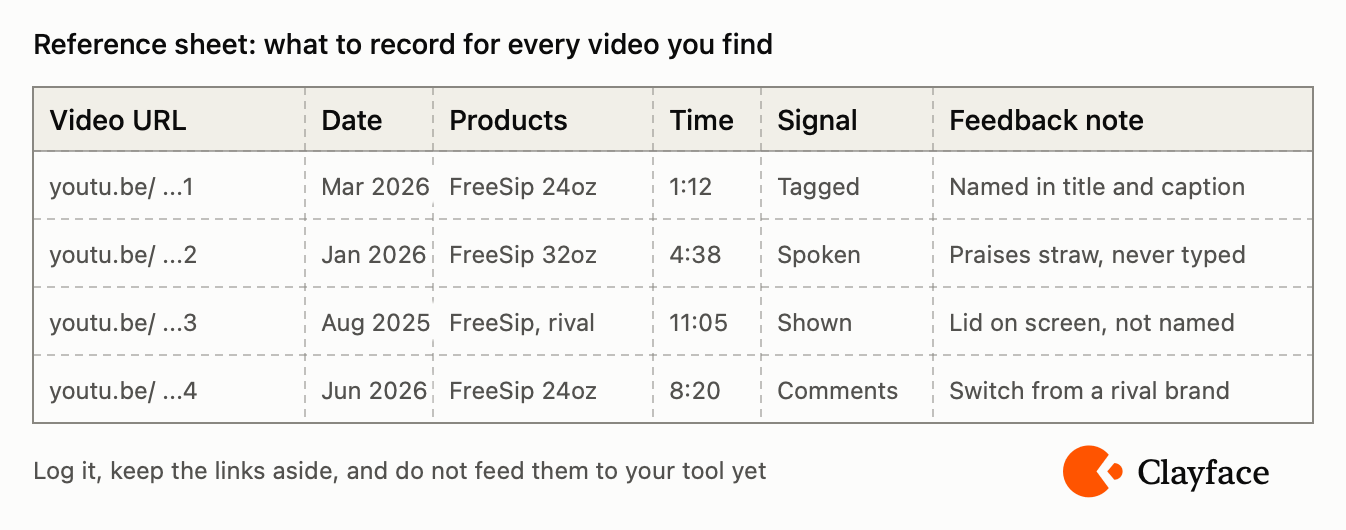
Reference sheet template with columns for video URL, date, products, timestamp, signal type and feedback note, used to log videos before testing a video content analysis tool
Log every video you find before touching your tool, because the whole test depends on it discovering them without your help

Step 2: Put your video content analysis tool to the test

Alright, time to see how your tool performs. Search for your brand and products as you normally would, without entering the video URLs you've collected.

First, see how many videos from your reference sample appear in the dashboard on their own. Then, examine how accurately your tool analyzes the ones it finds. Remember, discovering a video and understanding what happens inside it are 2 different tests.

Use this checklist to evaluate your tool:

What to testWhat a passing result looks like
Video discoveryFinds relevant untagged videos without being given their URLs
Spoken mentionsIdentifies brand and product names mentioned aloud, even when absent from captions
Visual recognitionRecognizes products, logos, and on-screen text
Consumer contextDistinguishes praise from criticism and captures the reasons behind competitor comparisons
Comment analysisIdentifies purchase questions, complaints, and recommendations in video comments
Platform coverageFinds relevant videos across supported platforms, including Instagram Reels and YouTube, with sufficient historical coverage

For each capability, mark your tool as Pass, Partial, or Fail. Don't be too generous with the grading. And note that a tool that detects Owala in a review but misses the creator's complaint about its lid deserves a Partial, not a Pass.
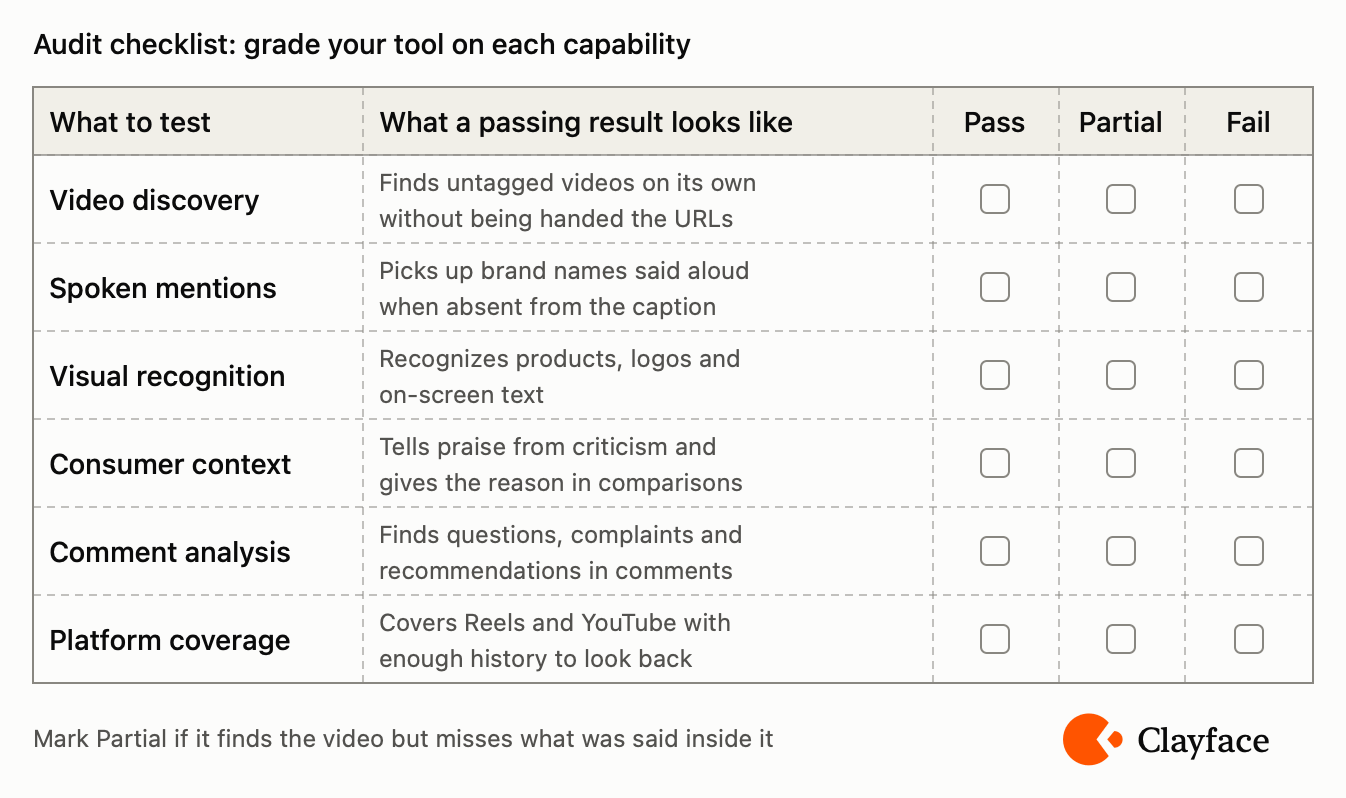
Audit checklist for grading a video content analysis tool on video discovery, spoken mentions, visual recognition, consumer context, comment analysis and platform coverage, with Pass, Partial and Fail columns
Grade each capability on its own, because finding a video and understanding what happens inside it are 2 different tests

Also, pay attention to whether the tool discovered the video independently or only analyzed it after you supplied the URL. That's an important distinction, especially when evaluating vendors that advertise AI-powered video analysis.

Step 3. Measure your coverage and find out what you're missing

Now that you've tested your tool, let's put a number to its performance.

Sample coverage rate = (Videos independently detected ÷ Total known relevant videos) × 100

Say you collected 15 videos, but your monitoring tool discovered only 7 without being given their URLs. That's a 47% coverage rate for your test sample.

The 8 missing videos deserve closer scrutiny, particularly if they contain recurring product complaints, competitor recommendations, or unexpected uses of your products that your marketing team hasn't considered.

To understand why this context is so valuable, look at this Clayface dashboard for a popular energy drink brand.

Clayface products and competition dashboard for an energy drink brand showing Amazon ratings, review share, price per fluid ounce, unbranded search results and whitespace opportunities against anonymized competitors
Clayface sets product ratings, pricing and range performance next to competitor benchmarks, but it is the conversations behind those numbers that explain them

The scorecard brings together product ratings, pricing, range performance, and market opportunities alongside competitor benchmarks. These numbers offer a useful overview, but examining the conversations behind them reveals a more nuanced picture of consumer preferences.
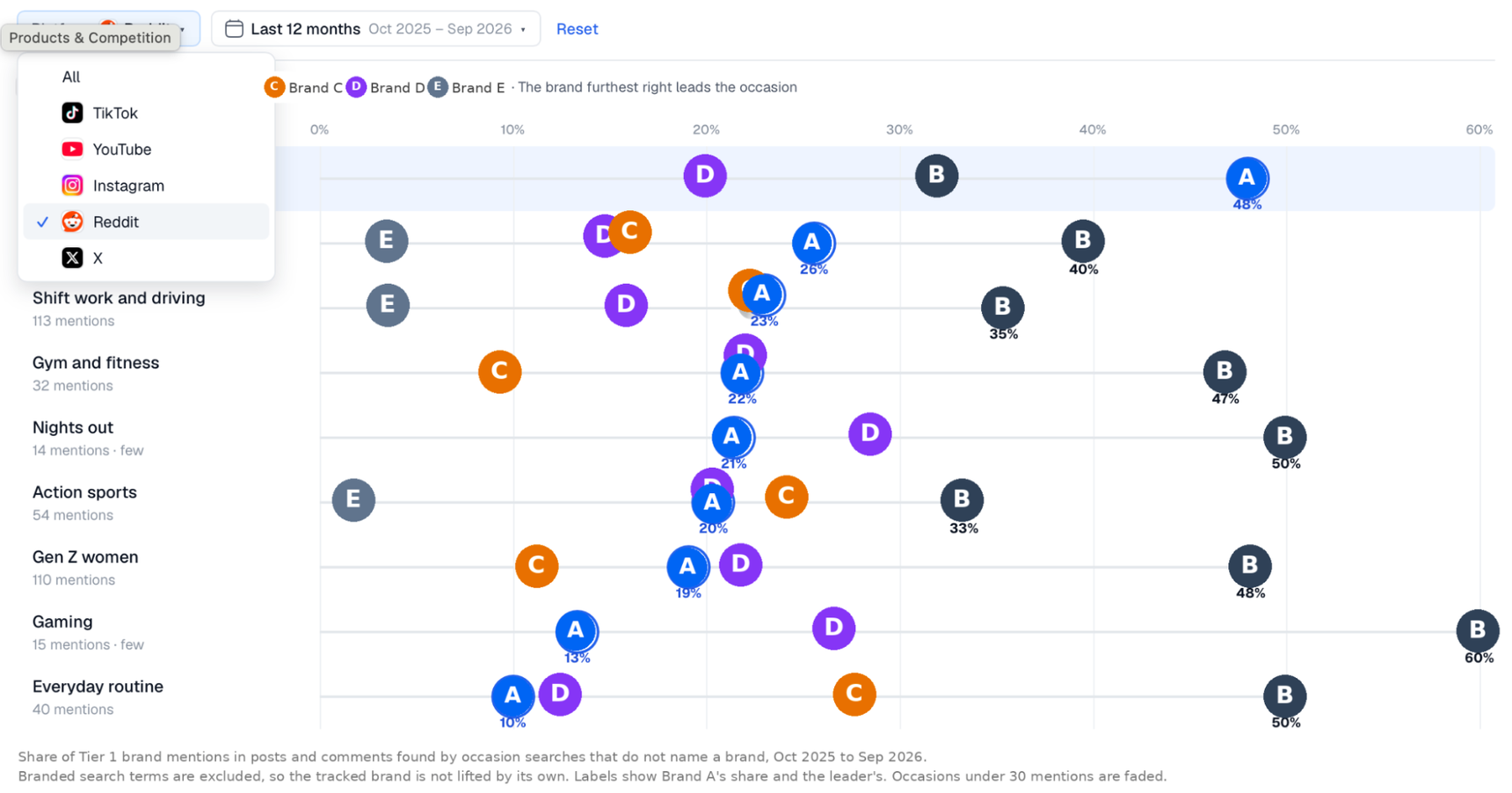
Clayface chart comparing how often competing energy drink brands appear in conversations about occasions including shift work, gym and fitness, nights out and everyday routine, filtered to Reddit
Filtered to Reddit, the tracked brand holds 10% of everyday routine mentions against 50% for the leader, a gap that total mention counts would hide completely

Here, Clayface compares how frequently competing energy drink brands appear in conversations about different occasions, from working long hours and studying to exercising and going out.

With Reddit selected, the tracked brand accounts for just 10% of everyday-routine mentions, compared with 50% for the leading competitor.

Relying exclusively on overall mention counts would obscure this disparity, leaving the brand unaware of which consumption occasions its competitors dominate and where it has room to strengthen its presence.

As you review your own audit results, consider what these conversations could mean for your business.

What you uncoverWhat your team can do
Recurring product complaintsPrioritize improvements to specific products
Competitor recommendationsRefine positioning and messaging
Organic creator contentIdentify partnerships and creative opportunities
Purchase questionsImprove product information and merchandising
Unexpected product usesExplore opportunities for innovation

Make this a weekly exercise by revisiting the original videos, identifying recurring themes, and sharing relevant findings with your product, marketing, e-commerce, and consumer insights teams.

Conclusion: Is your video intelligence telling the whole story?

A good video intelligence dashboard should reflect broader audience sentiment without simply amplifying the loudest voices. A video with 2 million views can make a complaint seem universal, even when it reflects one person's experience.

Your dashboard should help establish whether consumers across the board are reporting the same issue, whether it's confined to a particular product or batch, and whether customer support tickets corroborate these complaints, where that data is available.

As we've seen from the dashboards throughout this article, Clayface makes this investigation easier by connecting video conversations with product-specific feedback, recurring consumer themes, and competitor insights.

If your existing tool isn't giving you a satisfactory picture after the exercise, here's something worth trying before committing to a switch: run Clayface alongside your current platform for 14 days. The difference in results should give you a much clearer basis for your decision.

Video Content Analysis: What Are Your Social Listening Tools Missing?

See what your video content analysis tool misses in Reels and Shorts. Clayface reveals spoken mentions, visible products, and buyer feedback beyond captions.

Ross Bose
Ross Bose
November 23, 2026
Published:
November 23, 2026
Updated:
Video Content Analysis: What Are Your Social Listening Tools Missing?

Summarize this article with AI

Table of Contents

TL;DR

  • A video can reveal far more than its caption lets on, with spoken reviews, product demonstrations, and comment threads often carrying the feedback brands are looking for
  • Finding a video is only half the battle, and Clayface helps brands make sense of the conversations inside it, from product complaints to competitor comparisons
  • A glowing product review can still harbor criticism, which is why video sentiment analysis needs to examine the nuances of consumer feedback rather than settle for a positive or negative label
  • BÉIS turned customer criticism into a better Weekender bag, while Owala's YouTube reviews show how even the comments can reveal purchase decisions and reasons for switching brands
  • Before committing to a new tool, audit 10 to 15 known videos and run Clayface alongside your existing platform for 14 days to see what each captures and what you might be missing

Short-form video has become a huge part of how consumers discover and discuss products across Instagram Reels, TikTok, and YouTube Shorts. Yet a creator might demonstrate a product flaw without ever naming the brand in the caption.

So, when social listening tools rely on captions, hashtags, and tags to find these conversations, they risk missing them altogether, creating a video discovery gap.

Understanding what's actually being said requires listening to the audio, recognizing products on screen, and examining viewer comments, an arduous task to perform manually at scale. That's where video intelligence might save the day.

In this blog, I'll explore what conventional monitoring overlooks, how brands can benefit from richer video insights, and how to check whether your current video content analysis tool is capturing the full picture.

Does video intelligence actually pay off for brands?

In 2018, BÉIS launched its Weekender bag, which quickly became a customer favorite. 8 years, over 2 million units sold, and countless dupes later, you'd think the brand had cracked the perfect travel bag. Well, almost.

Despite its popularity, customers shared a few grievances that were circulating through TikTok and Instagram videos and social media comment sections for years. The shoulder straps were uncomfortable, the rigid frame ate into packing space, and accessing the bottom compartment was a hassle.

In July 2026, BÉIS finally gave its bestseller a makeover, using the same customer feedback.

Customers loved the new bag but more importantly, they were appreciating the fact that BÉIS had listened to them. The brand managed to improve its product and strengthen its relationship with customers in the same move, killing two birds with one stone.

And the conversation only started with the relaunch. Instagram is full of creators reviewing the upgraded bag, comparing it with the original, and showing what has actually changed.

Pause to think about how often consumers share feedback like this through Instagram Reels, YouTube Shorts, unboxings, and product reviews. They demonstrate problems, compare alternatives, and explain why they're switching brands, often without spilling all the tea in the caption.

If your social listening tool only tracks captions, hashtags, and tagged mentions, how much of that feedback is slipping through?

That's the video coverage gap we're exploring in this article. We'll look at what conventional monitoring can miss inside videos and how to check whether your current video content analysis tool is giving you the full picture.

What are social listening tools missing inside videos?

The caption doesn't even begin to scratch the surface of what might be discussed inside a video. Someone might mention 3 competing brands, demonstrate a faulty product, and explain why they wouldn't buy it again, all without typing a single brand name.

That information exists across these four layers of video content, and each reveals something different about the consumer's experience.

Diagram of the 4 layers inside a video: on-screen text and visuals, spoken audio, captions and hashtags, and comments, with only captions and hashtags visible to caption-only tracking
Only 1 of the 4 layers inside a video is text a keyword can match, and that is where the video coverage gap begins

Let me demonstrate exactly what I mean by decoding this YouTube video by Sydney Morgan.

The video title and description give us a useful starting point. We know it's a comparison of teen skincare brands, and several brands are explicitly named in the description, making the video discoverable through keyword searches.

But knowing which brands appear in a video is quite different from knowing how they fare.

The spoken audio reveals the particulars of Morgan's experience. At 1:13, she's puzzled by the packaging of a Yes Day moisturizer. At 8:23, she finds BYOMA's cleanser a little stripping, although she later praises its moisturizing gel cream. By 14:22, she's struggling to open a Bev toner.

Meanwhile, the visuals show the products, their packaging, and how Morgan handles and applies them, adding context to what she's describing. The comment section offers another avenue for understanding whether viewers agree, disagree, or have experiences of their own.

So, while a keyword search could discover this particular video, it wouldn't necessarily capture the substance of Morgan's reviews.

This is the distinction between video discovery and video analysis. And this is exactly where a more detailed analysis earns its keep. Look at the skincare video analysis in Clayface below.

Clayface video analysis of a skincare unboxing Reel showing the featured product, timestamped highlights, content classification, topic keywords and audio signals
Instead of logging one more mention of a night cream, Clayface pulls out the mixed verdict, the timestamp it was said at, and the single jar preference sitting behind it

Instead of merely recording a mention of a night cream, the dashboard identifies the featured product, flags the recommendation as mixed, and picks up a niche consumer preference.

When similar observations surface across hundreds of videos, brands can easily start identifying recurring consumer needs.

How to check if your video content analysis tool is missing brand mentions

So, the million-dollar question is, can your video content analysis tool actually detect spoken mentions, product appearances, and customer conversations beyond captions and hashtags?

I've put together 3 simple audit steps to help you find out exactly what your current tool captures and what it leaves out.

Step 1: Find videos your tool should be capturing

Start by collecting 10 to 15 public videos from Instagram Reels, YouTube Shorts, and long-form reviews. Look beyond videos that explicitly name your brand, and include product demonstrations, competitor comparisons, and discussions happening in the comments.

To show you what I mean, I tried this exercise with Owala, a popular reusable water bottle brand. Here's the mix of videos I found on YouTube:

Video typeExamples to look atWhat to capture
Tagged mentionsOwala FreeSip Review and Owala FreeSip #ShortsBoth explicitly name Owala which make them useful baseline mentions your tool should find
Spoken and visual mentions5AM Day in My Life and 31 Water Bottles TestedLook for products shown or discussed within broader videos; these are not confirmed untagged mentions, since Owala appears in their descriptions
Competitor comparisonsHydro Flask vs. Owala and Stanley, Yeti, Owala and Five OthersCapture which products win on insulation, portability, durability, or ease of use, and why
Comment discussionsOwala Test Results and Why Are Owala Bottles Popular?Look for experiences, buying objections, and viewer questions that add something beyond the video itself

This screenshot is from the comment section of one of the videos.

I'm sharing this to show you how much additional information the comments contribute. We have a product advantage, a specific usability complaint, a competitor switch, and evidence that the review influenced someone's purchase decision.

Once you've gathered your examples, record each video's URL, publication date, product names, and relevant timestamps in a spreadsheet. Include a short note describing the feedback, and whether the brand was tagged, spoken, or shown. Create something that looks sort of like this:

Reference sheet template with columns for video URL, date, products, timestamp, signal type and feedback note, used to log videos before testing a video content analysis tool
Log every video you find before touching your tool, because the whole test depends on it discovering them without your help

Step 2: Put your video content analysis tool to the test

Alright, time to see how your tool performs. Search for your brand and products as you normally would, without entering the video URLs you've collected.

First, see how many videos from your reference sample appear in the dashboard on their own. Then, examine how accurately your tool analyzes the ones it finds. Remember, discovering a video and understanding what happens inside it are 2 different tests.

Use this checklist to evaluate your tool:

What to testWhat a passing result looks like
Video discoveryFinds relevant untagged videos without being given their URLs
Spoken mentionsIdentifies brand and product names mentioned aloud, even when absent from captions
Visual recognitionRecognizes products, logos, and on-screen text
Consumer contextDistinguishes praise from criticism and captures the reasons behind competitor comparisons
Comment analysisIdentifies purchase questions, complaints, and recommendations in video comments
Platform coverageFinds relevant videos across supported platforms, including Instagram Reels and YouTube, with sufficient historical coverage

For each capability, mark your tool as Pass, Partial, or Fail. Don't be too generous with the grading. And note that a tool that detects Owala in a review but misses the creator's complaint about its lid deserves a Partial, not a Pass.

Audit checklist for grading a video content analysis tool on video discovery, spoken mentions, visual recognition, consumer context, comment analysis and platform coverage, with Pass, Partial and Fail columns
Grade each capability on its own, because finding a video and understanding what happens inside it are 2 different tests

Also, pay attention to whether the tool discovered the video independently or only analyzed it after you supplied the URL. That's an important distinction, especially when evaluating vendors that advertise AI-powered video analysis.

Step 3. Measure your coverage and find out what you're missing

Now that you've tested your tool, let's put a number to its performance.

Sample coverage rate = (Videos independently detected ÷ Total known relevant videos) × 100

Say you collected 15 videos, but your monitoring tool discovered only 7 without being given their URLs. That's a 47% coverage rate for your test sample.

The 8 missing videos deserve closer scrutiny, particularly if they contain recurring product complaints, competitor recommendations, or unexpected uses of your products that your marketing team hasn't considered.

To understand why this context is so valuable, look at this Clayface dashboard for a popular energy drink brand.

Clayface products and competition dashboard for an energy drink brand showing Amazon ratings, review share, price per fluid ounce, unbranded search results and whitespace opportunities against anonymized competitors
Clayface sets product ratings, pricing and range performance next to competitor benchmarks, but it is the conversations behind those numbers that explain them

The scorecard brings together product ratings, pricing, range performance, and market opportunities alongside competitor benchmarks. These numbers offer a useful overview, but examining the conversations behind them reveals a more nuanced picture of consumer preferences.

Clayface chart comparing how often competing energy drink brands appear in conversations about occasions including shift work, gym and fitness, nights out and everyday routine, filtered to Reddit
Filtered to Reddit, the tracked brand holds 10% of everyday routine mentions against 50% for the leader, a gap that total mention counts would hide completely

Here, Clayface compares how frequently competing energy drink brands appear in conversations about different occasions, from working long hours and studying to exercising and going out.

With Reddit selected, the tracked brand accounts for just 10% of everyday-routine mentions, compared with 50% for the leading competitor.

Relying exclusively on overall mention counts would obscure this disparity, leaving the brand unaware of which consumption occasions its competitors dominate and where it has room to strengthen its presence.

As you review your own audit results, consider what these conversations could mean for your business.

What you uncoverWhat your team can do
Recurring product complaintsPrioritize improvements to specific products
Competitor recommendationsRefine positioning and messaging
Organic creator contentIdentify partnerships and creative opportunities
Purchase questionsImprove product information and merchandising
Unexpected product usesExplore opportunities for innovation

Make this a weekly exercise by revisiting the original videos, identifying recurring themes, and sharing relevant findings with your product, marketing, e-commerce, and consumer insights teams.

Conclusion: Is your video intelligence telling the whole story?

A good video intelligence dashboard should reflect broader audience sentiment without simply amplifying the loudest voices. A video with 2 million views can make a complaint seem universal, even when it reflects one person's experience.

Your dashboard should help establish whether consumers across the board are reporting the same issue, whether it's confined to a particular product or batch, and whether customer support tickets corroborate these complaints, where that data is available.

As we've seen from the dashboards throughout this article, Clayface makes this investigation easier by connecting video conversations with product-specific feedback, recurring consumer themes, and competitor insights.

If your existing tool isn't giving you a satisfactory picture after the exercise, here's something worth trying before committing to a switch: run Clayface alongside your current platform for 14 days. The difference in results should give you a much clearer basis for your decision.

Frequently asked questions

How do video content analysis tools detect spoken words and on-screen text?

ASR (automatic speech recognition) converts spoken audio into searchable text, while OCR (optical character recognition) reads text appearing in video frames, including subtitles, overlays, and packaging labels. Together, they capture information that captions alone may omit.

Does YouTube provide enough data for video social listening?

Not entirely. YouTube offers captions and other public video information, but transcript access through its official API is restricted, automatic captions can misinterpret brand names, and transcripts cannot identify products or logos shown on screen.

Can I do video social listening with free tools?

Yes, you can manually find public videos, examine available transcripts, and review comments using free tools. However, consistently discovering untagged mentions across multiple platforms becomes difficult without dedicated monitoring software.

How accurate is AI transcription of brand and product names?

AI transcription can struggle with unfamiliar brand names, regional pronunciations, and product abbreviations, even when ordinary speech is clear. Test your software against known product mentions and check whether it supports custom vocabularies or corrections.

How can video social listening improve influencer marketing?

Video social listening can reveal creators who mention or demonstrate your products without tagging your brand, alongside those recommending competitors. This helps marketing teams identify potential partners based on observed product use and genuine recommendations rather than follower counts alone.