Brand tracking software that helps you protect market share
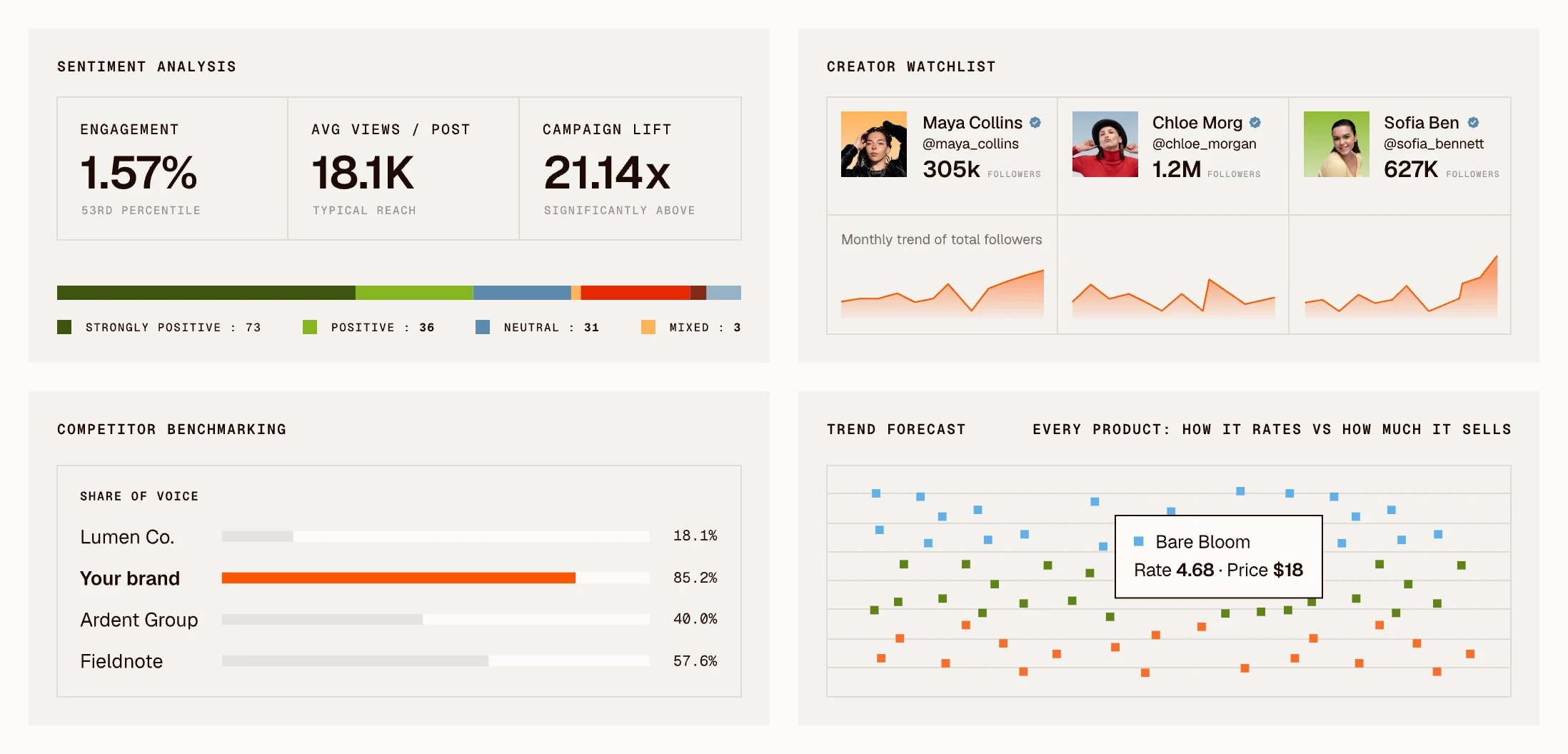
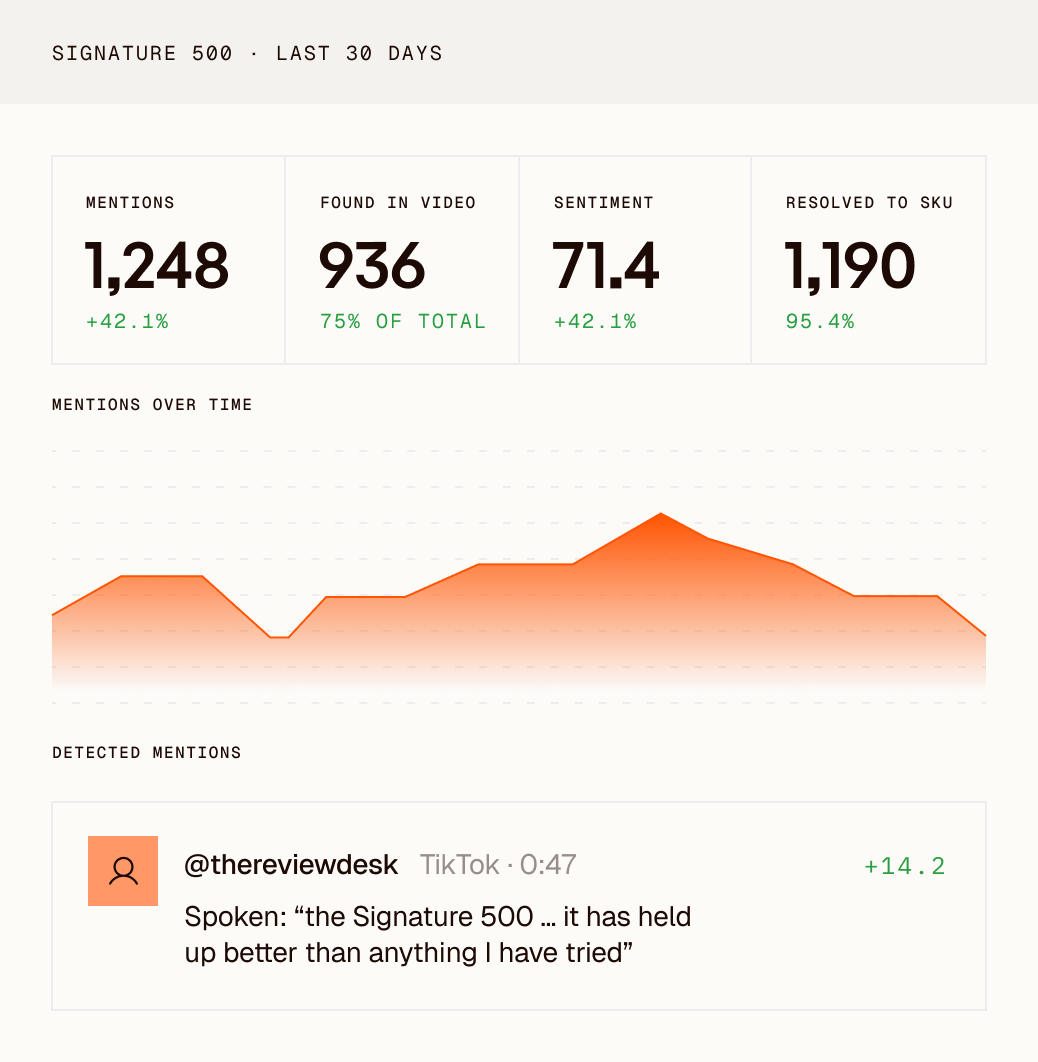
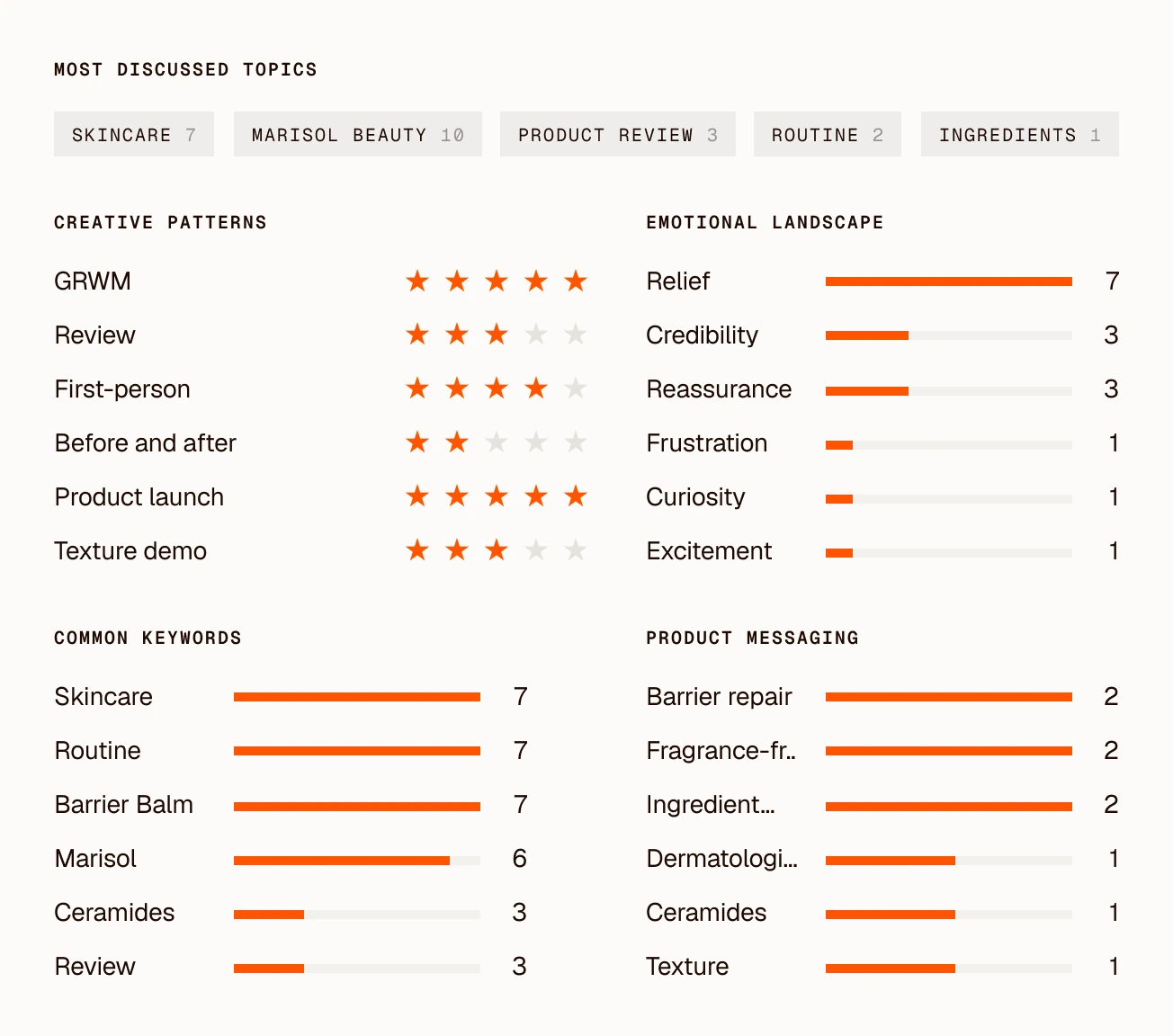
Clayface tracks how shoppers talk about your brand, your products and your rivals every week, in reviews, forums, social posts and videos. You see what is changing, which product is behind it, and why.












What our brand tracking tools do for brand teams
Brand health
Track brand health every week, between survey waves
Your survey tracker checks in a few times a year. Clayface tracks how people talk about your brand each week, so you spot changes before the next survey.
Launches
Know how a new launch is landing in its first weeks
When a new product comes out, Clayface shows what people like, what they complain about and how it compares with your last launch, one week at a time.
Rivals
See when a rival starts winning your shoppers over
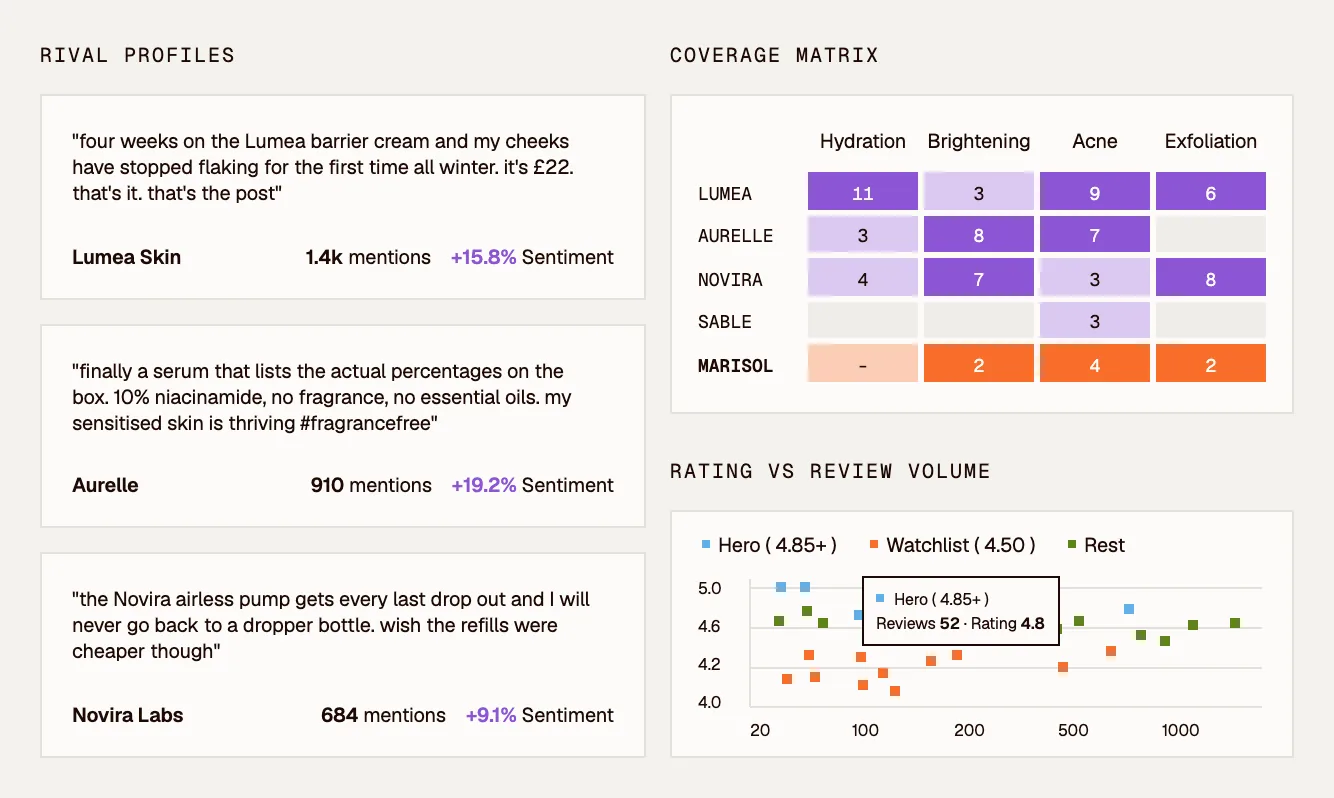
Name the brands you compete with. Clayface tracks how people talk about them next to you, and flags when shoppers start comparing you or switching to them.



475M+
creators database
25+
Social media platforms covered
5B+
Signals processed monthly


Why Our Customers Believe Us
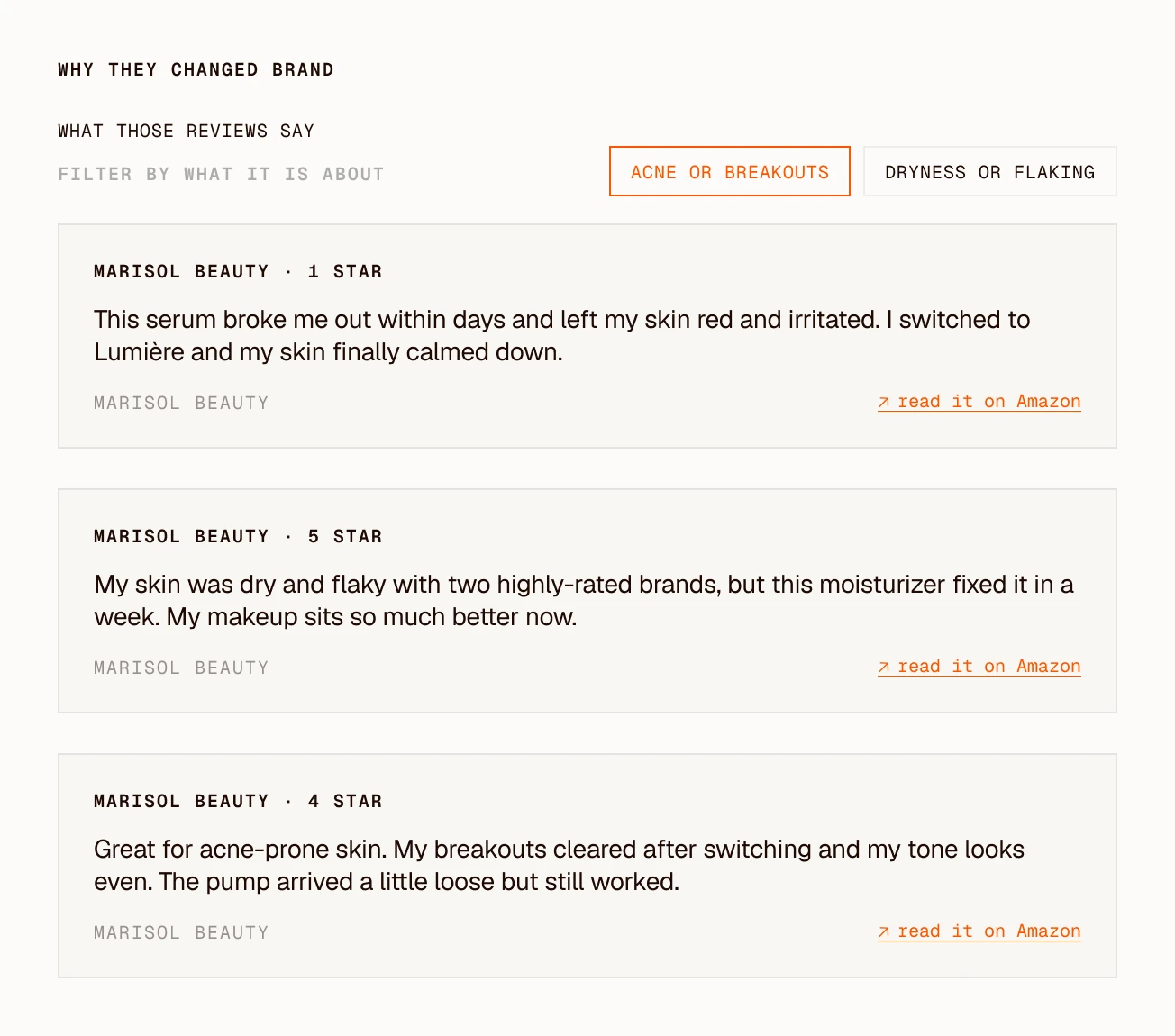
“Our brand score looked fine. Clayface showed that one clasp kept breaking and people were talking about it. We fixed it before the holidays.”
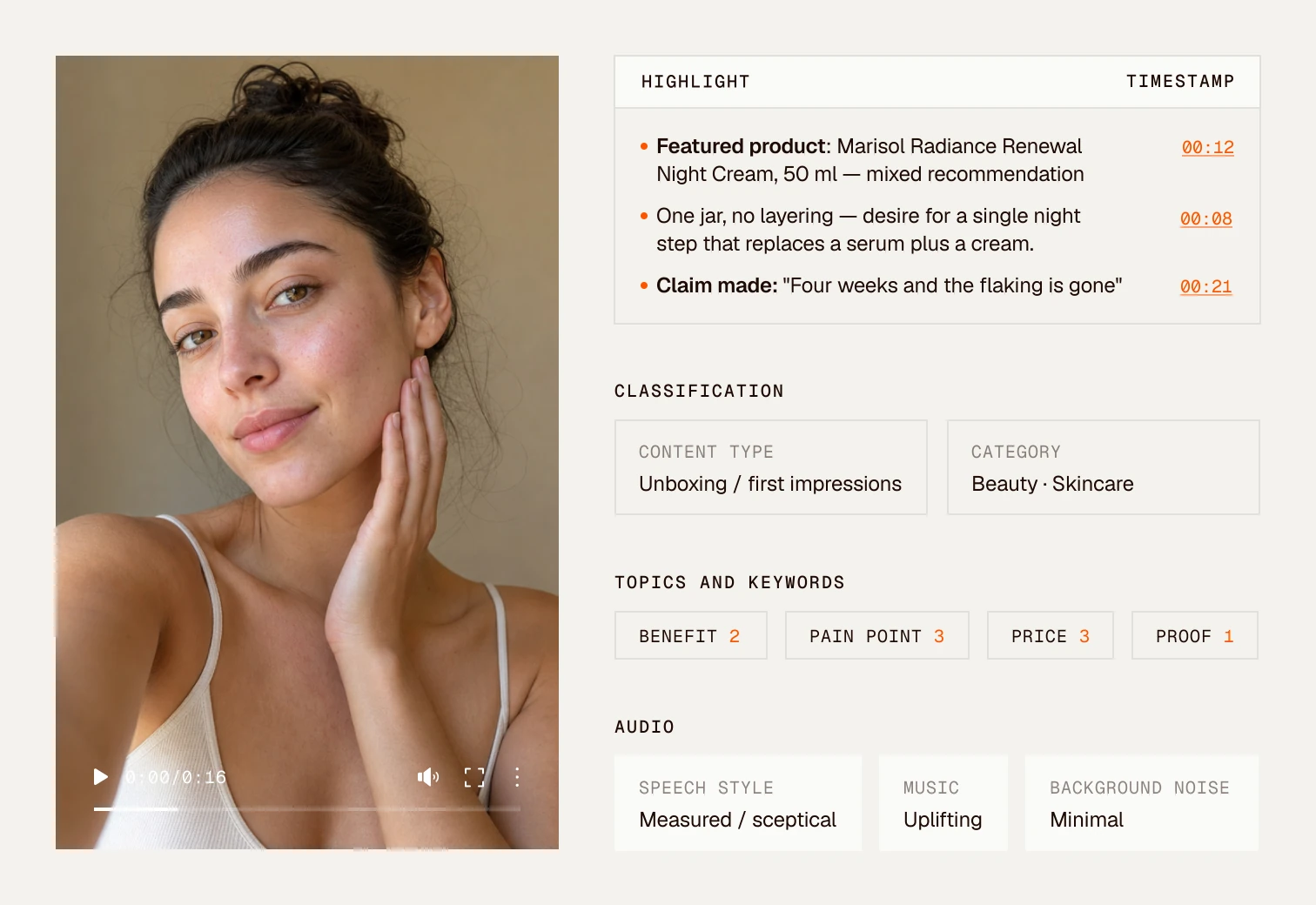
“Three weeks after launch, we knew which flavor people loved and which one they said they would not buy again. We changed the next order.”
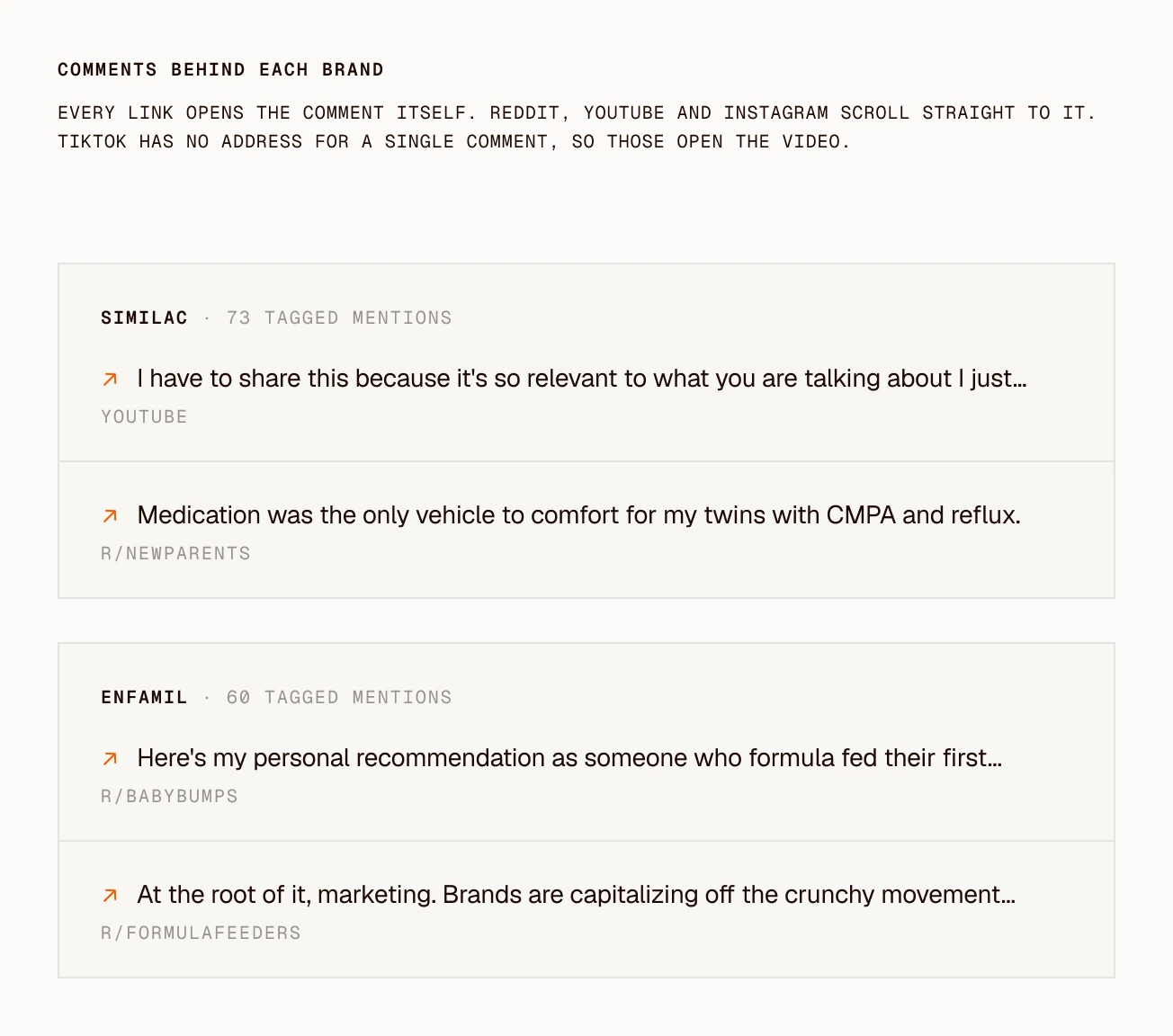
“We saw shoppers start comparing us with a new rival. By the next price review, we already had a plan.”

See what is moving your brand this week
Frequently asked questions

Brand tracking software measures how people see your brand over time, such as how well they know it, how they feel about it and whether they would buy it. Most tools do this with surveys. Clayface does it by reading what people already say online.
Most brand teams track awareness, how people feel about the brand, whether they would consider buying it, and share of voice against rivals. It also helps to track these for each product, because one weak product can hide inside a strong brand score.
No. Keep your survey tracker for the numbers leadership already trusts. Clayface adds a weekly view between survey waves, so you know what changed and why before the next wave comes in.
Surveys usually run every quarter or twice a year, which is fine for big trends. For launches, price changes and rival moves, a weekly view is more useful, because problems can grow fast.
Most brand tracking tools ask a panel of people questions. Clayface reads what shoppers already say across social posts, creators, reviews and listings on shopping sites, forums and news, and ties each one to the product it is about.