Marketing analytics software that cuts consumer data prep from days to hours
Your analysts spend much of the week cleaning data from social media, forums, shopping sites, retailer listings and survey tools before anyone can use it. Clayface brings it all together, sorts it by your own product names, and gives your team clean data that is ready to use.












What our marketing analytics tools do for analytics teams
Clean data
Stop cleaning consumer data by hand
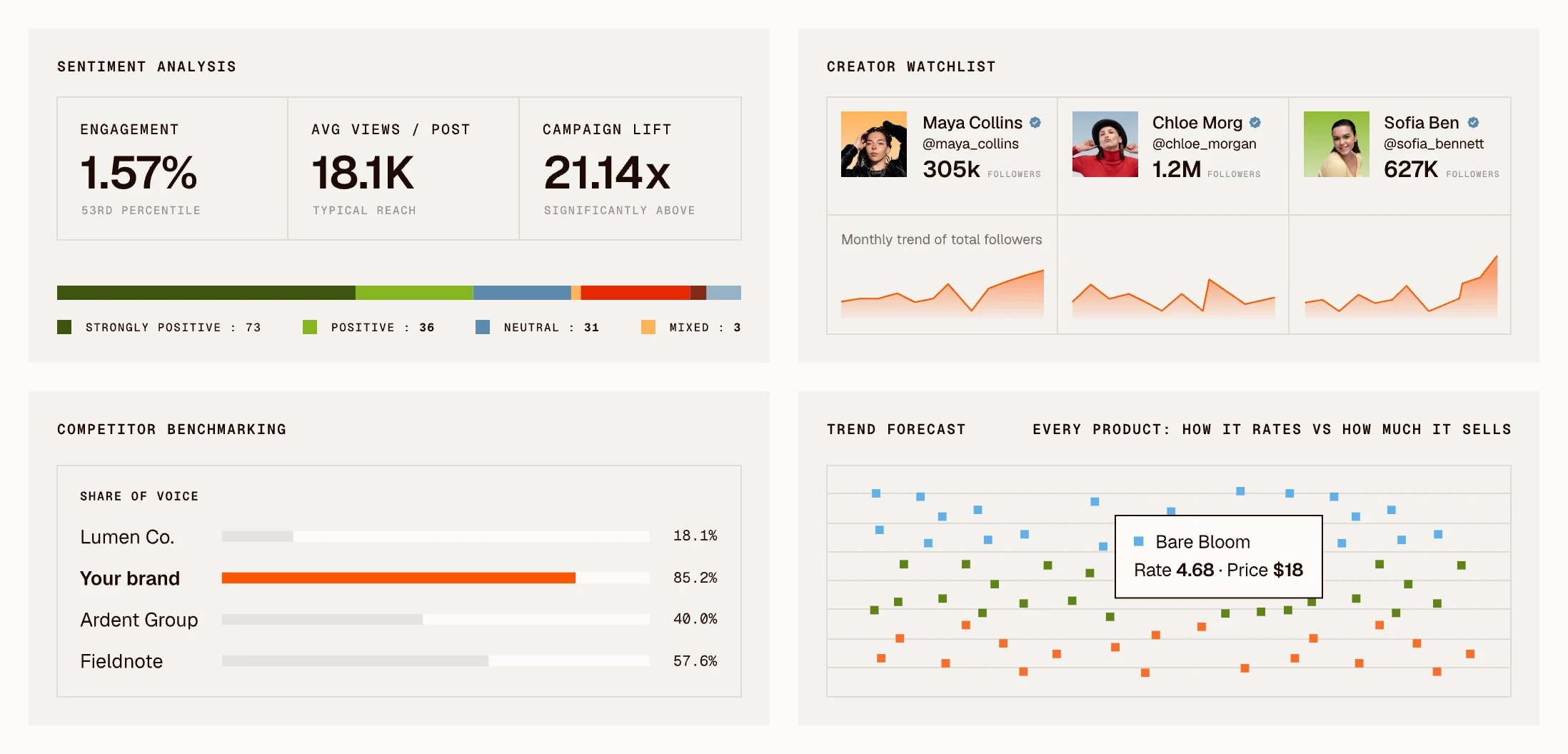
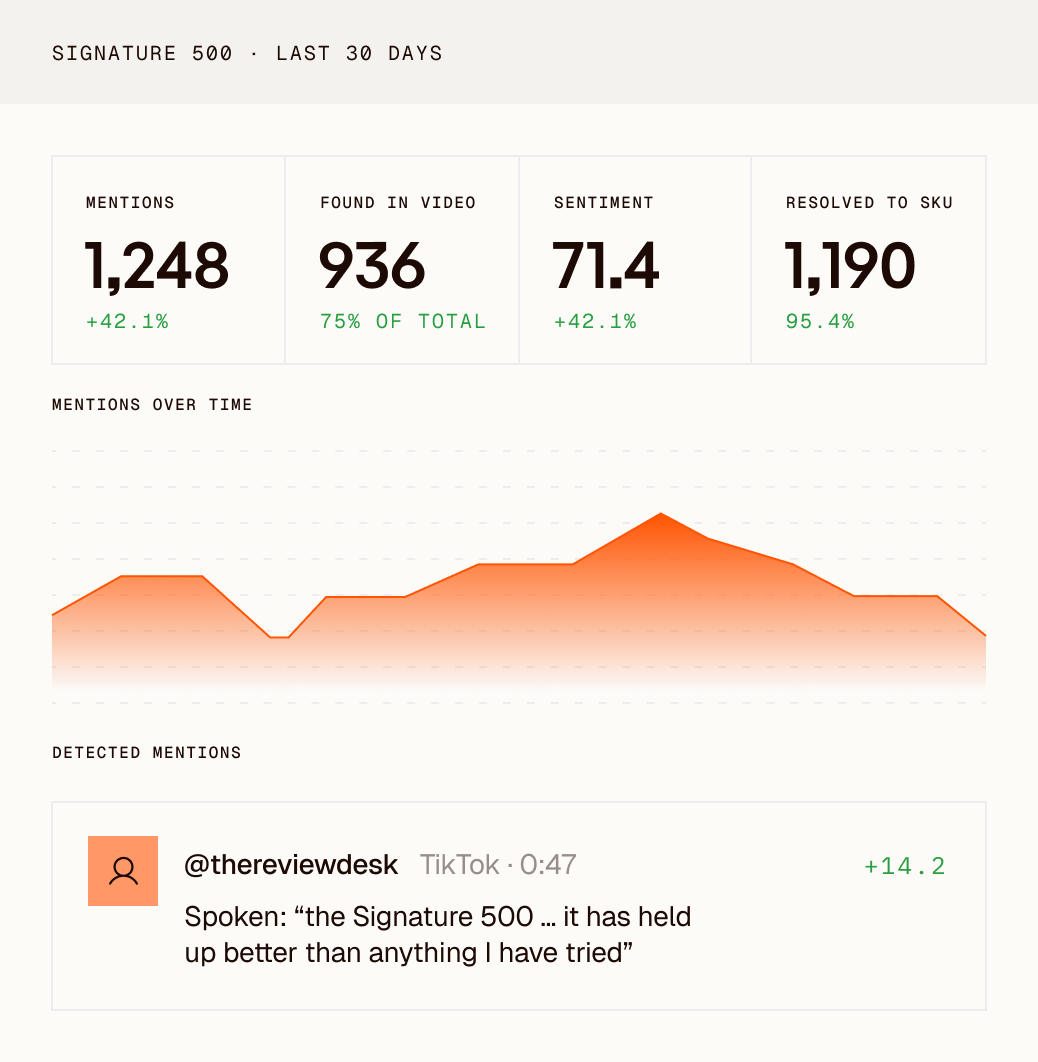
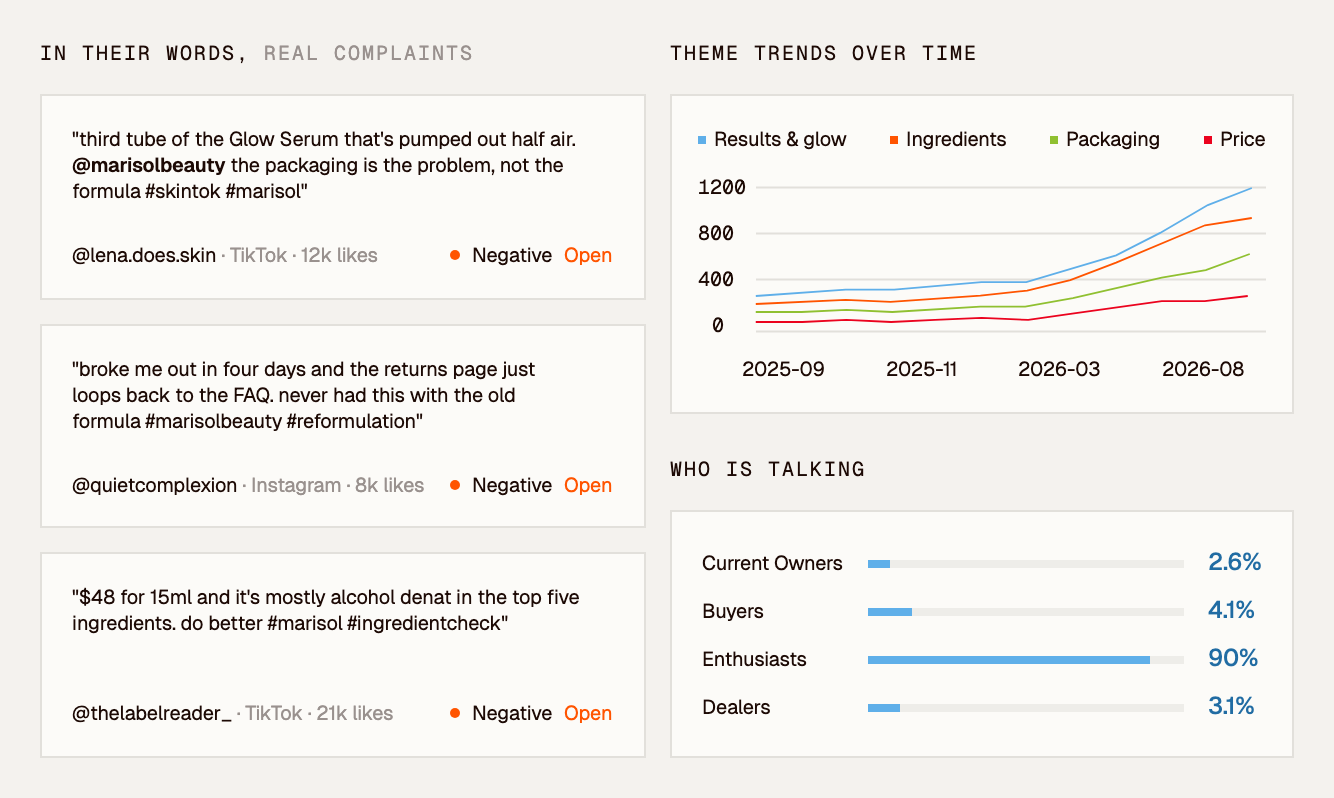
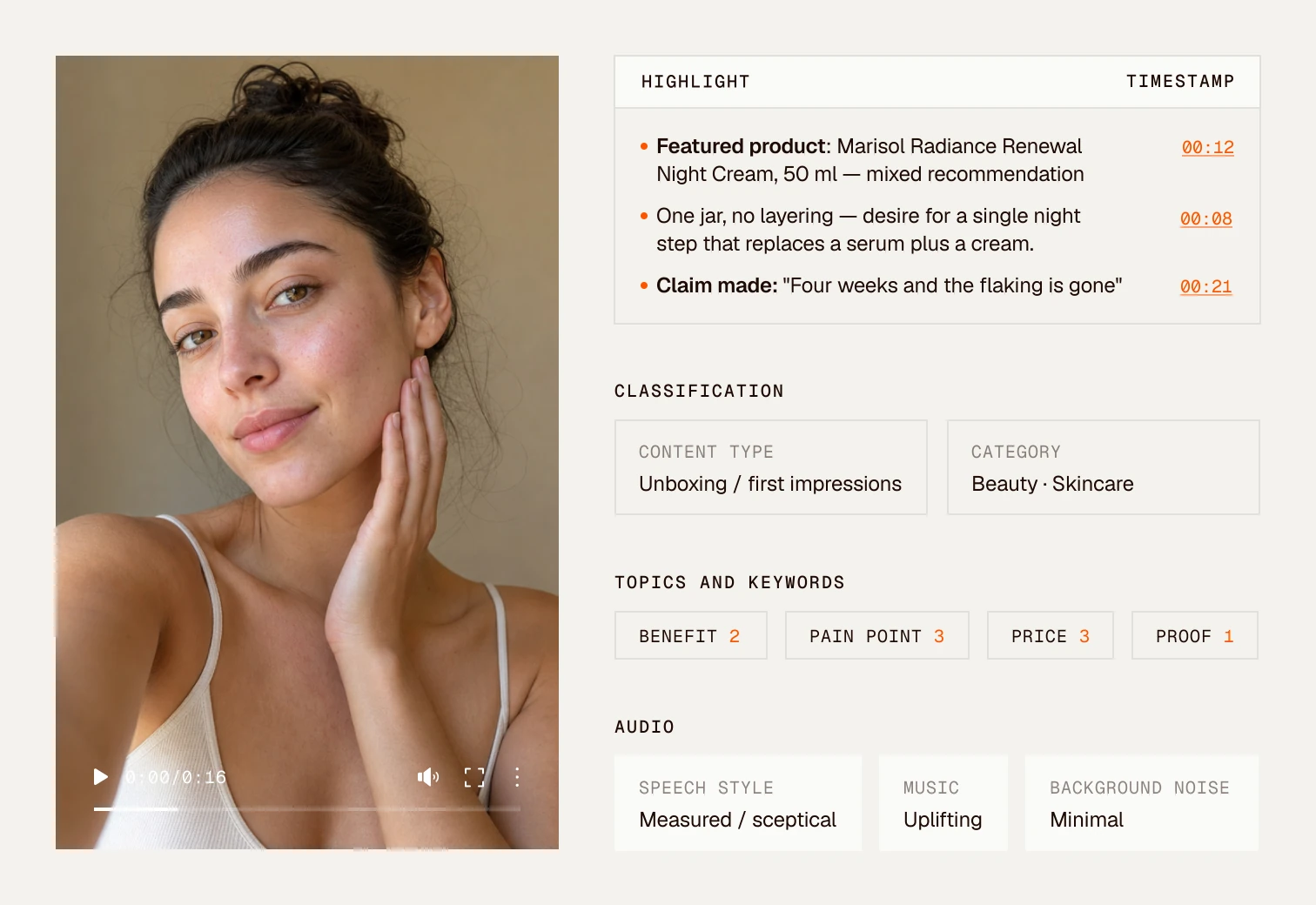
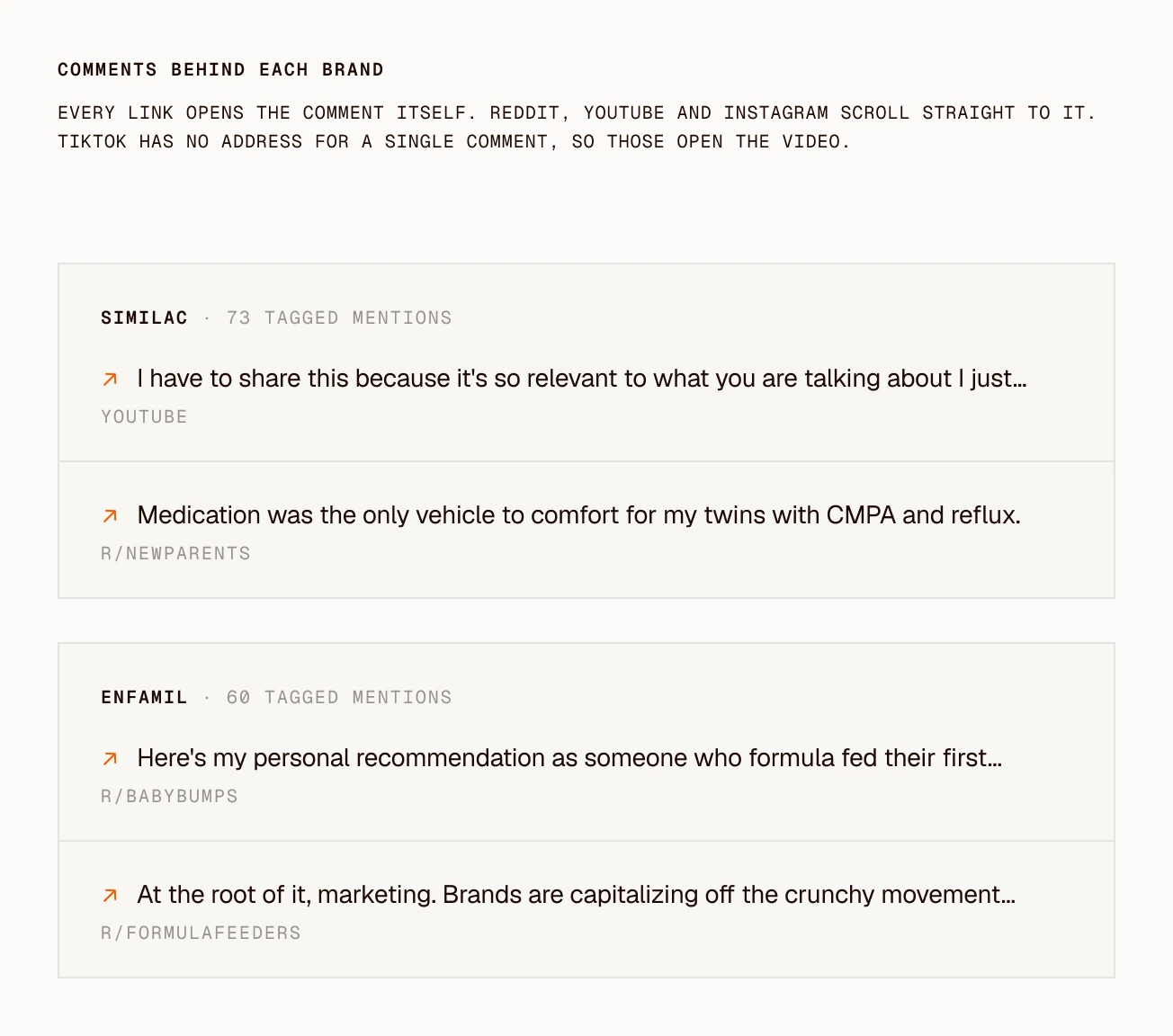
Clayface turns posts, reviews, listings, surveys and videos into rows your team can use. Each row carries the product, topic, feeling and source, so no one cleans text by hand.
Fewer tools
Cut the number of consumer data tools you pay for
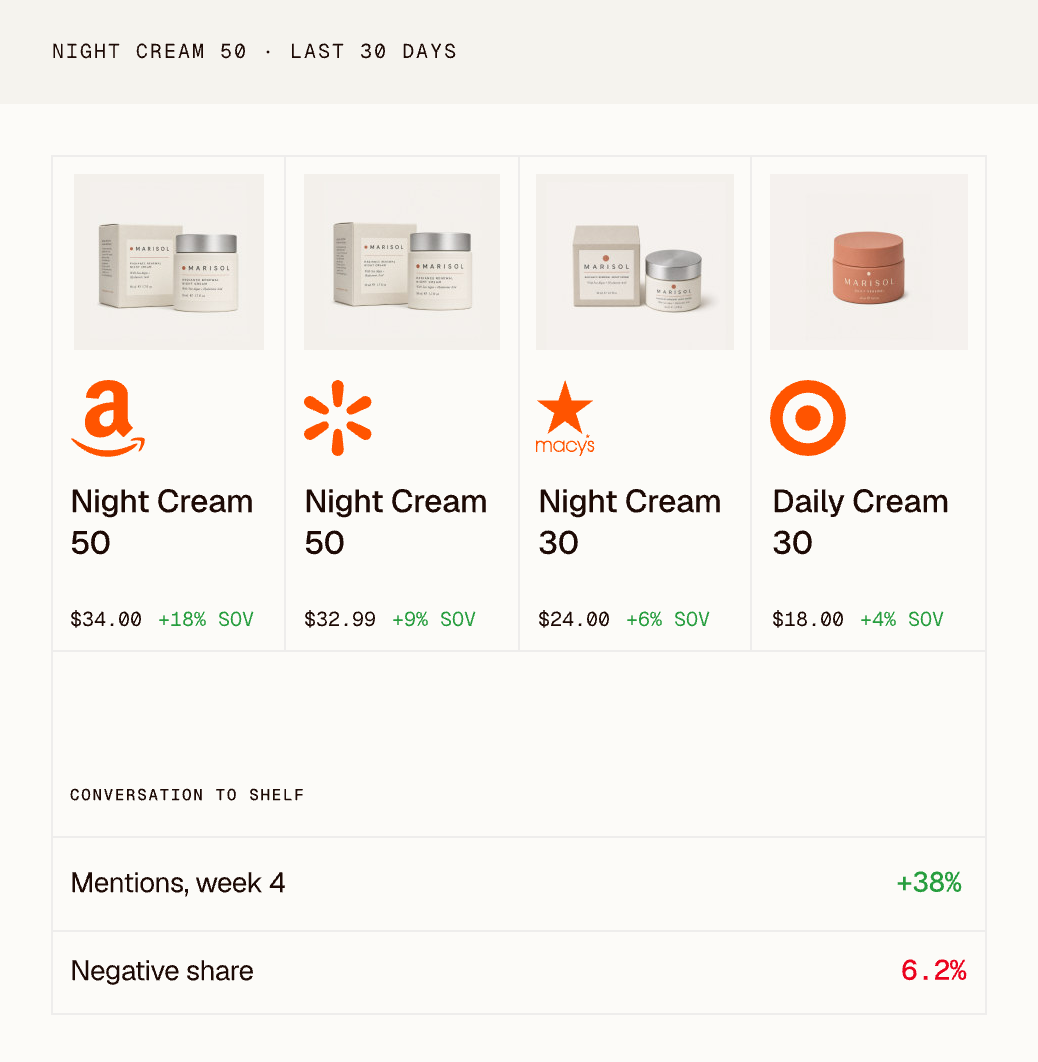
Social, creator, shopping site and survey data usually sit in separate tools that count in different ways. Clayface brings them into one place, so you pay for fewer licenses.
Self-serve
Let marketing answer its own questions
Marketers can ask a question in plain words and get an answer with the posts behind it. Your analysts stop fielding every small request and work on bigger ones.




475M+
creators database
25+
Social media platforms covered
5B+
Signals processed monthly


Why Our Customers Believe Us
“Cleaning social and review data used to take two analysts most of each week. Now it arrives ready to use, and they spend that time on analysis.”
“We were paying for three tools that counted the same posts three different ways. Now we pay for one, and the numbers agree.”
“Clayface used our own product codes, so its numbers joined to our sales data on the first try.”

See how much prep time your team gets back
Frequently asked questions

Marketing analytics software gathers data about your marketing and your customers and turns it into reports your team can act on. Some tools look at ads and websites. Clayface looks at what shoppers say about your products.
Marketing analytics looks inward, at how your own ads, website and campaigns perform. Marketing intelligence looks outward, at shoppers, rivals and the market. Clayface gives you the outward view as data your analytics team can use.
No. Clayface does not measure ad spend or split credit between channels. It adds what shoppers say about your products, which your team can use next to your attribution or marketing mix model to explain the results.
Unstructured data is information that does not come in neat rows, such as posts, comments, reviews and videos. It holds a lot of what shoppers think, but it is hard to count until it is sorted by product, topic and feeling.
Most marketing analytics tools look at your own ads, website and campaigns. Clayface looks at what shoppers say everywhere: social posts, creators, reviews on shopping sites, forums and news. Each one is tied to the product it is about.