Get higher influencer marketing ROI from every creator you pay
Clayface finds every post your creators make, counts what people said and did, and shows which creators got people asking where to buy. You renew the ones who work and drop the ones who do not.

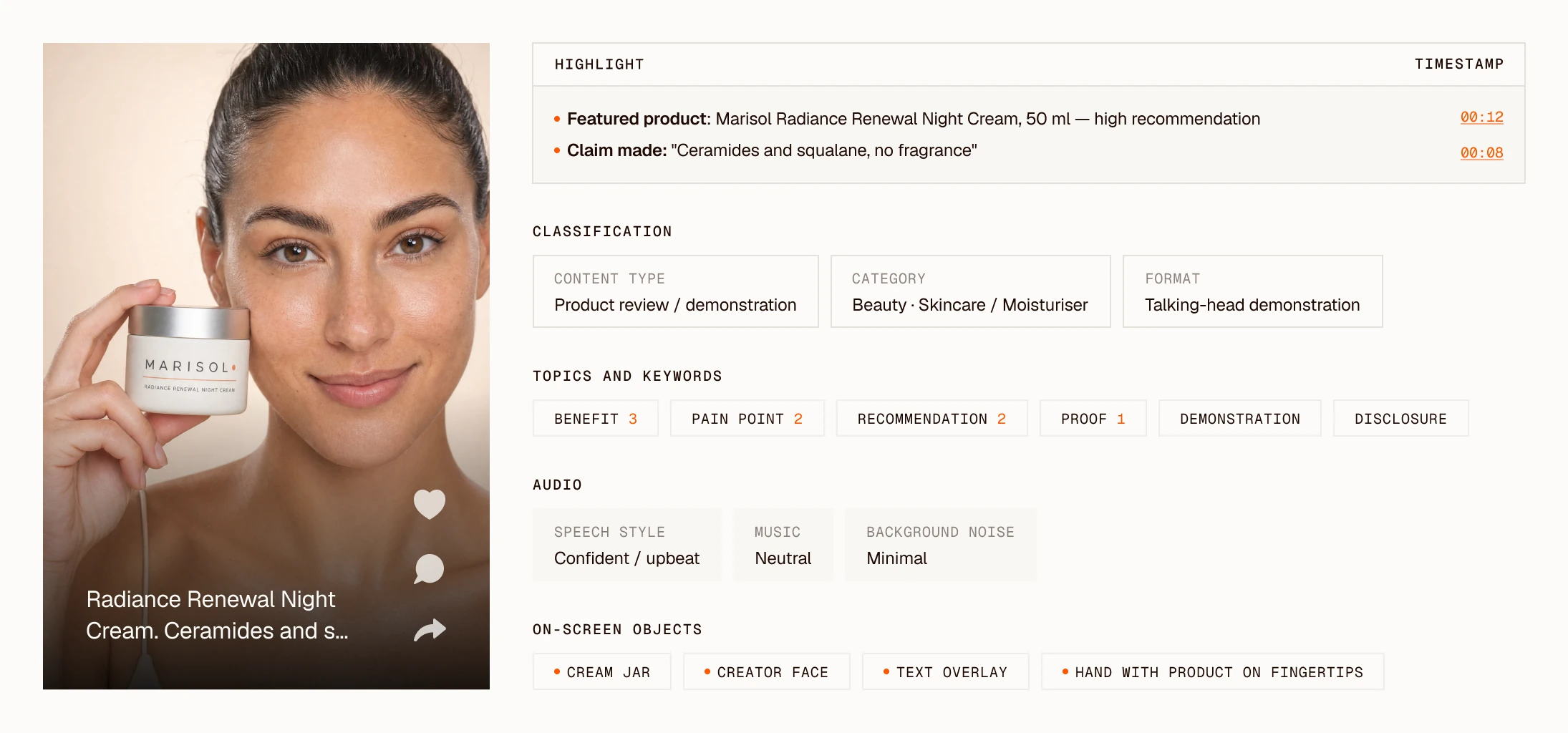











What our influencer marketing analytics do for creator teams
Campaign report
See every campaign post in one report
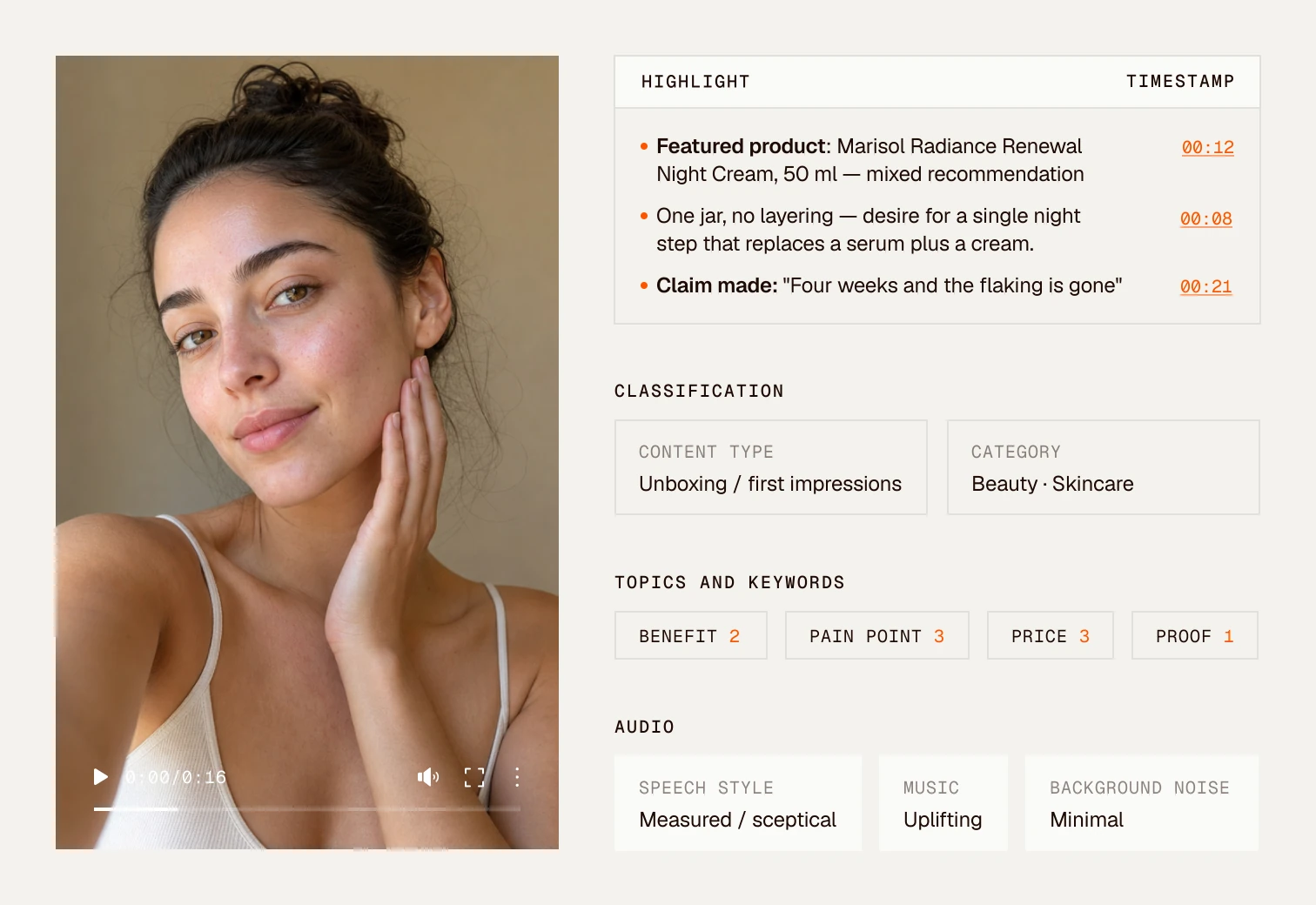
Clayface finds every post your creators made for a campaign and adds up views, comments, feelings and buying signals in one report, so no one builds it in a spreadsheet.
Buying signals
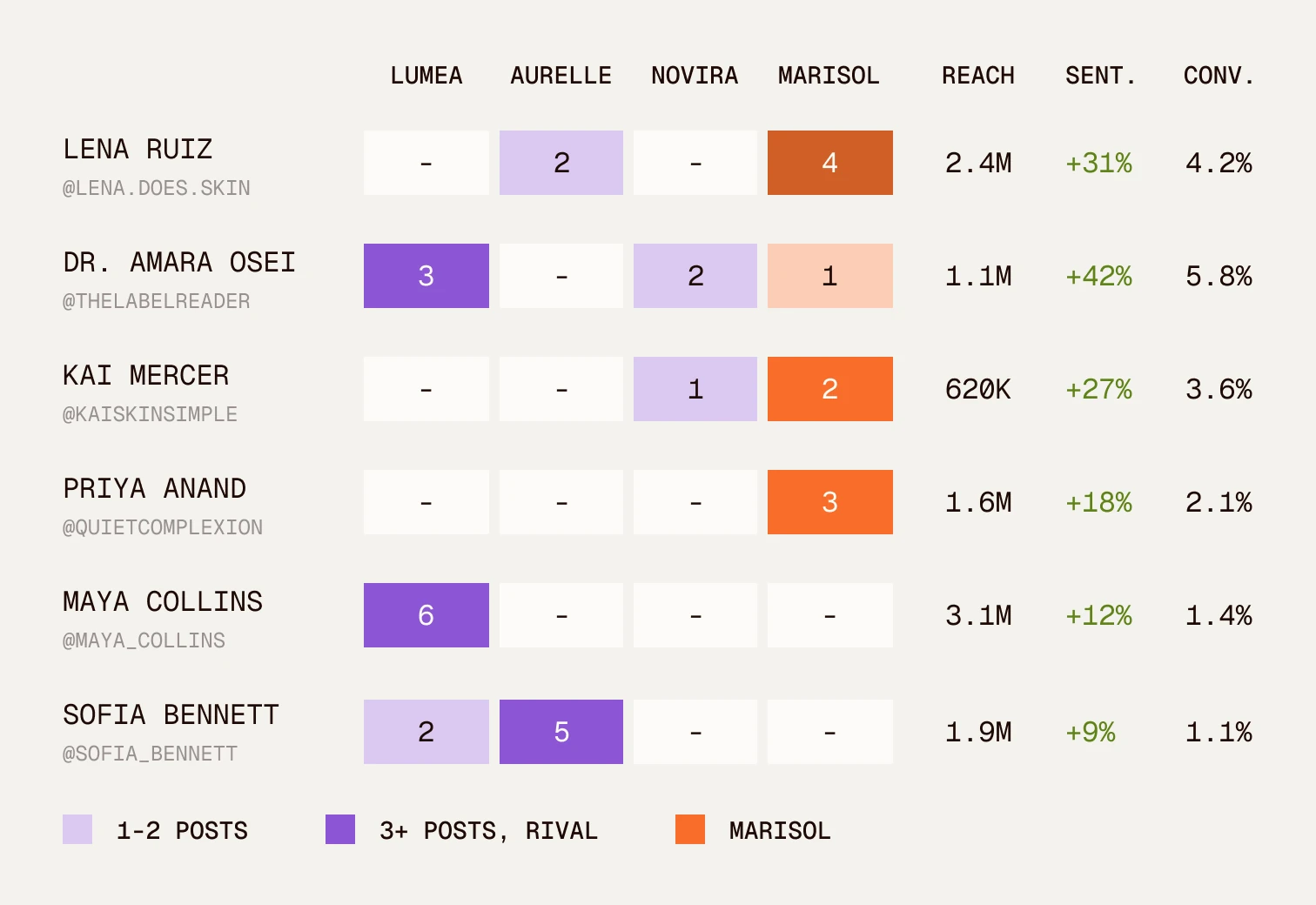
Show which creators got people ready to buy
Clayface counts comments where people ask where to buy, what it costs or say they ordered it. Each creator gets a count, so you can show who drove real interest.
Brand safety
Check a creator before you sign them
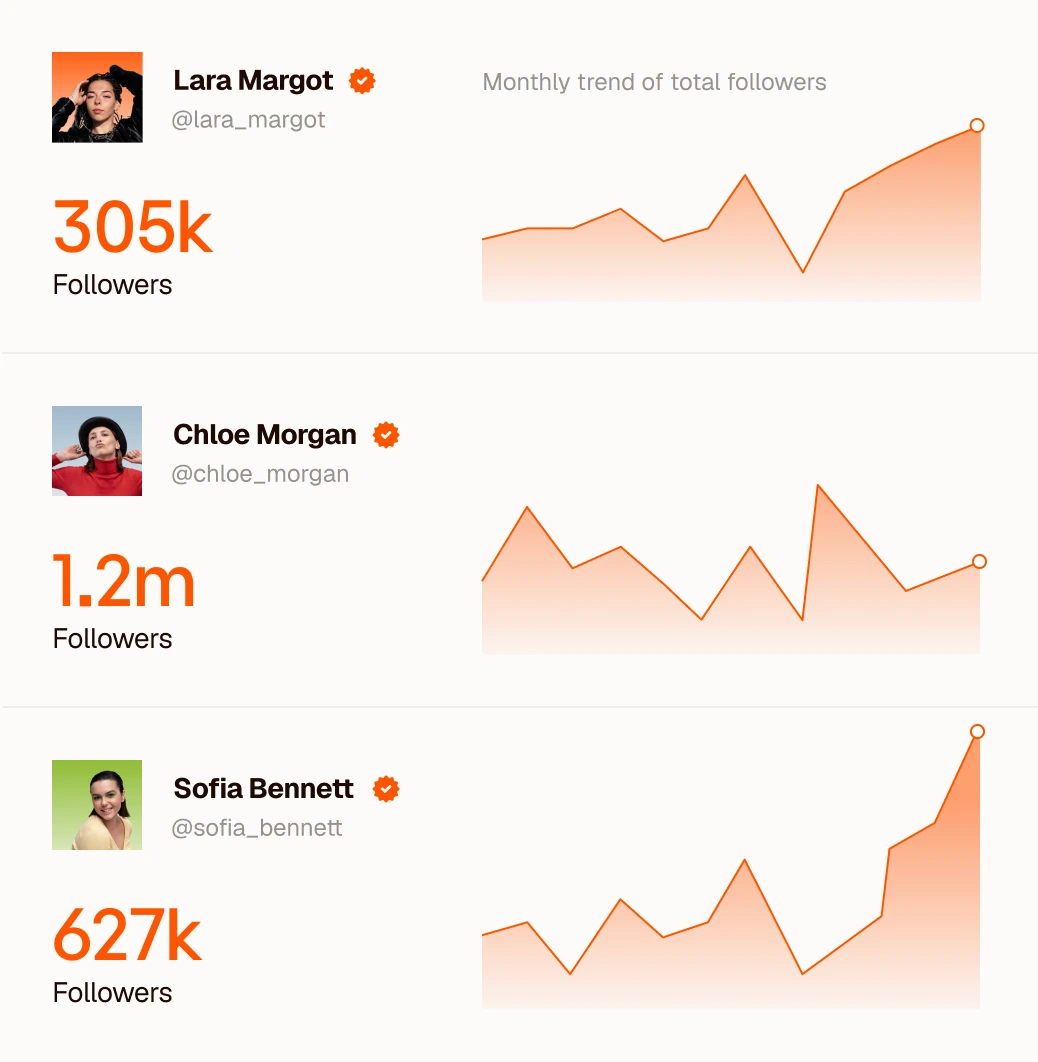
See what a creator has posted before, how their audience reacts and whether anything could put your brand at risk, so a bad match is caught before the contract.

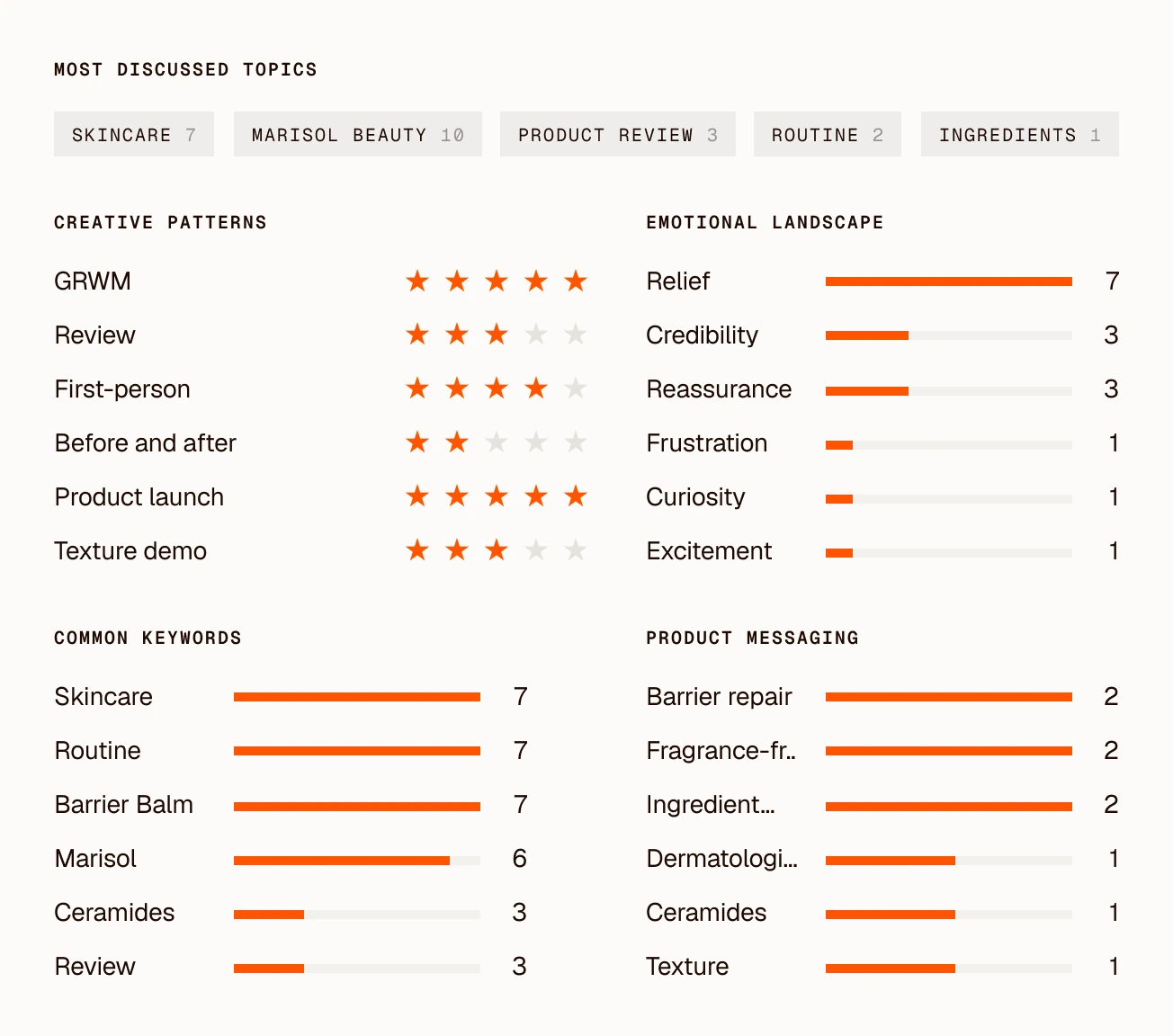

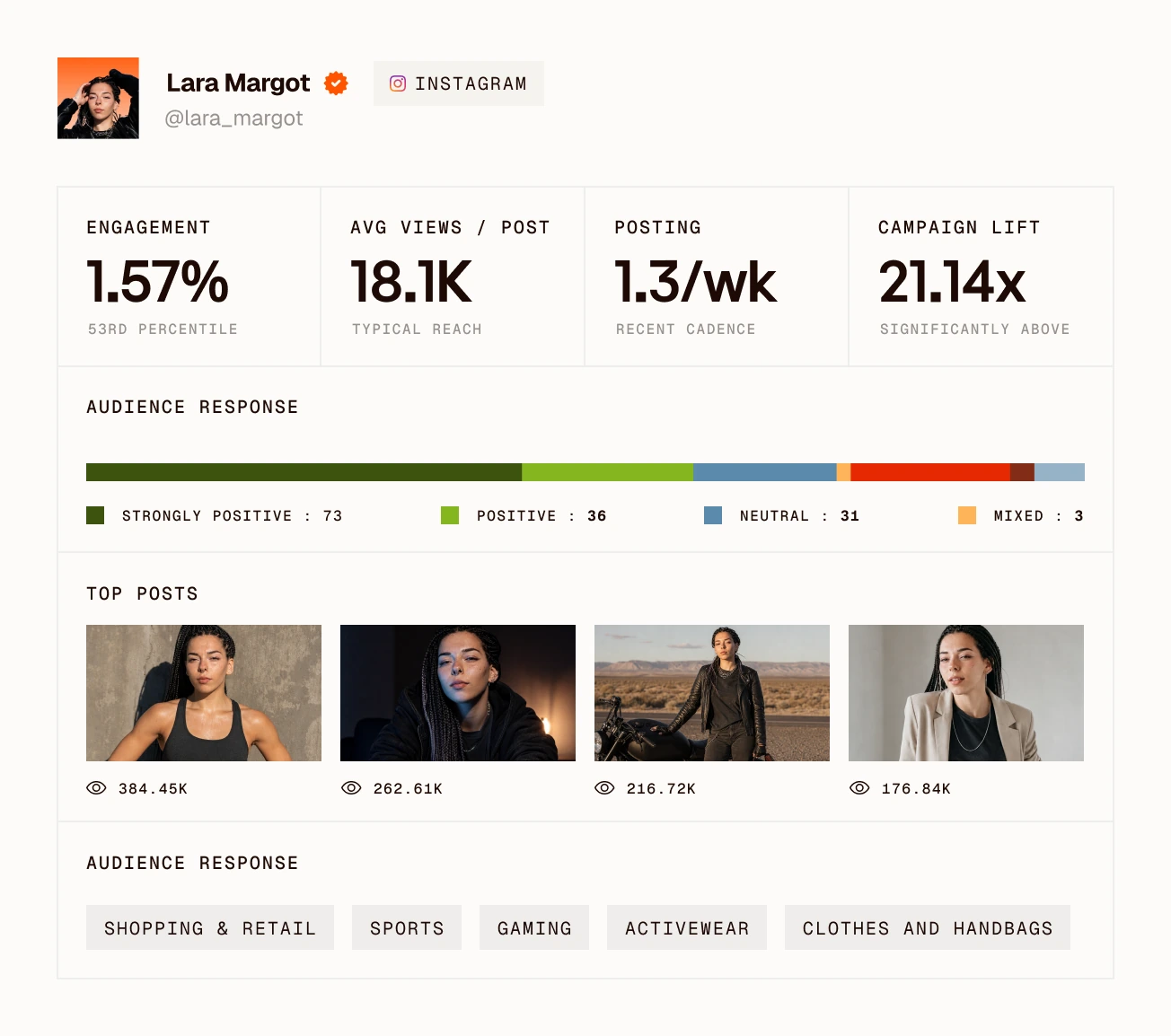

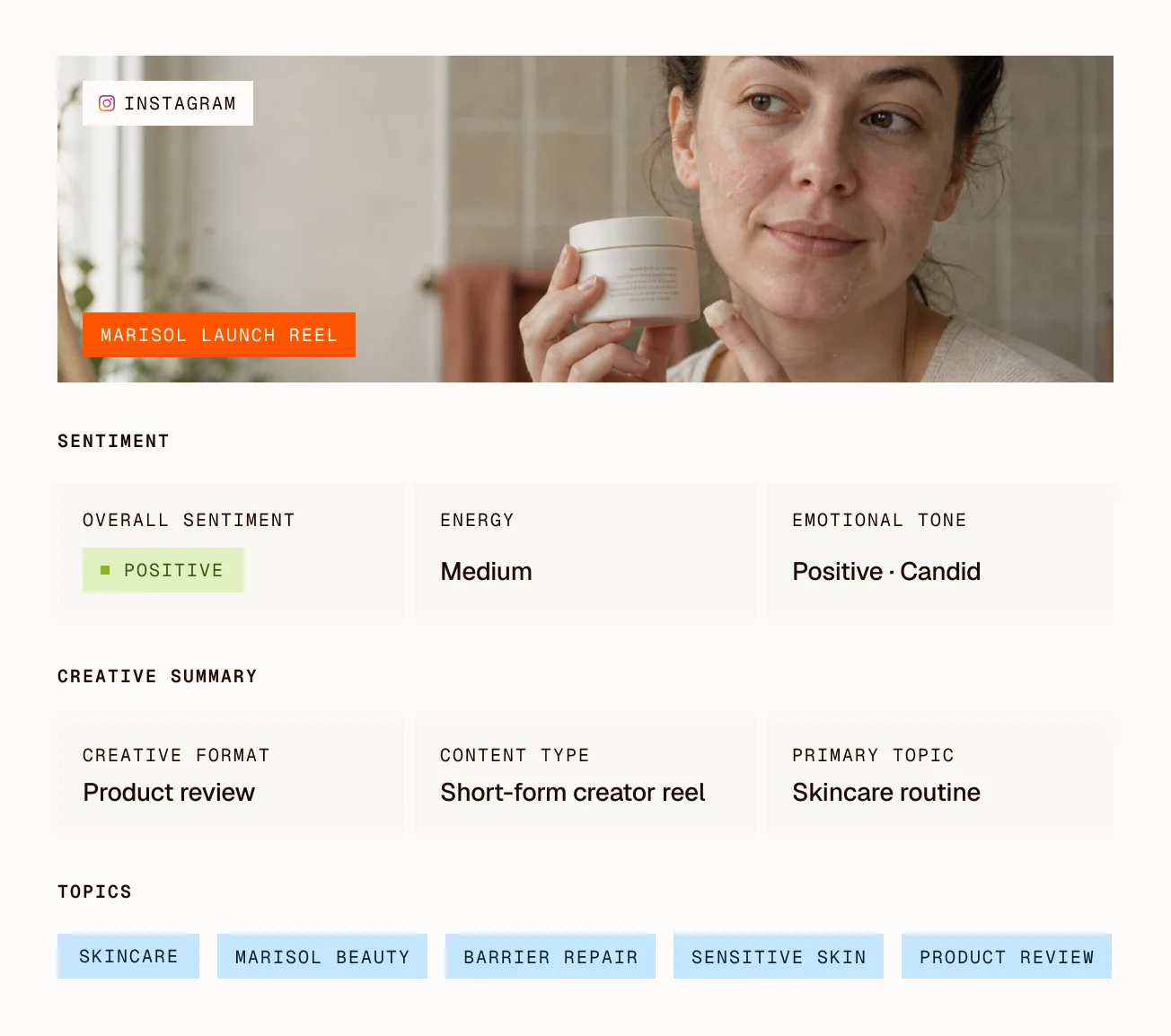
475M+
creators database
25+
Social media platforms covered
5B+
Signals processed monthly


Why Our Customers Believe Us
“Clayface found videos where creators said our name but never tagged us. Our campaign reached far more people than we had reported.”
“We saw a rival had signed three creators in our space. We reached two others first.”
“Renewals used to go to the biggest accounts. Now they go to the creators whose posts got people asking where to buy.”

See which creators are worth renewing
Frequently asked questions

Start by collecting every post from the campaign. Count views and comments, read how people felt, and look for comments where people say they want to buy. Then compare creators on the same measures.
Most teams track reach, engagement rate, cost per view and cost per engagement. The ones that matter most to leadership show buying interest, such as comments asking where to buy and sales from creator codes.
Add up what you spent on creators, then compare it with what you got back, such as sales from codes and links. Many sales have no code, so buying signals in comments help fill the gap.
No. Clayface does not handle contracts, briefs or payments. Keep your platform for managing creators, and use Clayface to measure what their posts did and to find new creators worth working with.
Most influencer tools report on the posts you tell them about. Clayface runs on Phyllo's data on more than 475 million creators and brings together social posts, reviews on shopping sites, forums and news, so it sees how creators affect what shoppers say everywhere.